Mirror, mirror on the palace wall
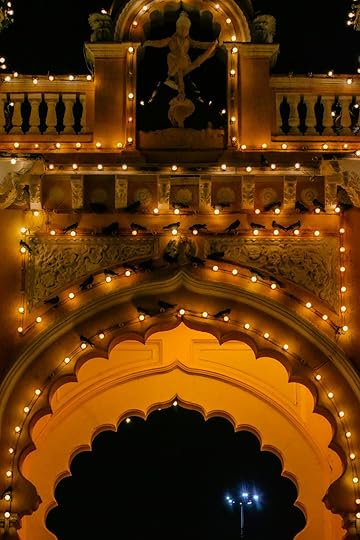 Photo by Abhishek Kirloskar on Unsplash
I have been reading a wonderfully engaging book written by Diwan Jarmani Dass, who was born in Punjab in 1895, and was a minister in the Indian princely states of Kapurthala and Patiala. Articulate in Punjabi, Urdu, English and French, he was decorated by the Vatican and the Governments of France, Spain, Morocco and Egypt. In his book Maharaja, Diwan offers a first hand account of the wisdom and excesses, the travels and intrigues of life among the Maharajas when their power was at its peak.
My recent post by the Dalai Lama’s Cat about jealousy, and the absurdity of the green-eyed monster immediately came to mind when I read this short but entertaining anecdote.
I hope it gives you a chuckle!
“The British Government always tried to please the rulers of Hunza and Nagar in many ways and the most powerful weapon they used, to have these rulers in their grip, was to bestow upon them titles and honours. The British Government played the same game with the Maharajas and Nawabs.
Besides British and Indian honours, such as the Order of the British Empire, Order of the Star of India, Order of the Victorian Order, other distinguished orders and numerous honorary titles of the time of the great Mughals were bestowed upon the Rulers, such as Beloved Son of the Government of Great Britain A Pillar of the Empire, Dignity of the Kingdom, Light of the British Empire, Kings of Kings, Giver of Joy to the Heart, Brave in Battle, Great and Esteemed Maharaja Chief of the Army of the Country and Viceregent of the Kingdom.
On the recommendation of Colonel S.A. Smith, the Resident and the Viceroy of India, His Imperial Majesty the King of England and Emperor of India, bestowed upon the Mir of Hunza, the exalted tide of KCIE in June 1921 while His Imperial Majesty conferred upon the Mir of Nagar on the 1st of January, 1923, the honour of KBE. KCJE means Knight Commander of the Indian Empire while KBE means Knight Commander of the British Empire.
Both these rulers were anxious to know which of the two tides was superior and each of them complained and fretted that the other ruler got better and higher tide. On account of this obsession, the jealousy between these two rulers grew and they became more and more hostile to each other.
In spite of the fact that the British Resident explained to these rulers that there was no difference between the two tides, and that he was satisfied that the King Emperor bestowed upon them titles which have equal value and distinction, they were not satisfied by the assurances given by the British Government in Gilgit.
Pandit Wazir Ram Rattan, an able administrator, was the Governor of Gilgit at that time and he wielded great power and prestige in that region on account of the implicit confidence which the Maharaja had in him. On account of his ability and impeccable character, both the Mirs came to see the Governor secretly and asked him which tide was superior and also told him that an assurance was given by the Resident and the Viceroy of India that both rulers were to be treated alike whenever any honours were to be bestowed upon them.
Pandit Ram Rattan was a tactful and shrewd diplomat He received the rulers one by one, separately. He told the Mir of Hunza that he had four letters to his honour, i.e., KCIE, while his brother Prince Mir of Nagar had only three letters, i.e., KBE. After the interview, the Mir of Hunza left the Government house quite satisfied that he had scored over his brother Prince in receiving the better, and more exalted tide at the hands of His Imperial Majesty, the King Emperor, and there was great rejoicing in his State to celebrate the occasion.
When this news got around Nagar, the Mir of Nagar sought an interview with the Governor to clarify the position. He was all smiles when the Governor told him that the Mir of Hunza had only an Indian tide while the Emperor had conferred upon him the highest British tide and that the British tides were superior to the Indian tides. The Mir of Nagar too celebrated the occasion by illuminating his Palace and the streets of his Capital and lavishly threw gold and silver coins and ornaments to the public from the balcony of his Palace. With such a shrewd handling of the situation by Pandit Ram Rattan, the Governor, political crisis was averted.”
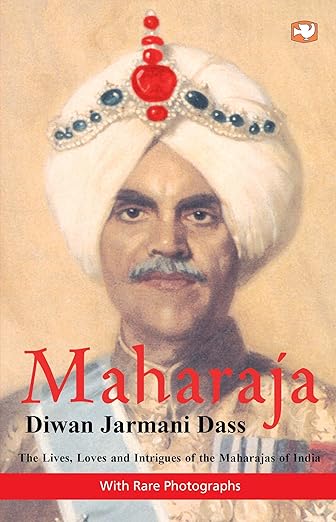
The above excerpt is from Maharaja by Diwan Jarmani Dass, available in hard copy and Kindle.
HHC’s original post on jealousy v envy in case you missed it: