Science and the Dragon

The Goddess Gaia and a Dragon discuss science together.
Here is a paper that my coworkers and I published in “Organisms” a few years ago. Appearing in an academic journal, it was not visible to the general public, but I think it was interesting enough to be republished on “The Seneca Effect” blog. It was written before the AI revolution that promises to create some order in the accumulation of scientific knowledge but that, so far, has failed to do so.
(note, some typos in the original paper were corrected in the version published here)
Organisms: Special Issue: Where is Science Going?
Vol. 5, No. 2 (2022)
ISSN: 2532-5876
Open access journal licensed under CC-BY DOI: 10.13133/2532-5876/17628
Ugo Bardi, Ilaria Perissi, Luisella Chiavenuto & Alessandro Lavacchi
a Dipartimento di Chimica ‘Ugo Schiff’, Università di Firenze, Florence, Italy - bGlobal Sustainability Institute, Anglia Ruskin University, Cambridge, United Kingdom- cIndependent Researcher, Aosta, Italy - dIstituto di Chimica dei Composti Organo Metallici del Consiglio Nazionale delle Ricerche (ICCOM-CNR), Area della Ricerca di Firenze, Sesto Fiorentino, Italy
*Corresponding author: Ugo Bardi, Email: ugo.bardi@unifi.it
Abstract
We start from an analogy: science can be seen as one of the dragons of Western mythology, described as sitting on their hoard of gold but not using it for any useful purpose. Similarly, scientists seem to be content with accumulating knowledge, doing little or nothing to use it outside their restricted domain of expertise. We argue that this attitude is one of the elements causing the ongoing decline of science as a way to produce innovative knowledge. We propose that the situation could be improved by encouraging scientific communication and the redistribution of the scientific treasure of knowledge in the form of “mind-sized” memes.
Keywords: knowledge distribution, memes, specialization, h-index
Citation: Bardi, U 2022, “Science and the Dragon: Redistributing the Treasure of Knowledge”, Organisms: Journal of Biological Sciences, vol. 5, no. 2. DOI: 10.13133/2532-5876/17628
Introduction
There are several reasons for the evident decline of science: unreliability, falsifications, cronyism, elitism, politicization, hyper-specialization, aversion to innovation, and more. This decline is not just reducing the capability of science to produce culture and innovation. It is also generating a serious disconnection of science from society as a whole. Non-scientists are developing an ideological aversion toward the dominating “technoscience,” seen as representing the entire scientific process.
In part, these problems can be attributed to a few (or maybe not so few) bad apples in the basket. But there is one profound problem affecting the whole scientific enterprise: science has grown so much that by now it produces an unmanageable mass of data and results which are incomprehensible except to people working in the narrowly specialized fields in which the results were produced.
We could compare science to the dragon Fafnir of Norse mythology or to one of its modern versions, such as Smaug of Tolkien’s novel The Hobbit. Dragons are said to sit on immense hoards of gold that they do not use and that nobody else can use. Science seems to be doing the same with the knowledge it creates, a treasure kept hidden in the darkness of scientific journals, inaccessible and incomprehensible to the majority of people and to most scientists as well. It has been said that a typical condition of scientists is to know more and more about less and less. If the trend continues, eventually they will know everything about nothing. Indeed, the dragon is not just sitting on the treasure of knowledge, but it is dominating its way of production by means of controlling science funding as well as the career of scientists. Science is becoming more and more like a dragon locked in its giant cave.
A recent paper by Chu and Evans (2021) offers a dramatic illustration of the current impasse of science. These authors found that the larger a specific research field is, the more unequal the impact of a scientific article becomes in terms of the number of citations. In other words, in science there holds the rule that “the rich becomes richer,” just as it happens in the financial world (this is also called the “Matthew Effect” from the parable of the talents in Matthew’s gospel). The result is that new entries in the field do not succeed in removing obsolete research from the top places of interest, if they ever manage to see the light on a scientific journal. The Matthew effect takes place with grant applications. Those scientists who can accumulate research grants in an early stage of their career tend to keep being successful (Bol et al. 2018). Also, this effect discourages innovative new entries in research.
In this paper, we examine the question and propose a tool inspired by Seymour Papert’s book Mindstorms (Papert, 1980). According to Papert, the learning process for humans is based on unpacking complex concepts into easily understandable sub-units that he calls “mind-size” (or “mind-sized”) bites. The author proposed this idea mainly in the framework of teaching geometry to children (Abelson et al. 1974). However, its value applies also to adults (Maedi 2013).
We propose here to enlarge Papert’s concept of “mind-size learning” to match the current scientific enterprise. We do not aim at renouncing specialized knowledge, but valuing the transmission of ideas using a language that is mutually understandable by scientists working in different fields and, at the same time, not just by scientists but also by practitioners of humanities and by the public. In other words, we propose to redistribute the dragon’s gold to the people.
Creativity and Knowledge
Mainly, we owe the concept that creativity is an emergent property of knowledge to Jean Piaget (Maedi 2013; Gruber & Vonèche 1977), who expressed it in the sentence “creativity is knowledge.” There follows that if we want to restart the progress of science, we need “cross-fertilization” from one scientific field to the other, including humanities. This idea is also known as “interdisciplinarity,” a concept that is often praised but rarely practiced.
Several factors tend to discourage interdisciplinarity in modern science. One is the attempt to classify scientific research in specific sectors. Hence, research is forced inside sealed compartments that discourage exchanges of ideas between different fields. Another factor is the use of various “indices” developed with the purpose of measuring productivity and the competence of an individual scientist or of an academic journal. These indices assume that competency is proportional to the number of papers that a scientist produces (“publish or perish”), taking also into account the number of citations received. In general, a paper will most likely be published if it deals with well-known ideas and concepts. Also, people who work in the same field as the author will cite it more than others. This encourages scientists to remain within the limits of their fields in order to maximize the number of their publications and the number of citations (Migheli & Ramello 2021). Venturing outside one’s area of specialization and producing actually innovative research would mean stepping into the darkness where a scientist’s work is likely to be ignored. No citations, no career—no career, no scientist. Indeed, it would be useless to blame bureaucrats for having developed indices that, in large part, are well integrated with the way scientists behave and the way the scientific process is performed. The problem lies deep in science.
The lack of interdisciplinarity in science is not just a matter of quality, as we can measure it. (Chu & Evans 2021) report that “Examining 1.8 billion citations among 90 million papers across 241 subjects, we find that a deluge of papers does not lead to turnover of central ideas in a field, but rather to ossification of canon. (…) A novel idea that does not fit within extant schemas will be less likely to be published, read, or cited.”
Chu and Evans propose that this phenomenon is due to the large number of papers published in every field, which makes it impossible for researchers to keep abreast with the general work. We also need to take into account a parallel phenomenon that Chu and Evans do not mention: as a certain field becomes larger, it also becomes more fragmented. That is, a large field spawns smaller subfields, which in turn will spawn smaller fields. The set of scientific fields is fractal.
The Web of Science database includes 241 subjects of study. Such a classification is arbitrary. For instance, Wikipedia lists 1475 fields. Even the finer Wikipedia subdivision is rather “macro” in comparison to the way certain fields are perceived by their practitioners. Note also that the fractalization of science does not take place just across different fields: it also takes place at the temporal level. The basic concepts of single disciplines can be progressively forgotten not because they have been invalidated, but simply because they suffer a sort of de-facto obsolescence that condemns them to oblivion. This phenomenon was clearly seen during the past two years of the epidemics that saw the rediscovery and sometimes the rejection of some basics of medicine that somehow had been forgotten. Just as an example, a recent review (Ashby & Best 2021) reports how “misconceptions about herd immunity and its implications for disease control are surprisingly common.” This loss of scientific memory is the local version of the wider dissociation occurring between scientific and humanistic disciplines, which gradually lose their common roots until they become completely alien to each other.
The result is that whenever scientists from two separate fields happen to discuss the same subject, they tend to behave like enemy ships exchanging broadsides against each other before vanishing in the fog. There have been several examples of this aggressive behavior. One is that of the study The Limits to Growth (Meadows et al. 1972). The study originated from the field of engineering control systems, but its method was applied to describing the global economic system. As a result, it didn’t fit with the methods used in the field of economics. As argued in the book The Limits to Growth Revisited (Bardi 2011), the debate occurred among people who did not understand each other. Hence, the study was demonized based on an insufficient debate and little evidence. Another example is the remarkable scientific quarrel between physicists and geologists about the cause of the “Cretaceous–Paleogene extinction event, ‘’ some 66 million years ago. In 1980, a group of researchers, most of them physicists, proposed that the impact of an asteroid had caused the extinction (Alvarez et al. 1980). Geologists, instead, mostly attributed the event to a large-scale volcanic eruption (Bond & Wignall 2014). The row that followed is by now legendary and the two groups involved had difficulties in understanding each other (Alvarez 1988).
These examples show how different scientific fields can differ in views, methods, and terminology. They become ossified, with scientists belonging to different subfields unable, and often uninterested, to speak to each other. A blatant example of such a fractalization and hyper-specialization of science may be the recent Covid-19 crisis, with the birth of a hierarchical view of human health that saw one specific ailment as separated and more important than all the others. The emergence of the pandemic led to a rush to publish that created a large number of poor quality papers—a rush described as a “carnage” (Bramstedt 2020). Kendrick (2021) reported a similar outcome when statins became a popular subject of research in the 1990s: other fields involving the prevention of cardiovascular disease were practically abandoned.
These phenomena are the cause of a chain of troubles and incomprehension transmitted from one scientific field to another. This generates diffidence and mistrust not just within science, as it is understood nowadays, but also among people working in the humanities, and the public. If the sad state of science is not recognized, we will continue financing and producing poor science, useful to nobody.
Science as Language: Mind-size Concepts
Nowadays, a great number of different people speak international languages, such as English. The result is that widely spoken languages tend to incorporate new terms from other cultures (e.g., pizza from Italian, ubuntu from Bantu, perlage from French, and many others). The increase in the size of the vocabulary generates, probably as a compensation, a reduction of its grammatical and syntactic complexity (Reali et al. 2018).
These trends are typical of ordinary languages but can also be seen in science. The huge number of terms developed in different fields generates a simplification in the grammatical structure of the scientific language. Scientific papers are written in a standardized form of English that avoids clichés like the plague. Such a language tends to be simple, especially when used by non-native speakers, who are now probably the majority of the active scientists in the world. There have been proposals for the use of a codified and simplified form of English, for instance, the ASD-STE100 Simplified Technical English (STE).
However, the grammatical simplification of scientific English does not solve the problem of the proliferation of concepts. This is a gigantic problem: the human mind has limits. So, how to make a mass of concepts available outside the specific fields that produced them? Here, we can take inspiration from the work of Seymour Papert, who proposed the concept of “mind-size” (or “mind-sized”) models (Papert 1980).
Papert’s idea is in itself “mind-sized.” It implies breaking down complex ideas into sub-units that can be easily digested, just the way we do when we take bites from a too-big chunk of food. In approaching a field of science, we try to break it down into mind-size bites that represent the essence of the story.
In fields other than hard sciences, this method is known as “slogans,” which are the political equivalent of mind-size concepts. As an example, the first volume of Karl Marx’s Das Kapital is 1134 pages long. Nevertheless, many people defined themselves as Communists without having read Marx’s text, just on the basis of slogans. For instance, “Soviet power plus electrification” was proposed as a synthetic definition of Communism by Vladimir Illich Lenin (Lenin 1919), and that seems to have been sufficient for many people.
Can we do something similar with science? Answering this question can only be made in qualitative terms. So we now present a number of case studies to illustrate how it is possible to communicate complex scientific ideas in the form of mind-size bites.
Case Studies
Darwin’s Natural Selection
Darwin’s book, The Origin of Species (1859), is a series of mind-size concepts. It contains some tables and some calculations, but not a single equation (and note that he uses the term “plot” only with the meaning of a parcel of land). The book is easily understandable by people not trained in biology or even in science. Yet, it was a milestone in understanding not just the behavior of Earth’s biosphere, but the more general concept of “complex systems.”
Darwin’s ideas are easy to condense into mind-sized statements. A classic one is “The survival of the fittest:” a synthetic interpretation of the mechanism of evolution. This is not the only possible way to express Darwin’s ideas in a single sentence. Another one is “Nature in red tooth and claw,” a poetic interpretation written by Tennyson (actually before the publication of Darwin’s book). Another somewhat poetic interpretation is The blind watchmaker, the title of a book by Richard Dawkins (1986).
These mind-size explanations are not necessarily excessive simplifications and can also illustrate different interpretations of the theory. For instance, “The survival of the fittest” is not equivalent to “Evolution by natural selection.” The second statement may imply that evolution maintains the stability of the genetic endowment of a species without individuals striving to become “better.” The latter interpretation seems to be more popular nowadays (Gorshkov et al. 2004).
A good example of how a mind-size interpretation of Darwin’s theory can be profitably used in real life is about a well-known problem in medicine: that of the growing antibiotic resistance of bacterial pathogens (Aslam et al. 2018). There is no need to be an expert in molecular biology or genetics to understand the problem: when bacteria are attacked using antibiotics, natural selection will favor forms that are resistant to the attack. These will rapidly become the major component of the bacterial population. The new variants may be highly dangerous, not because natural selection favors more lethal species–the opposite is actually true–but because the task of fighting the infection has been entrusted to the antibiotic, preventing the immune system from developing appropriate defenses. If the antibiotic fails to provide protection, then the body has no defense to fight the new infection. This general problem affects all medical factors. If a vaccine is not 100% effective in eradicating a virus, then it may favor the development of new, vaccine-resistant viral variants.
These concepts have been known for a long time, nevertheless, antibiotics have been used freely and in large amounts, not just to cure human illnesses, but as a preventive measure to keep farmed animals healthy, with the result that antibiotics have been spreading along the food chain, affecting the whole ecosystem (Kumar et al. 2020). Not only has it been impossible to control the growth of antibiotic production up to now, but the industry gleefully forecasts a 300% increase in sales for 2027 (Data Bridge Market Research 2020).
One of the reasons for the antibiotic spread is that the public and most physicians do not understand that natural selection is more than just a theory mentioned in textbooks, but a reality of everyday life. Among others, Andersson et al. (2020) made this point recently. If people knew the basic concepts of evolutionary biology, then the current problem could have been at least mitigated.
Mind-size Dynamic Models
The recent pandemic has put to severe strain the capabilities of the world’s governments to manage it. Their reaction highlighted how little of the basic elements of the epidemic cycles were known by decision-makers and by their advisors alike. Some scientists have been maintaining that the growth of the epidemic was expected to be “exponential,” extrapolating it to absurdly high levels. Even specialists in epidemiology were often unable to provide sound advice, mainly owing to the failure of complex, multi-parameter models that consistently overestimated the diffusion of the Covid-19 epidemic (Saltelli et al. 2020). This was the result of a phenomenon known as “creeping overparametrization,” the tendency of modelers to tinker with the model by adding “ad hoc” parameters.
This is a widespread issue of modeling complex systems. Models are not prophecies; they are computing machines designed to explore the “cause and effect” space. The result is that less detailed models can often provide better long-term forecasts than complex ones. For instance, the “base case” model of the 1972 study The Limits to Growth, one of the first “integrated assessment models” in the history of modeling, has described reasonably well the trajectory of the principal parameters of the human economy over 50 years (Bardi 2011; Turner 2008; Herrington 2021). Note that the model used in The Limits to Growth was relatively “mind size” because it was based on just five principal stocks and their simple interactions.
Even simpler models provided reasonably good results. Bardi and Lavacchi (2009), as well as Perissi and colleagues (2017), experimented with system dynamics-generated “mind size” models and found that their results are comparable with those of more complex models. In fact, even simpler models were useful as descriptors of future events. For instance, Marion King Hubbert (1956) described the production peak of crude oil in the United States with a simple model involving only two parameters. In general, all these models provide similar results in terms of “bell-shaped curves,” which can describe apparently different phenomena such as epidemic cycles (Kermack et al. 1927), oil extraction (Bardi & Lavacchi 2009), and fisheries (Perissi & Bardi 2021).
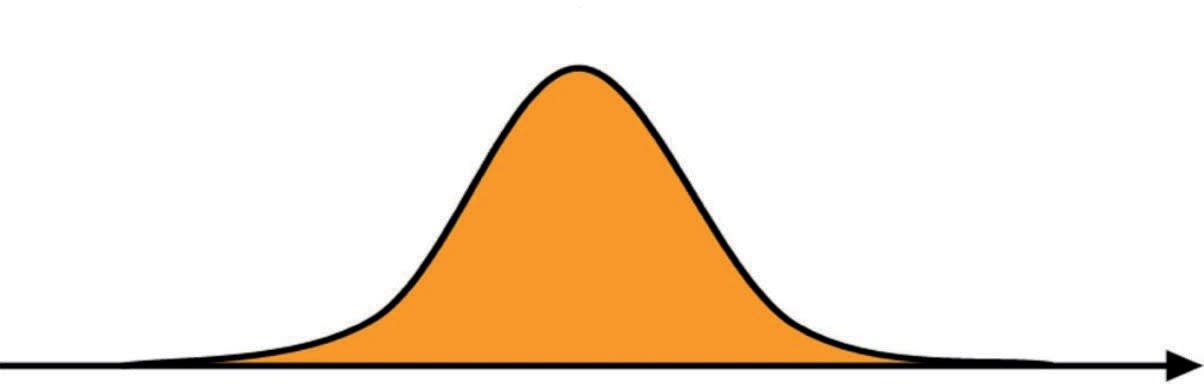
Figure 1: The Hubbert peak: a “mind size” result of dynamical models of complex systems.
Network Analysis
Many modern models are based on the concept of “network”. A network can be defined as a graphical representation of either symmetric or asymmetric relations between discrete objects/individuals. The objects are called nodes or vertices, and usually represented as points. We refer to the connections between the nodes as edges, and usually draw them as lines between points.
This kind of approach can lead to a clear mind-size representation of the diffusion of an epidemic: each node in the network represents a person. The edges between nodes represent social connections over which a disease can be transmitted (Dottori & Fabricius 2015) Ashby & Best 2021). In itself, the network representation does not generate a mind-size model of how the infection grows and then declines in time. Nevertheless, the mathematical implementation of the model can take into account the probability of infection spread through the neighbors of an infected node and of the recovery of already infected people. The resulting cycle is the same “bell-shaped” curve described in the previous section, as shown in Figure 1.
Networks can represent all sorts of systems in the real world. For example, one could describe the Internet as a network whose nodes are computers or other devices and whose edges are physical (including wireless) connections between the devices. The World Wide Web is a huge network where pages are the nodes and links are the edges. Other examples include social networks of acquaintances or other types of interactions, networks of publications linked by citations, and transportation, metabolic, and communication networks.
At the basis of a network analysis (Barnes & Harary 1983), graphs are an intuitive way of representing and visualizing the relationships between many objects even more than stock and flows. The dedicated branch of discrete mathematics called graph theory provides the formal basis for network analysis, across domains. It represents a common language for describing the structure of all those phenomena that can be modelled by networks.
However, as previously commented for the case study in 3.2, a large and complex modelling network requires a huge number of differential equations to describe the system. This is the case of large genetic networks (Bornholdt 2005). In fact, extrapolating the standard differential equations model of a single gene (with its several kinetic parameters) to large systems would render the model prohibitively complicated. One possible way to simplify such models would be to find a “coarse-grained” level of description for genetic networks. This means focusing on the system behavior of the network while neglecting molecular details wherever possible.
The Schrödinger equation
The Schrödinger equation describes a variety of phenomena involving quantum particles. This deceptively simple equation, in most cases, turns out to be impossible to solve, except in terms of approximations. In chemistry, it can describe the distribution of the electric charge around atomic nuclei and in complex molecules. The procedure to determine this distribution is as far as it can be from a “mind-size” concept, and the same is true in terms of understanding the results. Nevertheless, over the years, chemists have developed graphical concepts to help non-specialists understand the electron distribution around nuclei. These graphical objects are called atomic or molecular “orbitals,” a term that derives from the old interpretation of electrons “orbiting” around the nucleus. Although you need a certain level of training in chemistry to use orbitals as mental tools, they mercifully spare us from the details of the underlying quantum physics.
A solution of Schrödinger’s equation for one of the possible states of an electron associated with a hydrogen nucleus is given in Figure 3 as a “mind size” representation. These representations make sense for chemists, who use them to grasp some of the chemical

Figure 3: Calculated 3d orbital of an electron’s eigenstate in the Coulomb-field of a hydrogen nucleus. https:// e n.w ikiquote .org /w iki/Atomic_orbital#/me d ia/ File:Hydrogen_eigenstate_n3_l2_m0.png. CC BY-SA 3.0.
properties of atoms and molecules without the need of being experts in quantum mechanics. For instance, usually the interpretation of the aromatic properties of some organic molecules is understood in terms of these graphical representations of the electronic distribution.
Conclusion: How to Improve Communication in Science?
The global number of published scientific reports was estimated at ca. 50 million in 2010 (Jinha 2010). At a rate of 2-3 million papers published every year, nowadays this number may be closer to 100 million. Assuming that an article has an average length of 5 pages, we have a corpus of knowledge spanning some 500 million pages, with good possibilities of reaching one billion pages in the near future. The Bible, with about 1400 pages in its English version, is a leaflet in comparison.
What is the value of this giant mass of data? On this, we may cite Henry Poincaré, who said, “Science is built up of facts, as a house is built of stones. But an accumulation of facts is no more a science than a heap of stones is a house” (Poincaré, 1905). Of course, databases index scientific publications, but that does not necessarily create knowledge, just like a list of the shape and weight of each stone in the heap does not create a house.
Science is, after all, a human enterprise, and it has to be understood in human terms, otherwise, it becomes a baroque accumulation of decorative items, just like gold in the paws of a dragon. The accumulated knowledge of science must be somehow made “alive” if it has to generate further knowledge.
This is the key insight that Papert generated in 1980 in terms of “mind size models.” In order to be alive, science must have a comprehensible form. That does not mean renouncing the conventional accumulation of data and results in the form of specialized papers. It means that scientists should feel their duty to express results in the form of mind-size bites, understandable by their colleagues and, as much as possible, by the public. Scientific production and communication cannot be seen as separate tasks: they are one and the same thing. Of course, this idea will not make any inroads in science if it is not supported in some way, for instance by specific legislation aimed at redefining the parameters that control scientists’ careers and their salaries, especially avoiding the deadly trap of the “h-index.” But, more than legislation, perhaps what is needed is just a different attitude. Among other things, we need to reconcile modern “science” and humanism, as it used to be not long ago. We need to stop thinking that there exist “two cultures,” in the view of Charles Snow (1959). There is only one culture: the human culture, in the sense that ancient philosophers, such as Plato, had clear.
A return of “science” from the realm of the dragons’ caves for both scientists and the public to appreciate it is possible. The job of the dragonslayer is a little out of fashion nowadays, but it could still be useful (Heinlein 1961).
References
Abelson, H, Goodman, N & Rudolph, L 1974, Logo Manual. Cambridge: Massachusetts Institute of Technology, Artificial Intelligence Laboratory, LOGO Memo, No. 7.
Alvarez, L 1988, “Opinion. The bricks of scholarship”, The New York Times, Jan 21, p. 26.
Alvarez, LW, Alvarez, W, Asaro, F & Michel, HV 1980, “Extraterrestrial cause for the Cretaceous-tertiary extinction”, Science, vol. 208, pp. 1095–1108.
Andersson, DI et al. 2020, “Antibiotic resistance: turning evolutionary principles into clinical reality”, FEMS Microbiol. Rev., vol. 44, pp. 171–188. https://doi. org/10.1093/femsre/fuaa001
Ashby, B & Best, A 2021, “Herd immunity”, Curr. Biol., vol. 31, R174–R177. https://doi.org/10.1016/j.cub.2021.01... Aslam, B, et al. 2018, “Antibiotic resistance: a rundown of a global crisis”, Infect. Drug Resist., vol. 11, pp. 1645 1658. https://doi.org/10.2147/IDR.S173867
Bardi, U 2011, The limits to growth revisited, New York: Springer.
Bardi, U & Lavacchi, A 2009, “A simple interpretation of Hubbert’s model of resource exploitation”, Energies, vol. 2, pp. 646–661. https://doi.org/10.3390/en20300646
Barnes, JA & Harary, F 1983, “Graph theory in network analysis”, Soc. Netw., vol. 5, pp. 235–244. https://doi. org/10.1016/0378-8733(83)90026-6
Bol, T, Vaan, M de & Rijt, A van de 2018, “The Matthew effect in science funding”, Proc. Natl. Acad. Sci., vol. 115, pp. 4887–4890. https://doi.org/10.1073/pnas.1719557115
Bond, D & Wignall, P 2014. “Large igneous provinces and mass extinctions: an update”, Geol. Soc. Am., vol. 505, pp. 29–55. https://doi.org/10.1130/2014.2505(02)
Bornholdt, S 2005, “Less is more in modeling large genetic networks”, Science, vol. 310, pp. 449–451. https://doi. org/10.1126/science.1119959
Bramstedt, KA 2020, “The carnage of substandard research during the COVID-19 pandemic: a call for quality”, J. Med. Ethics, vol. 46, pp. 803–807. https://doi.org/10.1136/ medethics-2020-106494
Chu, JSG & Evans, JA 2021, “Slowed canonical progress in large fields of science”, Proc. Natl. Acad. Sci., vol. 118. https://doi.org/10.1073/pnas.2021636118
Data Bridge Market Research 2020, “Antibiotics market: global industry trends and forecast to 2027” [Online]. Retrieved from:
https://www.databridgemarketresearch.... reports/global-antibiotics-market (accessed 10.17.21).
Dottori, M & Fabricius, G 2015, “SIR model on a dynamical network and the endemic state of an infectious disease”, Physica A: Statistical Mechanics and its Applications, vol. 434, pp. 25–35. https://doi.org/10.1016/j. physa.2015.04.007
Gorshkov, VG, Makarieva, AM & Gorshkov, VV 2004, “Revising the fundamentals of ecological knowledge: the biota–environment interaction”, Ecol. Complex., vol. 1, pp. 17–36.
Gruber, H & Vonèche, J 1977, The essential Piaget: An interpretive reference and guide, New York: Basic Books. Heinlein, RA 1961, Stranger in a strange land, New York: Putnam Publishing Group.
Herrington, G 2021, “Update to limits to growth: comparing the World3 model with empirical data”, J. Ind. Ecol., vol. 25, pp. 614–626. https://doi.org/10.1111/jiec.13084
Hubbert, MK 1956, “Nuclear energy and the fossil fuels”, in: Spring meeting of the Southern district, American Petroleum Institute, Plaza Hotel, San Antonio, Texas, March 7–8-9,. San Antonio.
Jinha, A 2010, “Article 50 million: an estimate of the number of scholarly articles in existence”, Learn. Publ., vol. 23, pp. 258–263. https://doi.org/10.1087/20100308
Kendrick, M 2022, The clot thickens: The enduring mystery of heart disease, Cwmbran: Columbus Publishing Limited. Kermack, WO, McKendrick, AG & Walker, GT 1927, “A contribution to the mathematical theory of epidemics”,
Proc. R. Soc. Lond. Ser. Contain. Pap. Math. Phys. Character 115, pp. 700–721. https://doi.org/10.1098/ rspa.1927.0118
Kumar, SB, Arnipalli, SR & Ziouzenkova, O 2020, “Antibiotics in food chain: the consequences for antibiotic resistance”, Antibiotics, vol. 9, no. 10, p. 688. https://doi.org/10.3390/ antibiotics9100688
Latour, B 1993, We have never been modern, trans. C Porter, Cambridge: Harvard University Press.
Lenin, VI 1919, “The economic basis of the withering away of the state”, in: The state and revolution.
Maedi, S 2013, “Piaget’s theory in the development of creative thinking”, Res. Math. Educ., no. 17. https://doi. org/10.7468/jksmed.2013.17.4.291
Meadows, D, Meadows, DH, Randers, J & Behrens, W, Jr 1972. The limits to growth, New York: Universe Books.
Migheli, M & Ramello, GB 2021, “The unbearable lightness of scientometric indices”, Managerial and Decision Economics, vol. 42, no. 8, pp. 1933–1944.https://doi. org/10.1002/mde.34861944MIGHELIANDRAMELLO
Papert, S 1980, Mindstorms: computers, children, and powerful ideas, New York: Basic Books.
Perissi, I & Bardi, U 2021, The empty sea: The future of the blue economy, Springer International Publishing. https:// doi.org/10.1007/978-3-030-51898-1
Perissi, I, Bardi, U, Asmar, T & Lavacchi, A 2017, “Dynamic patterns of overexploitation in fisheries”, Ecol. Model., vol.
359. https://doi.org/10.1016/j.ecolmodel.2... Poincaré, H 1905, Science and hypothesis, Walter Scott Publ.
Reali, F, Chater, N & Christiansen, MH 2018, “Simpler grammar, larger vocabulary: How population size affects language”, Proc. R. Soc. B Biol. Sci., vol. 285: 20172586. https://doi.org/10.1098/rspb.2017.2586
Saltelli, A et al. 2020, “Five ways to ensure that models serve society: a manifesto”, Nature, vol. 582, pp. 482–484. https://doi.org/10.1038/d41586-020-01...
Snow, CP 1959, The two cultures, Cambridge: Cambridge University Press.
Turner, G 2008, “A comparison of The limits to growth with 30 years of reality”. Glob. Environ. Change, vol. 18, pp. 397–
411. https://doi.org/10.1016/j.gloenvcha.2... Serres, M 1968, Hermes ou la communication, Paris: Minuit. Serres, M 1982b, The parasite, trans. L Schehr, Baltimore: Johns Hopkins University Press.
Serres, M & Latour, B 1995, Conversations on science, culture and time, trans. R Lapidus, Ann Arbor: University of Michigan Press.