Frayed and tired of it? Rinpoche's three living antidotes.
Dear Subscribers,
Before we head into this week’s post, my heartfelt thanks for your wonderfully generous and excited response to my new novel. The Good Karma Refuge for Elephants is now out in the world, and I really do appreciate all your beautiful messages and kind online reviews.
How lucky am I?!
As we head into the final stretch of the year, I know that many people are, however, feeling a kind of cumulative fatigue that creeps in at the edges. A sense of being worn down by the challenges we face ourselves, or the ones weighing on people we love. A feeling that we are living through permanent crises with no let-up. Over-saturated, overstimulated, and over-it, many are tuning out, disengaging, and curling inward in self-protection mode.
And yet… there is another way to meet this moment.
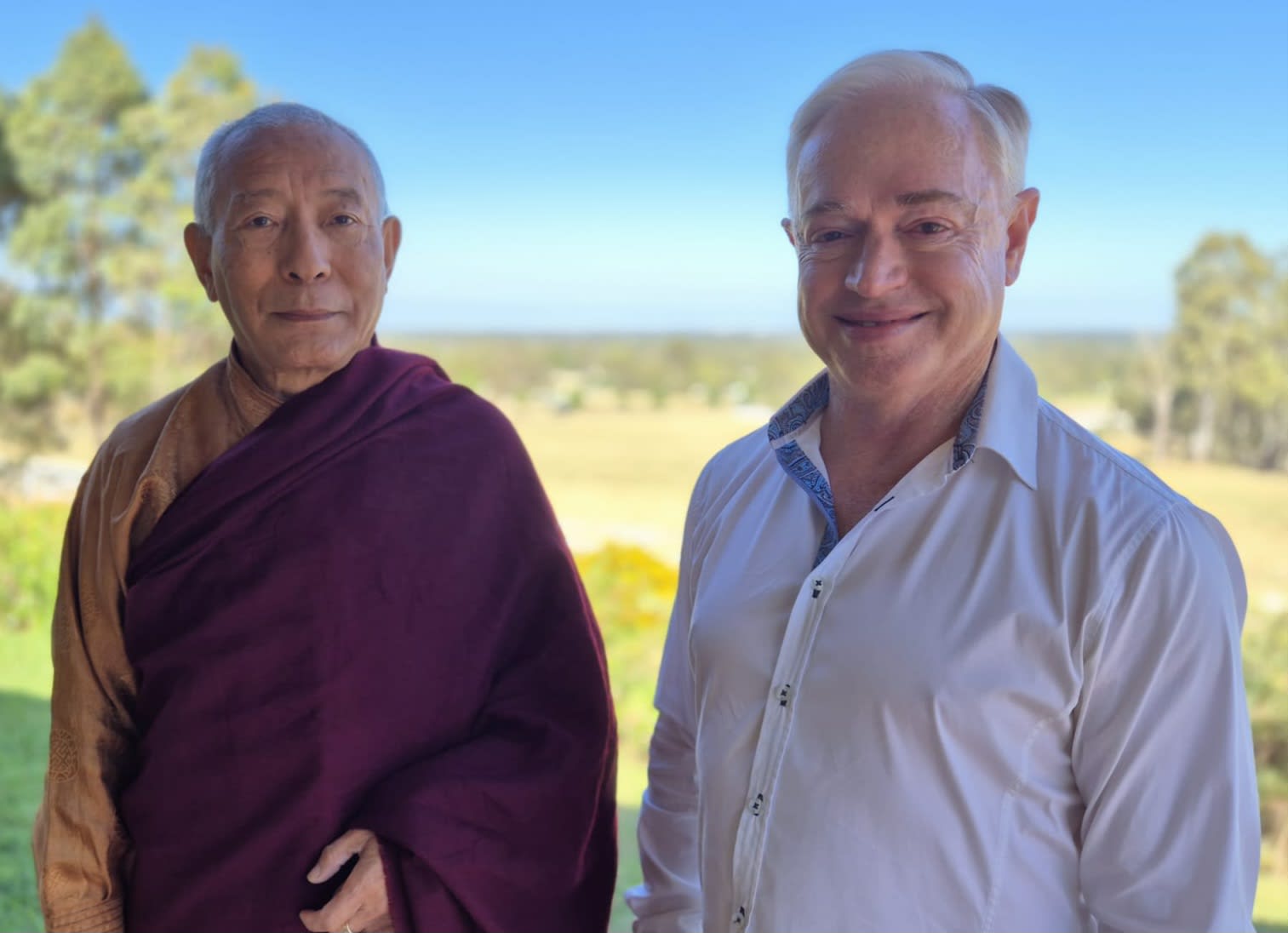
I have just come away from a week in the presence of my kind and precious guru, Zasep Tulku Rinpoche. Based in Nelson, British Columbia, Rinpoche is now almost 78—and in the past year alone he has travelled to Mexico and Bolivia, to his centres across Canada and Australia offering empowerments and retreats, to Africa on Mindful Safari, and to South Korea and Mongolia (twice). In every place, students line up with worries about health, relationships, finances, and family. Students email and message him day and night, from every time zone.
If anyone should be feeling frayed and fatigued, surely it would be him.
But no. Rinpoche moves through the world with a lightness, spontaneity, and irrepressible good humour that is quietly contagious. It is impossible to be around him and not feel lifted. He cares deeply about the world, and he certainly has political opinions—but none of these things define him, or weigh him down. His vision is simply too wide, too compassionate, and too joyful for that.
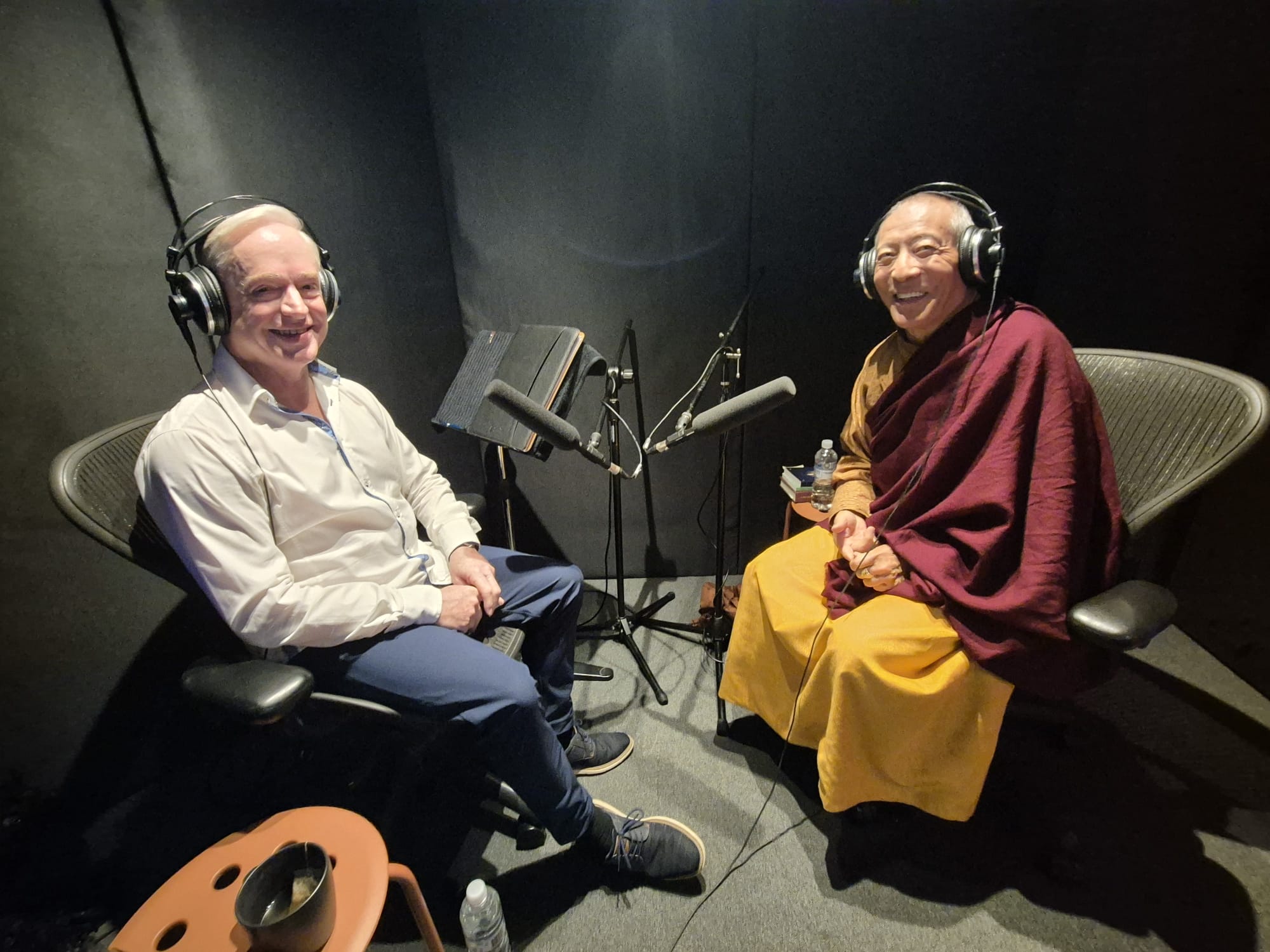
Over the past fortnight I’ve had the privilege of spending long hours recording with Rinpoche in the studio, preceded by a week of teachings at the Tibetan Buddhist Society gompa in Perth. Earlier this year, Koala and I also spent time with him on a special Tara Safari in Africa. With all of this still very fresh in my heart, I wanted to try and capture something of what makes Rinpoche such an extraordinary human being—someone fully in the world, while remaining wonderfully, delightfully untouched by it. Someone I’d like to be more like.
Three qualities stand out as living antidotes for these weary times.
1. Everything arises from mind itselfRinpoche is a yogi, born and raised in Tibet. Recognised as a tulku at five, rigorously trained, and steeped in insight, he lives from the deep knowing that everything arises from mind. Our entire experience of reality is shaped by awareness—not in a “nothing exists” sense, but in the sense that the way things exist for us is a result of our conditioning, habits, and karma.
This understanding isn’t theoretical for him. It’s lived.
Last week, he paused over his Tibetan texts, looked up, and said with typical clarity:
“We can make a decision not to whine and complain and go on about blah blah blah. Only we can do that. No one can do it for us. If we choose, we can focus on positive things. Changing our mind”—and here he mimed changing gears in a car—“is like shifting gear. We can choose.”
This, of course, is a constant theme in what I write about here. Not because it’s new, but because we all need reminding. Me very much included. We are constantly being invited into the trance that reality “out there” is fixed and factual, reinforced minute by minute by social media, news commentary, and conversations with friends.
But as Viktor Frankl wrote after surviving the Holocaust, even when everything is taken from us, we still have the freedom to choose our thoughts.
Marcus Aurelius echoed it:
“If you are distressed by anything external, the pain is not due to the thing itself, but your estimate of it.”
Rinpoche seems to meet each moment unburdened—without baggage or projection, without needing to affirm a particular idea of himself. He comes from openness. From freshness. From a clarity of heart that is almost palpable. And that state of mind is available to all of us.
2. We are multi-life beings, constantly creating our futureThere is a saying in Buddhism:
“If it is about this life, it is not Dharma. If it is about the future, it is Dharma.”
Meaning: the true perspective is the long one.
Rinpoche says he doesn’t remember his previous lives in detail—just odd moments of déjà vu, as many of us have. But what is unmistakable is that he lives with the awareness of continuity, of causes and conditions flowing over lifetimes.
Just as we can look back now on decisions we made in our twenties with a knowing smile—or wince—Rinpoche sees these patterns playing out across lifetimes. Generosity leading to prosperity. Cruelty or selfishness manifesting later as obstacles or suffering.
One day, driving together, we spoke about how difficult it is to explain to good, gentle people that their current suffering may be the result of karma from a previous life—karma they don’t remember. It can feel unfair, almost inhuman. But this isn’t about blame. It’s simply the law of cause and effect at a bigger scale than we usually consider.
Rinpoche often emphasises how negative mental states affect the body. Anger can harm the heart. Sorrow the lungs. Karma plays out over differing timescales, but it can be cleansed at any moment.
The deeper point, which landed again and again in his presence, is this:
Everything that unfolds begins in mind first. Today’s thoughts shape tomorrow’s reality—and the next lifetime’s too.
So when we allow ourselves to be swept into despair by the day’s headlines, we are not just damaging our mood—we are shaping the architecture of our future. Why sacrifice the happiness of lifetimes by engaging with a sensationalised news cycle?
 3. Gratitude is the source of abundance
Rinpoche says “thank you” constantly. He lives in the rhythm of giving and receiving. Born in a Tibetan yurt with none of the amenities we take for granted, he is now a multilingual global nomad—equally at ease with a smartphone as with a vajra and bell.
What struck me again this week is how naturally he lives in appreciation. Tiny things delight him. If he doesn’t get his preferred food or drink, he doesn’t sink into disappointment. He doesn’t complain. There is always something else to enjoy.
What he does possess, abundantly, is equanimity. And equanimity is its own form of wealth. It makes every place, every person, every moment feel workable.
This isn’t just my rose-coloured view as his student. Last weekend at the recording studio, people with no background in Buddhism melted in his presence within minutes. They wanted to help him. They responded instinctively to his humour, his light, his wholehearted attention. It is very difficult not to love someone who sees you so clearly and with such self-evident benevolence.
Summary: Three antidotes for a weary worldIf you’re feeling a little blah, worn out, or weighed down as yet another festive season barrels toward us, I hope these glimpses from my time with Rinpoche help to gently reorient your heart:
• Our experience of reality depends on our mind.
We can shift gears. We can choose a different focus for our attention.
• These precious human lives are fleeting and filled with possibility.
The mind habits we indulge today shape lifetimes. Guard your equanimity as fiercely as you would your most cherished possession.
• Gratitude transforms the ordinary into the extraordinary.
Wonder is not naïve — it is a form of wisdom. And it leads us back, again and again, to a authentic appreciation.
As Rinpoche shows, when we cultivate gratitude, openness, and the quiet courage to return to our better nature, we guide our hearts to where the beauty is.

Photo: Biscuit - the dog formerly known as ‘Piglet’
This week’s good news update comes to us from Sarah Carter at Twala Trust, one of the three non-profits supported by paying subscribers:
“‘Piglet’ arrived at Twala with 14 other unwanted puppies. He was the littlest by far and was bullied by the others. Of course our volunteers took one look at that darling face with the biggest ears and the piggiest little snoot and scooped him up to live with them in to volunteer house.
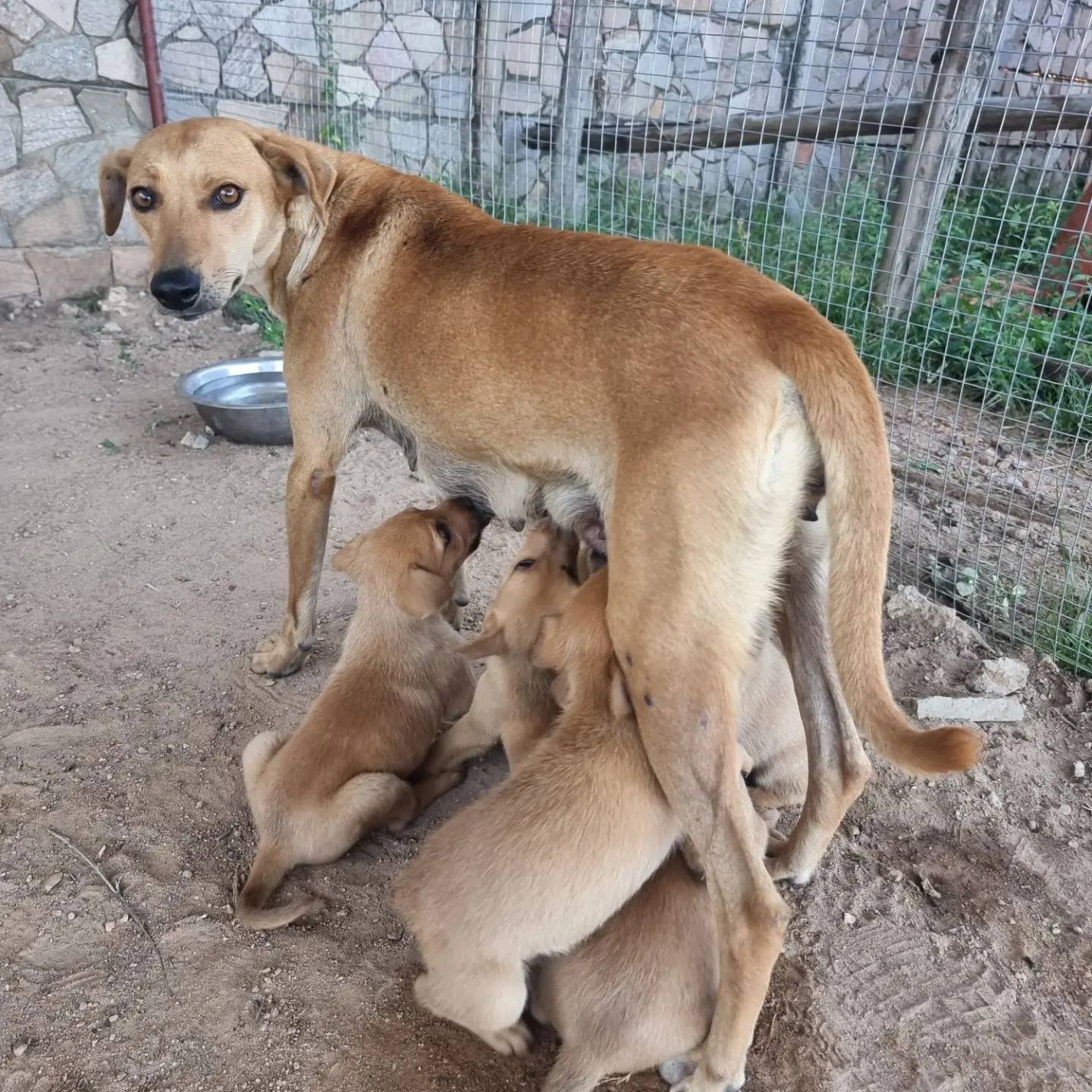
Photo: ‘Piglet’ as one of 14 unwanted puppies when first arriving at Twala Trust in Goromonzi, Zimbabwe
“One by one the other puppies found homes. ‘Piglet’ kept on hoping his special person would find him. He lived with a bunch of old dogs and of course volunteers came and went, and ‘Piglet’ felt he hadn’t yet found his place in the world.
And then he met Andy and his family. Over the course of a few weeks, And, his sons and ‘Piglet’ made that magical connection on visits to Twala, and ‘Piglet’ found his forever family at last.
He had lots of adjustments to make and his family were right alongside him as he learnt, working with a trainer and becoming a Very Good Boy.
When his family returned to the USA, Piglet - now Biscuit - went with them, all the way to Maryland! There he lives the happiest life we could wish for this little African dog!
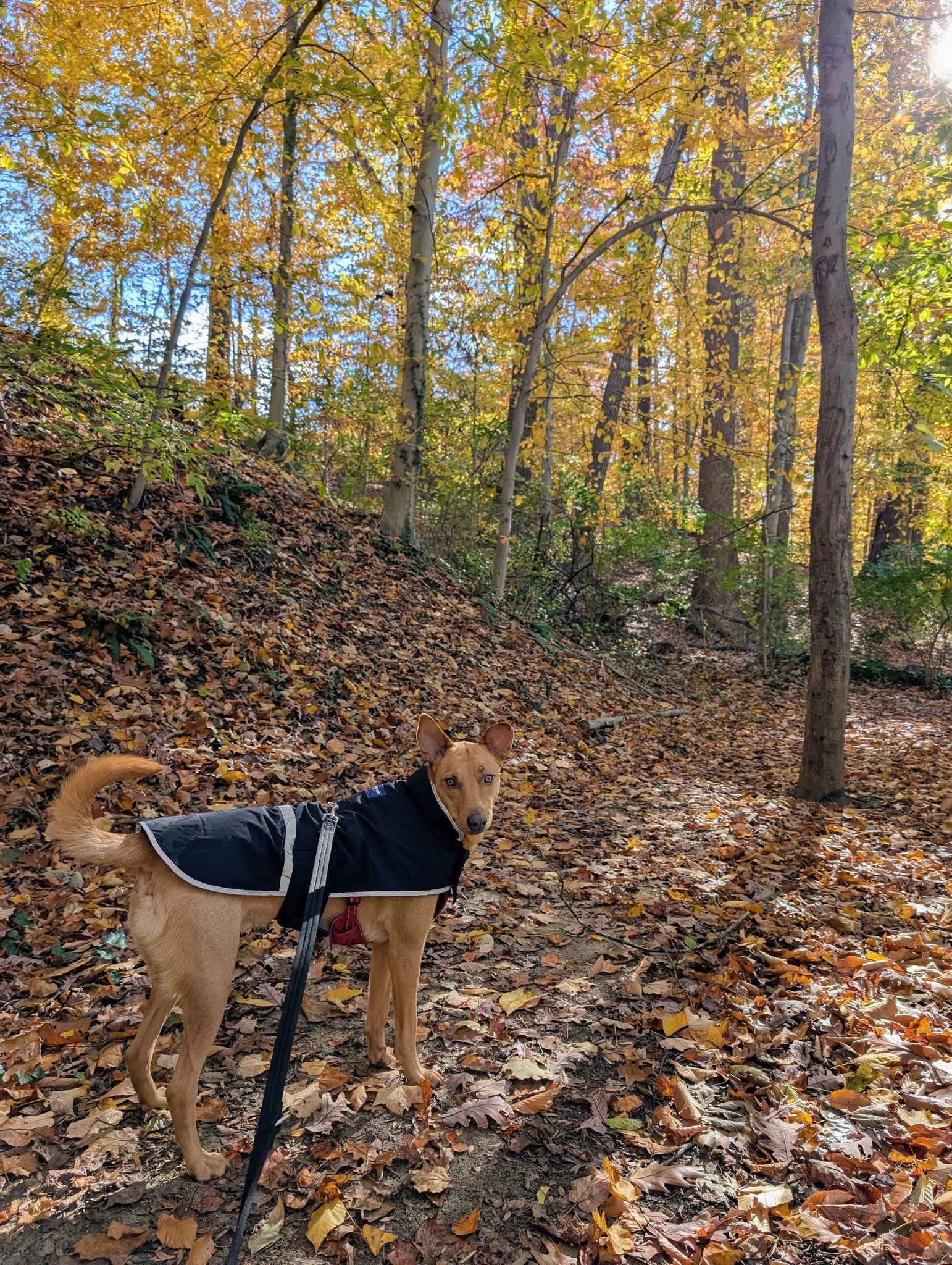
Photo: Biscuit in Maryland. Walkies!
Thank you to Andy and family for choosing ‘Piglet’ and taking him with you to the other side of the world as a part of your family.”
David here again:
And thank you to all the Dalai Lama’s Cat newsletter paying subscribers who do so much to help the ‘Goromonzi Piglets’ of this world become ‘Maryland Biscuits’!
There is something quite magical and deeply fulfilling about playing a small part in these real-life and extraordinary stories of rescue, interconnection and compassion in action.
Whatever else happens today, this we have done.
May all beings have happiness and its causes!
May all beings be free from suffering!