
Find & Share Quotes with Friends
Economic Development Quotes
Quotes tagged as "economic-development"
Showing 1-30 of 45
“Mom & pop stores are not about something small; they are about something big. Ninety percent of all U.S. businesses are family owned or controlled. They are important not only for the food, drink, clothing, and tools they sell us, but also for providing us with intellectual stimulation, social interaction, and connection to our communities. We must have mom & pop stores because we are social animals. We crave to be part of the marketplace. ”
― The Mom & Pop Store: How the Unsung Heroes of the American Economy Are Surviving and Thriving
― The Mom & Pop Store: How the Unsung Heroes of the American Economy Are Surviving and Thriving

“People tend to buy more at a lower price and less at a higher price. Also, people who produce goods or supply services tend to produce more at higher prices and less at lower prices. This juxtaposition constitutes equilibrium.”
― Principles of a Permaculture Economy
― Principles of a Permaculture Economy

“The so-called socialist societies rediscover, under modified forms, the necessities inherent in any modern economic system. There, just as under capitalism, the ‘boss class’ lays down the law. (...) Up to now the planners, by reason of penury and of the decision to develop economic power as rapidly as possible, have not concerned themselves either with the productivity of the various investments or with the consumers’ preferences. It will not be long before they experience the perils of slump and deflation and the exigencies of economic arithmetic.”
― The Opium of the Intellectuals
― The Opium of the Intellectuals

“There is no such thing as philanthropy, because the money that the billionaires pretend to donate, belong to the people anyways.”
― Hometown Human: To Live for Soil and Society
― Hometown Human: To Live for Soil and Society
“Transportation systems are a major area of opportunity for cities seeking to issue sustainability bonds.”
―
―
“The idea of waste is non existent in a Permacapital Economy.”
― Principles of a Permaculture Economy
― Principles of a Permaculture Economy
“We will only secure a prosperous, peaceful and liveable planet if we harness economic growth and development to social solidarity across and between generations.”
―
―
“Gone are days when politics was an adventure of the hegemonic masculinity, when men were canonized and women demonized for being in politics. A Woman's strength lies in her intuition and femininity which when harnessed through proper education, give her the autonomy and power to participate in democracy and leadership. Women economic empowerment is a promise of a better and sustainable future.”
―
―
“Economy is a living project, And with cooperation and determination, We'll build a better future for every nation.”
―
―
“Poverty has many dimensions, but its causes include unemployment, social exclusion, and high vulnerability of certain populations to disasters, diseases and other phenomena which prevent them from being productive.”
―
―
“Inter-jurisdictional competition for growth can and does lead to potentially misplaced investments - stadiums instead of schools, highways instead of health care. There is nothing intrinsic about the mark in jurisdictions that ensures that it will produce the right kind of spending, even if we knew that that spending was.”
―
―
“Our goal might be more ambitious, directed toward restructuring capital's constraints altogether. Recall that the rejection of the corporatist medieval and early colonial city represented the end of monopoly, mercantilism, and autocracy in favor of open markets, democracy, and individual economic freedom. One may wish to reassert these same goals in the face of the power and authority of large, hierarchical corporate entities. The goal of the city would be to become less a passive recipient of global capital than a shaper of local capital in a direction more conducive to freedom.”
―
―
“If geographically uneven economic development is a deep feature of economies on all scales, as economic geographers tell us, then the existence of leading and lagging economies will be a long-term feature of the landscape. And competition will merely exacerbate the shift of productive enterprise to leading places, generate unproductive races to the bottom, or induce lagging cities to give up altogether.”
―
―
“The stories of failure are commonplace. Reporting that, five years after locating there, IBM fired most of its employees in Dubuque and Columbia despite a combined $84 million in tax breaks, the author of a Bloomberg News story noted that this scenario has 'played out often across America: Big company comes to town, provides boost to the local economy and then leaves.' The Kelo case ended similarly: New London provided Pfizer with significant subsidies only to see the company depart a few years later.”
―
―
“Indeed, the move to connect public subsidy and private compliance must be understood in the context of the postwar history of urban redevelopment initiatives, most of which have been considered failures. A thorough history of these programs is beyond this chapter, but the litany of criticisms is familiar: Urban redevelopment has relied too heavily on private-side investment; it has emphasized displacement and gentrification over reinvestment; it has lacked citizen participation or neighborhood input; and it has been riddled with patronage, incompetence, and distribution to favored groups. Mostly, however, urban redevelopment policy has been unsuccessful.”
―
―
“One of the first modern American clawback provisions was adopted by New Haven over twenty years ago. Now twenty states and over on hundred cities have clawback provisions.”
―
―
“Local and state tax incentives are much less visible because they do not constitute a direct charge to local budgets and are often paid for by future generations through municipal debt. This relative invisibility makes it much less probable that the local political process can be counted on to prevent bad incentive deals.”
―
―
“If a nation is not able to monetize its assets, then it’ll have to beg for money from the developed parts of the world.”
― Mad About Humans: World Maker's Almanac
― Mad About Humans: World Maker's Almanac
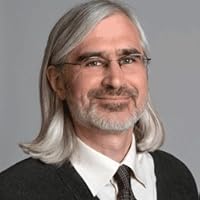
“The premise of this book is that basic goods, namely those goods and services that meet basic human needs, are at the center of human progress. The approach views basic goods as the ingredients of well-being in that they allow human beings to be secure, healthy, literate, and able to participate effectively in their societies. They are the material prerequisites of capability expansion and can help to support growth processes. Basic goods provision is part of minimalist approaches to ethics and systems of basic human rights, namely subsistence rights. Significant deprivations in basic goods and services are widespread, and we face significant challenges to overcoming these deprivations. Basic goods might not be what matters above all else, but they nonetheless matter a great deal.”
― No Small Hope: Towards the Universal Provision of Basic Goods
― No Small Hope: Towards the Universal Provision of Basic Goods
“Buy less, buy local, to construct a sustainable economy.”
― Giants in Jeans: 100 Sonnets of United Earth
― Giants in Jeans: 100 Sonnets of United Earth
“If you wanna see economic equity, start by supporting your local business. One small business in one small neighborhood, is the backbone of sustainable economic progress.”
― Giants in Jeans: 100 Sonnets of United Earth
― Giants in Jeans: 100 Sonnets of United Earth
“Dollar of Disparity (The Sonnet)
Millions of people go without food,
For some privileged nimrods to afford their luxuries.
Millions of people have no access to essentials,
So that celebrities can buy their lamborghinis.
The difference between phony activists and a reformer,
Is not in what they say but in their lifestyle and action.
In a world that still suffers from the lack of essentials,
Indulgence in luxury is human rights violation.
What people do with their money is not a private affair,
Each penny above necessity belongs to social welfare.
One who talks of equality while riding in a Rolls Royce,
Is the last person to be concerned of people's despair.
None has a right to luxury till all can access necessities.
Every dollar spent on luxury is a dollar of disparity.”
― Giants in Jeans: 100 Sonnets of United Earth
Millions of people go without food,
For some privileged nimrods to afford their luxuries.
Millions of people have no access to essentials,
So that celebrities can buy their lamborghinis.
The difference between phony activists and a reformer,
Is not in what they say but in their lifestyle and action.
In a world that still suffers from the lack of essentials,
Indulgence in luxury is human rights violation.
What people do with their money is not a private affair,
Each penny above necessity belongs to social welfare.
One who talks of equality while riding in a Rolls Royce,
Is the last person to be concerned of people's despair.
None has a right to luxury till all can access necessities.
Every dollar spent on luxury is a dollar of disparity.”
― Giants in Jeans: 100 Sonnets of United Earth
“In the world we live in economic growth doesn't actually mean collective economic growth, it is actually code for selective economic growth, which means, exclusive prosperity of a select group of people.”
― Şehit Sevda Society: Even in Death I Shall Live
― Şehit Sevda Society: Even in Death I Shall Live

“Gone are the days for the Law of Supply and Demand. For now, the world operates on "DOP" i.e. Demand and Overpowered. The demand arisen in the third world countries get them overpowered by first world and the "DOP Colonization" enjoys its full swing.”
― Puppet
― Puppet
“So long as greed drives the economy, it's not economy, but catastrophe.”
― Ingan Impossible: Handbook of Hatebusting
― Ingan Impossible: Handbook of Hatebusting
“Statism overvalues human rationality, disregards the complexity of social interaction, and ignores the learning from the system of trial and error that has produced economic development and peace among nations through trade relations.”
―
―

“Noting that the rise in IQ scores “is concentrated in nonverbal IQ performance,” which is “mainly tested through visual tests,” she attributed the Flynn effect to an array of factors, from urbanization to the growth in “societal complexity,” all of which “are part and parcel of the worldwide movement from smaller-scale, low-tech communities with subsistence economies toward large-scale, high-tech societies with commercial economies.” We’re not smarter than our parents or our parents’ parents. We’re just smart in different ways.”
― The Shallows: What the Internet Is Doing to Our Brains
― The Shallows: What the Internet Is Doing to Our Brains
“A payment system that works only under perfect conditions does not have a strong infrastructure. It is a fragile convenience.”
― Digital Payments and the New Economy: How Cashless Innovation Is Transforming Global Finance, Inclusion, and Growth
― Digital Payments and the New Economy: How Cashless Innovation Is Transforming Global Finance, Inclusion, and Growth
All Quotes
|
My Quotes
|
Add A Quote
Browse By Tag
- Love Quotes 102.5k
- Life Quotes 81k
- Inspirational Quotes 77.5k
- Humor Quotes 45.5k
- Philosophy Quotes 32k
- Inspirational Quotes Quotes 28.5k
- God Quotes 27k
- Wisdom Quotes 25k
- Romance Quotes 25k
- Truth Quotes 25k
- Poetry Quotes 24.5k
- Life Lessons Quotes 23k
- Quotes Quotes 21.5k
- Death Quotes 21k
- Happiness Quotes 19k
- Hope Quotes 19k
- Faith Quotes 18.5k
- Inspiration Quotes 18k
- Relationships Quotes 16k
- Spirituality Quotes 16k
- Motivational Quotes 16k
- Religion Quotes 15.5k
- Life Quotes Quotes 15.5k
- Writing Quotes 15k
- Love Quotes Quotes 15k
- Success Quotes 14.5k
- Motivation Quotes 14k
- Time Quotes 13k
- Science Quotes 12.5k
- Motivational Quotes Quotes 12k