
Find & Share Quotes with Friends
Indian Philosophy Quotes
Quotes tagged as "indian-philosophy"
Showing 1-30 of 35

“When we two parted,
there was no agony in either
of the two
who
lived all our lives together,
so close and near,
and so, so dear
one could hardly guess
one from the other.”
― Thoughts Between Life and Death
there was no agony in either
of the two
who
lived all our lives together,
so close and near,
and so, so dear
one could hardly guess
one from the other.”
― Thoughts Between Life and Death
“Only if I knew
that knowing it would bring
a burden I could seldom carry
and ferry among those I know,
only to be rejected.”
― Thoughts Between Life and Death
that knowing it would bring
a burden I could seldom carry
and ferry among those I know,
only to be rejected.”
― Thoughts Between Life and Death
“And we are still here
walking in this maze of perplexing
entries and problematic exits.
No words exchanged.
Even our eyes seldom throw
some letters of compassion or contempt
on each other.
I believe you, and I do so.
I know only you may show
the final door to enter
with no exit that follows.”
― Thoughts Between Life and Death
walking in this maze of perplexing
entries and problematic exits.
No words exchanged.
Even our eyes seldom throw
some letters of compassion or contempt
on each other.
I believe you, and I do so.
I know only you may show
the final door to enter
with no exit that follows.”
― Thoughts Between Life and Death
“Justice
A mother will die.
A child will be saved.
A serpent will always bite.
Beyond the sentimental values
we often inscribe on whatever we can,
the jury and the executioner, in this case,
are one and the same, and their perception of justice –
airtight!
Untouched by the melodrama.”
― Thoughts Between Life and Death
A mother will die.
A child will be saved.
A serpent will always bite.
Beyond the sentimental values
we often inscribe on whatever we can,
the jury and the executioner, in this case,
are one and the same, and their perception of justice –
airtight!
Untouched by the melodrama.”
― Thoughts Between Life and Death

“Life can be understood, says the Hindu, only on the assumption that each existence is bearing the penalty or enjoying the fruits of vice or virtue in some antecedent life. No deed small or great, good or bad, can be without effect; everything will out. This is the Law of Karma—the Law of the Deed —the law of causality in the spiritual world; and it is the highest and most terrible law of all. If a man does justice and kindness without sin his reward cannot come in one mortal span; it is stretched over other lives in which, if his virtue persists, he will be reborn into loftier place and larger good fortune; but if he lives evilly he will be reborn as an Outcaste, or a weasel, or a dog. This law of Karma, like the Greek Moira or Fate, is above both gods and men; even the gods do not change its absolute operation; or, as the theologians put it, Karma and the will or action of the gods are one. But Karma is not Fate; Fate implies the helplessness of man to determine his own lot; Karma makes him (taking all his lives as a whole) the creator of his own destiny. Nor do heaven and hell end the work of Karma, or the chain of births and deaths; the soul, after the death of the body, may go to hell for special punishment, or to heaven for quick and special reward; but no soul stays in hell, and few souls stay in heaven, forever; nearly every soul that enters them must sooner or later return to earth, and live out its Karma in new incarnations.”
― Our Oriental Heritage
― Our Oriental Heritage

“Spirituality is not about 'the doings' but 'the living'. Once chosen, one ought to follow it 24x7 endlessly to be spiritual.”
―
―
“Spirituality is not about rituals but purport. And without that, no path would take you anywhere.”
―
―
“Spirit is a subtle force, somewhat like electricity. One cannot confine or attach it to any object. Accordingly, spirituality is about transcending every limit: caste or creed or country or anything else.”
―
―
“Spirituality greatly depends on dispassion. Cravings for the worldly feat and spiritual growth are contradictory.”
―
―
“Perseverance is the paramount quality on the spiritual path. To succeed, one must make a firm resolve to not deviate from this path despite all odds.”
―
―
“The three best friends of a spiritual seeker are self-study, self-control, and selfless service.”
―
―
“Self-study means studying, in the light of scriptures, our body and mind to make the necessary rectifications, and our soul to reinstate its correlation.”
―
―

“I came to philosophy first through Plato. I was very interested in Plato, the person and his works.
[The] Republic is a much larger work. I was fascinated particularly by his Symposium. It is a beautiful work with Plato’s signature dialogues and the speech on Socrates, Aristophanes and others. I read the history of western philosophy and eventually moved to Indian philosophy.”
― An Examined Life: Essays and Reflections by Karan Singh
[The] Republic is a much larger work. I was fascinated particularly by his Symposium. It is a beautiful work with Plato’s signature dialogues and the speech on Socrates, Aristophanes and others. I read the history of western philosophy and eventually moved to Indian philosophy.”
― An Examined Life: Essays and Reflections by Karan Singh
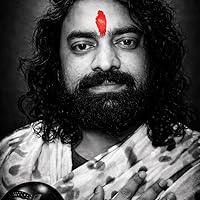
“Your dreams and your actual life have different paces. For most people, dream life runs too fast for them. They continuously dream and after a few years, they realize that in real life, they have not moved a bit. Eventually, this gap between achieving in real life and in dream life is at the core of all the pain we suffer.”
―
―

“The universe has been distinguished into seven different spheres:
7th Sphere, Satyaloka: The sphere of God, Sat - the only Real Substance in the universe.
6th Sphere, Tapoloka: Eternal Patience
5th Sphere, Janaloka: Sphere of spiritual reflection, wherein the idea of separate existence of Self originates.
4th Sphere, Maharloka: Sphere of the Atom, the beginning of the creation of Darkness, Maya. This, the connecting link, is the only way between spiritual and the material creation, and is called the Door.
3rd Sphere, Swarloka: Sphere of magnetic aura, the electricities.
2nd Sphere, Bhuvarloka: The sphere of electric attributes. It is conspicuous by the presence of the fine matters only.
1st Sphere, Bhuloka: The lowest sphere, the sphere of gross material creation, which is always visible to everyone.”
― The Holy Science
7th Sphere, Satyaloka: The sphere of God, Sat - the only Real Substance in the universe.
6th Sphere, Tapoloka: Eternal Patience
5th Sphere, Janaloka: Sphere of spiritual reflection, wherein the idea of separate existence of Self originates.
4th Sphere, Maharloka: Sphere of the Atom, the beginning of the creation of Darkness, Maya. This, the connecting link, is the only way between spiritual and the material creation, and is called the Door.
3rd Sphere, Swarloka: Sphere of magnetic aura, the electricities.
2nd Sphere, Bhuvarloka: The sphere of electric attributes. It is conspicuous by the presence of the fine matters only.
1st Sphere, Bhuloka: The lowest sphere, the sphere of gross material creation, which is always visible to everyone.”
― The Holy Science
“When Divine Love becomes well developed, Ignorance (Maya) begins to be withdrawn.”
― The Holy Science
― The Holy Science
“As Hindu thought and metaphysical experiences evolved even further (as I said, the Hindu lineage is very long), the two previous focuses of exploration—nature and the individual—were combined. You could find the Eternal by either means, they discovered, and they combined the two in the form of a summary of all previous findings. This summary was called the Bhagavad Gita.”
― The Brihadaranyaka Upanishad 101: a modern, practical guide, plain and simple.
― The Brihadaranyaka Upanishad 101: a modern, practical guide, plain and simple.
“The ultimate lesson of the Upanishads is that God must not be sought as something far away, separate from us, but rather as the closest, most intimate aspects of our own being.”
―
―
“Though each of the Vedas may be regarded as a separate work, their composition must have originated contemporaneously. Thus there is no clear division between the notion of the personification of stellar, atmospheric and chthonic phenomena and the henotheistic and henotic notions that finally superseded them. Some members of the brahmin and ksatra classes, and even of the südra, joined secret coteries in the seclusion of the forest and composed radical Äranyakas and Upanisads, which rejected ritual sacrifice as the sole means of liberation (moksa), and introduced a monistic doctrine. Such ideas challenged the stereotyped theological dogmas and revitalized religion in India. So great was their impact that the Äranyakas and Upanishads were finally regarded as the fulfilment of Vedic nascent aspirations, and therefore called the Vedanta, the end or conclusion ‘anta’ of the Veda.”
― Dictionary of Hinduism: Its Mythology, Folklore and Development 1500 BC - AD 1500
― Dictionary of Hinduism: Its Mythology, Folklore and Development 1500 BC - AD 1500
“Shankara’s views were gradually accepted, possibly because he presented brahman both as the cosmic principle and as a personal god (isvara), which added emphasis to the teaching of the later Upanisads and to that of Patañjali. Advaita Vedanta thus reinforced the teaching of the Bhagavadgitä and the concept of liberation (mukti) by grace (prasäda), faith (sraddha), and devotion (bhakti). It succeeded in reviving the ancient belief in the affinity of mankind with the world of nature. From being merely one of the darsanas, the Vedanta became an element that permeated all Hindu cults and dissolved sectarian distinctions. It gave to the Supreme Essence (paramätman), Vishnu and Shiva the common, all-inclusive designation, ‘Isvara’.”
― Dictionary of Hinduism: Its Mythology, Folklore and Development 1500 BC - AD 1500
― Dictionary of Hinduism: Its Mythology, Folklore and Development 1500 BC - AD 1500
“Buddha himself is reported to have remarked that he has propounded the doctrines which are ekamsika(one sided) and anekamasikas(many-sided). Matilal says that the word was probably another name for anekanta and could be taken as a precursor of the Jaina Anekanta doctrine”
― Vada in Theory and Practice
― Vada in Theory and Practice


“Many cultures beat together within the Indian heart.”
― Vande Vasudhaivam: 100 Sonnets for Our Planetary Pueblo
― Vande Vasudhaivam: 100 Sonnets for Our Planetary Pueblo
“The text has to be studied with a great patience, a great passivity, waiting for experience, waiting for light & then waiting for still more light. Insufficient data, haste of conclusions, wilful ramming of one’s own favourite opinions into the text, wilful grasping at an imperfect or unfinished experience, wilful reading of a single narrow truth as the sole meaning of this complex harmony of thought, experience & knowledge which we call the Veda,—these are fruitful sources of error. But if a man can make his mind like a blank slate, if he can enter into the condition of bottomless passivity proper to the state of the calm all-embracing Chaitanya Atma, not attempting to fix what the Truth shall be, but allowing Truth to manifest herself in his soul, then he will find that it is the nature of the Sruti to reveal perfectly its own message…..By entering into communion with the soul of the thinker which still broods behind the inspired language, we come to realise what he saw, and what he put into his words, what waits there to make itself known to us.”
― Reading Sri Aurobindo
― Reading Sri Aurobindo
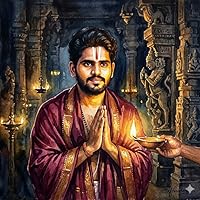
“The AI serves as the 'Mirror of Logic'—it cannot see the Sun, but it can show you the perfect geometry of its rays.”
― The Logic of Liberation: “The Steady Lamp vs. The Lightning Flash”
― The Logic of Liberation: “The Steady Lamp vs. The Lightning Flash”

“कविता उन में विलीन हो रही है, वह कविता में और शेष है सिर्फ असीम अखंडित आनंद जो एक अखंड शून्य की भाँति अगणित भागों में खण्डित हो रहा, किन्तु प्रत्येक भाग वही पूर्ण शून्य है।”
― त्रिकूट: धर्म का चक्रव्यूह
― त्रिकूट: धर्म का चक्रव्यूह
“प्रवरा रूपी शक्ति आज कल्याण रूपी शिव को ढूँढ रही थी, जिसके संग से पूर्ण अर्द्धनारीश्वर सा चमत्कार प्रकट होने वाला था। वही अर्द्धनारीश्वर तत्त्व जिसके पूर्ण अभाव से पुरुष एक शक्तिशाली यंत्र मात्र बन जाता है और स्त्री मात्र एक सजीली वस्तु, पौरुष मात्र अहंकार बन जाता है और स्त्रीत्व मात्र प्रदर्शन। एक मानवीय स्वतंत्रता का दमन करने लगता है तथा दूसरे की स्वतंत्रता स्वच्छंदता में परिवर्तित होने लगती है। इसी तत्व के अभाव में रावण और सूर्पनखा का जन्म होता है। ये दोनों असंतुलित ऊर्जाएँ उन्मुक्ततता का रूप ले लेतीं हैं तथा इसके भी चरम से चमत्कार प्रकट होता है, विनाशकारी चमत्कार- शिव का प्रलयंकारी तांडव।”
― त्रिकूट: धर्म का चक्रव्यूह
― त्रिकूट: धर्म का चक्रव्यूह

“O sire, I would impart to thee another sacred lesson productive of great fruits, and which is the highest of all teachings, viz., virtue should never be forsaken from desire, fear, or temptation, nay, nor for the sake of life itself. Virtue is everlasting; pleasure and pain are transitory; life is, indeed, everlasting but its particular phases are transitory. Forsaking those which are transitory, betake thyself to that which is everlasting, and let contentment be thine, for contentment is the highest of all acquisitions. Behold, illustrious and mighty kings, having ruled lands abounding with wealth and corn, have become the victims of the Universal Destroyer, leaving behind their kingdoms and vast sources of enjoyment. The son brought up with anxious care, when dead, is taken up and carried away by men (to the burning ground). With the dishevelled hair and crying piteously, they then cast the body into the funeral pyre, as if it were a piece of wood. Others enjoy the deceased's wealth, while birds and fire feast on the elements of his body. With two only he goeth to the other world, viz., his merits and his sins which keep him company. Throwing away the body, O sire, relatives, friends, and sons retrace their steps, like birds abandoning trees without blossoms and fruits. The person cast into the funeral pyre is followed only by his own acts. Therefore, should men carefully and gradually earn the merit of righteousness.”
― Mahabharata
― Mahabharata
“In the world above this, and also in that below this, there are regions of great gloom and darkness. Know, O king, that those are regions where the senses of men are exceedingly afflicted. Oh, let not any of those places to thine. Carefully listening to these words, if thou canst act according to them, thou wilt obtain great fame in this world of men, and fear will not be thine here or hereafter. O Bharata, the soul is spoken of as a river; religious merit constitutes its sacred baths; truth, its water; self-control, its banks; kindness, its waves. He that is righteous purifieth himself by a bath therein, for the soul is sacred, and the absence of desire is the highest merit. O king, life is a river whose waters are the five senses, and whose crocodiles and sharks are desire and anger. Making self-control thy raft, cross thou its eddies which are represented by repeated births! Worshipping and gratifying friends that are eminent in wisdom, virtue, learning, and years, he that asketh their advice about what he should do and should not do, is never misled. One should restrain one's lust and stomach by patience; one's hands and feet by one's eyes; one's eyes and ears by one's mind; and one's mind and words by one's acts. That Brahmana who never omitteth to perform his ablutions, who always weareth his sacred thread, who always attendeth to the study of the Vedas, who always avoideth food that is unclean, who telleth the truth and performeth acts in honour of his preceptor, never falleth off from the region of Brahma.”
― Mahabharata
― Mahabharata
All Quotes
|
My Quotes
|
Add A Quote
Browse By Tag
- Love Quotes 102.5k
- Life Quotes 81k
- Inspirational Quotes 77.5k
- Humor Quotes 45.5k
- Philosophy Quotes 32k
- Inspirational Quotes Quotes 29k
- God Quotes 27k
- Wisdom Quotes 25.5k
- Romance Quotes 25k
- Truth Quotes 25k
- Poetry Quotes 24.5k
- Life Lessons Quotes 23k
- Quotes Quotes 21.5k
- Death Quotes 21k
- Happiness Quotes 19k
- Hope Quotes 19k
- Faith Quotes 18.5k
- Inspiration Quotes 18k
- Relationships Quotes 16k
- Spirituality Quotes 16k
- Motivational Quotes 16k
- Religion Quotes 15.5k
- Life Quotes Quotes 15.5k
- Writing Quotes 15k
- Love Quotes Quotes 15k
- Success Quotes 14.5k
- Motivation Quotes 14k
- Time Quotes 13k
- Science Quotes 12.5k
- Motivational Quotes Quotes 12k