
Find & Share Quotes with Friends
Personality Disorder Quotes
Quotes tagged as "personality-disorder"
Showing 1-30 of 34

“By developing a contaminated, stigmatized identity, the child victim takes the evil of the abuser into herself and thereby preserves her primary attachments to her parents. Because the inner sense of badness preserves a relationship, it is not readily given up even after the abuse has stopped; rather, it becomes a stable part of the child's personality structure.”
― Trauma and Recovery: The Aftermath of Violence - From Domestic Abuse to Political Terror
― Trauma and Recovery: The Aftermath of Violence - From Domestic Abuse to Political Terror
“Narcissistic personality disorder is named for Narcissus, from Greek mythology, who fell in love with his own reflection. Freud used the term to describe persons who were self-absorbed, and psychoanalysts have focused on the narcissist's need to bolster his or her self-esteem through grandiose fantasy, exaggerated ambition, exhibitionism, and feelings of entitlement.”
― DSM-5 Guidebook: The Essential Companion to the Diagnostic and Statistical Manual of Mental Disorders
― DSM-5 Guidebook: The Essential Companion to the Diagnostic and Statistical Manual of Mental Disorders
“It is a rare person who can cut himself off from mediate and immediate relations with others for long spaces of time without undergoing a deterioration in personality.”
― The Interpersonal Theory of Psychiatry
― The Interpersonal Theory of Psychiatry
“Although, in principle, the psychoanalytical theory of borderlines is not punitive, in practice 'borderline' is almost always used to indicate that the patient is hostile, demanding, unpleasant, manipulative, attention-seeking, and prone to regression and dependency if admitted to hospital; in other words patient is a witch by Malleus Maleficarum criteria. The term 'borderline' functions to rationalize sadistic counter-transference, and to legitimize rejecting triaging decisions within the health-care system. Actually, most of the time, in my experience, the splitting is coming from the staff, not the patient, and it is the mental-health professionals who are using projection and denial. This is an example of 'blaming the victim,' which is a fundamental borderline psychodynamic.”
― Satanic Ritual Abuse: Principles of Treatment
― Satanic Ritual Abuse: Principles of Treatment

“In spite of everything she did that she shouldn't have done, and everything she didn't do that she should have, something that felt like love was in her and she would take it out at times like this and show it to us and make us hunger for more. All of us, each in our own way.”
― Emma in the Night
― Emma in the Night

“There came a time in my life when I had to admit to myself that I have some very clear narcissistic tendencies. Ironically, it occurred during the writing of my book The Emotionally Abused Woman. As I listed the symptoms of narcissism, I was amazed to find that I recognized myself in the description of the disorder.
It should have been no surprise to me because I come from a long line of narcissists. My mother and several of her brothers suffered from the disorder, as did her mother. For some reason, though, I imagined that I’d escaped our family curse. I should have known that it’s not that easy to.”
― The Jekyll and Hyde Syndrome: What to Do If Someone in Your Life Has a Dual Personality - or If You Do
It should have been no surprise to me because I come from a long line of narcissists. My mother and several of her brothers suffered from the disorder, as did her mother. For some reason, though, I imagined that I’d escaped our family curse. I should have known that it’s not that easy to.”
― The Jekyll and Hyde Syndrome: What to Do If Someone in Your Life Has a Dual Personality - or If You Do

“We propose that BPD involves secondary structural dissociation. Consistent with this, Golynkina and Ryle (1999) found that patients with BPD encompassed a dissociative part of the personality that seems to represent an ANP (a coping ANP) and more than one EP (abuser rage, victim rage, passive victim, and zombie). Some patients with BPD have severe dissociative symptoms, and may actually border on DDNOS or DID. Our clinical observations suggest that dissociative parts in BPD patients have less emancipation and elaboration, and less distinct sense of self than in DDNOS or DID.”
― The Haunted Self: Structural Dissociation and the Treatment of Chronic Traumatization
― The Haunted Self: Structural Dissociation and the Treatment of Chronic Traumatization
“Within the mental-health system in North America, the borderline victim of severe childhood trauma is usually blamed for her behaviour, which is regarded as having no legitimate basis and being self-indulgent; her trauma history is ignored and not talked about; and she is given as little treatment and follow-up as possible. At St Boniface Hospital in Winnipeg, many staff members expressed the opinion, in my presence, that borderlines and multiple personality disorder patients did not have a legitimate right to in-patient treatment, and the out-patient department would not accept patients with either diagnosis. (1995)”
― Satanic Ritual Abuse: Principles of Treatment
― Satanic Ritual Abuse: Principles of Treatment

“Typical relationship books, they are about communicating more clearly, being more loving, and making time for your relationship. All of this is lovely advice, only if the other person is noticing or listening! Kierkegaard noted that “Love is the expression of the one who loves, not of the one who is loved.” The challenge is that when this expression is not met with any reciprocity, and in fact the opposite, it can be exhausting and demoralising. If you love more, then you will get more back. It’s not that linear, and while that may apply in a factory— work harder, make more widgets—it does not work in relationships, least of all with a narcissist. Personality patterns tend to be pretty entrenched—and the rules of rescue do not apply.”
― Should I Stay or Should I Go?: Surviving a Relationship with a Narcissist
― Should I Stay or Should I Go?: Surviving a Relationship with a Narcissist

“The hatred that vibrated beneath the surface of my girl's face-- I think Suzanne recognized it. Of course my hand would anticipate the weight of a knife. The particular give of a human body. There was so much to destroy.”
―
―

“Please don't talk to me like I'm crazy. I've been accused of personality disorders enough this week, thanks. You know I've slept with girls before and didn't get attached.”
― Destiny, NY, Volume One: Who I Used to Be
― Destiny, NY, Volume One: Who I Used to Be


“misconceptions of narcissism as a black and white “thing” that people either “are,” or “are not” is an oversimplified approach”
― How to Handle a Narcissist: Understanding and Dealing with a Range of Narcissistic Personalities
― How to Handle a Narcissist: Understanding and Dealing with a Range of Narcissistic Personalities

“Statistics show that a narcissistic mother has a 98% chance of raising a narcissistic son. As a result, he will lie, cheat, steal, & in some cases, kill.”
―
―
“The belief that someday he will see how wonderful you are, and he will apologize and thank you for standing by his side. The hope of redemption. It is one of the primary messages of all world religions: Through love comes redemption. It is a dangerous sell, because it can be true and miraculous, but in the case of narcissism, redemption will almost never occur. By definition a personality disorder is almost impossible to change. Removing the hope will help you find your way to taking care of you.”
― Should I Stay or Should I Go?: Surviving a Relationship with a Narcissist
― Should I Stay or Should I Go?: Surviving a Relationship with a Narcissist
“The cognitive style of individuals with paranoid personality disorder deserves special mention. Overtly, they have a legalistic bent, sharp attention, rich vocabulary, hypervigilance, and a tendency toward perceptual hairsplitting; they often possess striking oratorial skills. Covertly, however, they are unable to grasp the “big picture.” They readily dismiss the obvious, including any evidence that is contradictory to their preexisting beliefs. Their attention is narrow and biased. They are experts in seeing the “truth” but almost always fail to grasp the “whole truth.”
― Quest for Answers: A Primer of Understanding and Treating Severe Personality Disorders
― Quest for Answers: A Primer of Understanding and Treating Severe Personality Disorders

“Il lettore che fosse sconcertato dalle mie impacciate descrizioni dovrebbe solo provare a chiudere gli occhi per non più di due minuti e scoprirebbe che, tutt'a un tratto, egli non è più un essere umano solido, bensì una pura coscienza immersa in un mare di sensazioni sonore e tattili; è solo quando abbiamo gli occhi aperti che torna la forma corporea, costruendosi saldamente attorno al nocciolo duro della vista.”
― The Bird's Nest
― The Bird's Nest

“Filmovi, knjige, stripovi... Toliko je toga u popularnoj kulturi, što daje romantičnu notu ludilu. Toliko je toga što stvara iluziju da je prava ljubav jednaka ludilu, toliko je toga što tvrdi da se ludilo može voleti. Istina je, ja sam dokaz. Može se ludilo voleti, ali ludilo te ne može voleti. Kažu da treba vremena, da se ludilo može preboleti, ali dok preboljevaš, ništa te ne razlikuje od onog za čim patiš. Postaješ oštećen, prazan i lud. Ja sam on. On je ja. Druga strana istog ogledala.”
― Bivirgata
― Bivirgata
“In individuals who initially felt defected, bad or “low value,” the positive feelings gained from attention and approval can lead to a habit of seeking out similar experiences repetitively to an unhealthy degree”
― How to Handle a Narcissist: Understanding and Dealing with a Range of Narcissistic Personalities
― How to Handle a Narcissist: Understanding and Dealing with a Range of Narcissistic Personalities
“Nobody should be in a position where they are suffering abuse at the hands of another, and if this is the case for you, stopping the abuse by leaving the situation is the only course of action to take.”
―
―
“Understanding what the narcissist finds threatening, entertaining and complimentary can be extremely helpful when deciding how best to “repackage” yourself- if this is what you want to do.”
― How to Handle a Narcissist: Understanding and Dealing with a Range of Narcissistic Personalities
― How to Handle a Narcissist: Understanding and Dealing with a Range of Narcissistic Personalities
“A personality disorder is more than a crisis, a passage. It is a way of functioning that is marbilized into the persona.”
―
―
“We should keep in mind that a woman is not a narcissist just because she regularly practices self-care in order to stay physically attractive. The problem is when a woman is putting too much emphasis on her physical appearance, neglecting other dimensions of her being and using her image to mask all the complexes and insecurities she may be dealing with inside.”
―
―
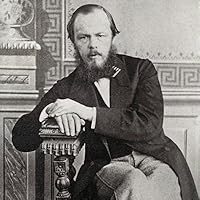
“It was remarkable that Raskolnikov had almost no friends while he was at the university, kept aloof from everyone, visited no one, and had difficulty receiving visitors. . . . General gatherings, conversations, merrymaking - he somehow did not participate in any of it. He was a zealous student . . . and was respected for it, but no one loved him. He was very poor and somehow haughtily proud and unsociable, as though he were keeping something to himself. It seemed to some of his friends that he looked upon them all as children, from above, as though he were ahead of them all in development, in knowledge, and in convictions, and that he regarded their convictions and interests as something inferior.”
― Crime and Punishment
― Crime and Punishment
“The term disorder of the self is descriptive of a personality disorder because these patients are out of touch with themselves. They identify themselves with a facade, a false defensive self that they have developed to adapt to a world that they perceive as hostile.”
― Split Self/Split Object
― Split Self/Split Object

“The worst thing anxiety ever did was to turn everyone into a stranger, no matter how many times you interacted with them.”
― Stamerenophobia
― Stamerenophobia

“It was ridiculous to cast my shadow over her light. The bee girl didn’t know what it was like to wonder if she even had a soul, or if the emptiness inside was merely a sign that her soul was rotten. She had honey in her veins, not death. Not rot.
Not like me.”
― Honey in Her Veins
Not like me.”
― Honey in Her Veins
“The monster didn’t usually get to be this near to her, to smell the damp of her hair or feel where her freckles lay flat against Arthur’s skin. It loved her freckles.
Eva had a tendency to push the monster back. At times, it had managed to slip past Arthur’s defenses so completely after Charlotte died.
The monster held its breath as the acute sensation of summer grew heavy around the two of them, but the sunny feeling didn’t hurt. It hummed.”
― Honey in Her Veins
Eva had a tendency to push the monster back. At times, it had managed to slip past Arthur’s defenses so completely after Charlotte died.
The monster held its breath as the acute sensation of summer grew heavy around the two of them, but the sunny feeling didn’t hurt. It hummed.”
― Honey in Her Veins
“"Eva?" the monster whispered, feathering a panicked touch to her cheek. Her color was fading, a deathly pallor swallowing the rosy hue of sun-touched skin. "Wake up," it pleaded weakly, cradling the back of her neck to prevent her head from lolling. Salt burned the corners of its eyes. Strange, how tears could hurt sometimes.
With a little sob, the monster repositioned Eva on the grass and pressed both palms to the wound in her side. The gentle pressure made Eva convulse, her eyes slitting open.
She moaned.
"I’m sorry." The monster couldn’t tell where its panic ended and Arthur’s began. The level of terror coursing through their shared being was so violent it made the monster nauseous. "I’m so sorry. But you’ve got to stay awake for me.” It scrubbed under its eyes, clearing the blurriness away, tasting salt. "You have to stay.”
Eva’s lips parted, but no sound came out. The monster stripped off Arthur’s shirt and balled it up, then pressed it to her wound. "Come on, Freckles,” it choked out.
The monster had never prayed before. What was a creature like it supposed to do with God, anyway? But it firmly believed that if anyone should curry divine favor, it was Arthur’s bee girl.”
― Honey in Her Veins
With a little sob, the monster repositioned Eva on the grass and pressed both palms to the wound in her side. The gentle pressure made Eva convulse, her eyes slitting open.
She moaned.
"I’m sorry." The monster couldn’t tell where its panic ended and Arthur’s began. The level of terror coursing through their shared being was so violent it made the monster nauseous. "I’m so sorry. But you’ve got to stay awake for me.” It scrubbed under its eyes, clearing the blurriness away, tasting salt. "You have to stay.”
Eva’s lips parted, but no sound came out. The monster stripped off Arthur’s shirt and balled it up, then pressed it to her wound. "Come on, Freckles,” it choked out.
The monster had never prayed before. What was a creature like it supposed to do with God, anyway? But it firmly believed that if anyone should curry divine favor, it was Arthur’s bee girl.”
― Honey in Her Veins
All Quotes
|
My Quotes
|
Add A Quote
Browse By Tag
- Love Quotes 102.5k
- Life Quotes 81k
- Inspirational Quotes 77.5k
- Humor Quotes 45.5k
- Philosophy Quotes 32k
- Inspirational Quotes Quotes 29k
- God Quotes 27k
- Wisdom Quotes 25.5k
- Romance Quotes 25k
- Truth Quotes 25k
- Poetry Quotes 24.5k
- Life Lessons Quotes 23k
- Quotes Quotes 21.5k
- Death Quotes 21k
- Happiness Quotes 19k
- Hope Quotes 19k
- Faith Quotes 18.5k
- Inspiration Quotes 18k
- Relationships Quotes 16k
- Spirituality Quotes 16k
- Motivational Quotes 16k
- Religion Quotes 15.5k
- Life Quotes Quotes 15.5k
- Writing Quotes 15k
- Love Quotes Quotes 15k
- Success Quotes 14.5k
- Motivation Quotes 14k
- Time Quotes 13k
- Science Quotes 12.5k
- Motivational Quotes Quotes 12k