
Find & Share Quotes with Friends
Veil Quotes
Quotes tagged as "veil"
Showing 1-30 of 65

“I always find it more difficult to say the things I mean than the things I don't.”
― The Painted Veil
― The Painted Veil

“I have always thought that if women's hair posed so many problems, God would certainly have made us bald.”
― The Complete Persepolis
― The Complete Persepolis

“If we hesitate between 'veiling' and 'revealing' our emotions or vacillate between 'shrouding' and 'disclosing' our thoughts, we must understand the nuts and bolts of our individual construct and underpin the elasticity of our mental frame. ("Unfulfilled meeting")”
―
―
“Once the horizon is narrowing and the countdown is ticking hastily, people may bring themselves to tear down the veil of inattention, losing their wintry smile, and come to recognize eventually the radiance and the deliverance of the breathing space that they have been missing for so long. (“Just a bit of a chat, Please”)”
―
―
“As we are whiling away days of idleness, time may flow rashly through the screen of our thoughts and veil the relevance of individual fragments in our story. The clock of reality can arrest us, though, and compel us to confront the demands of the truth. ("Non mais, t'as vu l'heure !")”
―
―

“The veil deliberately marks women as private and restricted property, nonpersons. The veil sets women apart from men and apart from the world; it restrains them, confines them, grooms them for docility. A mind can be cramped just as a body may be, and a Muslim veil blinkers both your vision and your destiny. It is the mark of a kind of apartheid, not the domination of a race but of a sex.”
― Nomad: From Islam to America: A Personal Journey Through the Clash of Civilizations
― Nomad: From Islam to America: A Personal Journey Through the Clash of Civilizations

“We use our minds not to discover facts but to hide them. One of things the screen hides most effectively is the body, our own body, by which I mean, the ins and outs of it, its interiors. Like a veil thrown over the skin to secure its modesty, the screen partially removes from the mind the inner states of the body, those that constitute the flow of life as it wanders in the journey of each day. (p.28)”
― The Feeling of What Happens: Body and Emotion in the Making of Consciousness
― The Feeling of What Happens: Body and Emotion in the Making of Consciousness

“It isn't very nice to admit, but domestic violence has its uses. So raw and unleashed, it tears away the veil of civilization that comes between us as much as it makes life possible. A poor substitute for the sort of passion we like to extol perhaps, but real love shares more in common with hatred and rage than it does with geniality or politeness.”
― We Need to Talk About Kevin
― We Need to Talk About Kevin
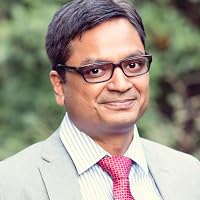
“It was much easier to explain the veil than to answer questions about the wounds.”
― Coinman: An Untold Conspiracy
― Coinman: An Untold Conspiracy

“I sit with Shakespeare and he winces not. Across the color-line I move arm in arm with Balzac and Dumas, where smiling men and welcoming women glide in gilded halls. From out the caves of the evening that swing between the strong-limbed earth and the tracery of the stars, I summon Aristotle and Aurelius... and they come all graciously with no scorn nor condescension. So, wed with Truth, I dwell above the Veil.”
― The Souls of Black Folk
― The Souls of Black Folk

“With my veil I put my faith on display—rather than my beauty. My value as a human is defined by my relationship with God, not by my looks. I cover the irrelevant. And when you look at me, you don’t see a body. You view me only for what I am: a servant of my Creator.
You see, as a Muslim woman, I’ve been liberated from a silent kind of bondage. I don’t answer to the slaves of God on earth. I answer to their King.”
― Reclaim Your Heart: Personal Insights on Breaking Free from Life's Shackles
You see, as a Muslim woman, I’ve been liberated from a silent kind of bondage. I don’t answer to the slaves of God on earth. I answer to their King.”
― Reclaim Your Heart: Personal Insights on Breaking Free from Life's Shackles

“My face is my identity. No one will cover it. I’m proud of my face. If my face bothers you, don’t look. Turn your own face away, take your eyes off me. If you are seduced by merely looking at my face, that is your problem.
Do not tell me to cover it. You cannot punish me simply because you cannot control yourself.”
― Daring to Drive: A Saudi Woman's Awakening
Do not tell me to cover it. You cannot punish me simply because you cannot control yourself.”
― Daring to Drive: A Saudi Woman's Awakening
“Hijab adalah pembebasan dari ketergantungan kosmetik dan topeng. Hijab adalah pembebasan untuk jujur pada hatimu. Hijab adalah pembebas jiwamu dari rantai-rantai duniawi.”
― Ratu yang Bersujud
― Ratu yang Bersujud

“The Coach’s head was oblong with tiny slits that served as eyes, which drifted in tides slowly inward, as though the face itself were the sea or, in fact, a soup of macromolecules through which objects might drift, leaving in their wake, ripples of nothingness. The eyes—they floated adrift like land masses before locking in symmetrically at seemingly prescribed positions off-center, while managing to be so closely drawn into the very middle of the face section that it might have seemed unnecessary for there to have been two eyes when, quite likely, one would easily have sufficed. These aimless, floating eyes were not the Coach’s only distinctive feature—for, in fact, connected to the interior of each eyelid by a web-like layer of rubbery pink tissue was a kind of snout which, unlike the eyes, remained fixed in its position among the tides of the face, arcing narrowly inward at the edges of its sharp extremities into a serrated beak-like projection that hooked downward at its tip, in a fashion similar to that of a falcon’s beak. This snout—or beak, rather—was, in fact, so long and came to such a fine point that as the eyes swirled through the soup of macromolecules that comprised the man’s face, it almost appeared—due to the seeming thinness of the pink tissue—that the eyes functioned as kinds of optical tether balls that moved synchronously across the face like mirror images of one another.
'I wore my lizard mask as I entered the tram, last evening, and people found me fearless,' the Coach remarked, enunciating each word carefully through the hollow clack-clacking sound of his beak, as its edges clapped together. 'I might have exchanged it for that of an ox and then thought better. A lizard goes best with scales, don’t you think?' Bunnu nodded as he quietly wondered how the Coach could manage to fit that phallic monstrosity of a beak into any kind of mask, unless, in fact, this disguise of which he spoke, had been specially designed for his face and divided into sections in such a way that they could be readily attached to different areas—as though one were assembling a new face—in overlapping layers, so as to veil, or perhaps even amplify certain distinguishable features. All the same, in doing so, one could only imagine this lizard mask to be enormous to the extent that it would be disproportionate with the rest of the Coach’s body. But then, there were ways to mask space, as well—to bend light, perhaps, to create the illusion that something was perceptibly larger or smaller, wider or narrower, rounder or more linear than it was in actuality. That is to say, any form of prosthesis designed for the purposes of affecting remedial space might, for example, have had the capability of creating the appearance of a gap of void in occupied space. An ornament hangs from the chin, let’s say, as an accessory meant to contour smoothly inward what might otherwise appear to be hanging jowls. This surely wouldn’t be the exact use that the Coach would have for such a device—as he had no jowls to speak of—though he could certainly see the benefit of the accessory’s ingenuity. This being said, the lizard mask might have appeared natural rather than disproportionate given the right set of circumstances. Whatever the case, there was no way of even knowing if the Coach wasn’t, in fact, already wearing a mask, at this very moment, rendering Bunnu’s initial appraisal of his character—as determined by a rudimentary physiognomic analysis of his features—a matter now subject to doubt. And thus, any conjecture that could be made with respect to the dimensions or components of a lizard mask—not to speak of the motives of its wearer—seemed not only impractical, but also irrelevant at this point in time.”
― Don't Forget to Breathe
'I wore my lizard mask as I entered the tram, last evening, and people found me fearless,' the Coach remarked, enunciating each word carefully through the hollow clack-clacking sound of his beak, as its edges clapped together. 'I might have exchanged it for that of an ox and then thought better. A lizard goes best with scales, don’t you think?' Bunnu nodded as he quietly wondered how the Coach could manage to fit that phallic monstrosity of a beak into any kind of mask, unless, in fact, this disguise of which he spoke, had been specially designed for his face and divided into sections in such a way that they could be readily attached to different areas—as though one were assembling a new face—in overlapping layers, so as to veil, or perhaps even amplify certain distinguishable features. All the same, in doing so, one could only imagine this lizard mask to be enormous to the extent that it would be disproportionate with the rest of the Coach’s body. But then, there were ways to mask space, as well—to bend light, perhaps, to create the illusion that something was perceptibly larger or smaller, wider or narrower, rounder or more linear than it was in actuality. That is to say, any form of prosthesis designed for the purposes of affecting remedial space might, for example, have had the capability of creating the appearance of a gap of void in occupied space. An ornament hangs from the chin, let’s say, as an accessory meant to contour smoothly inward what might otherwise appear to be hanging jowls. This surely wouldn’t be the exact use that the Coach would have for such a device—as he had no jowls to speak of—though he could certainly see the benefit of the accessory’s ingenuity. This being said, the lizard mask might have appeared natural rather than disproportionate given the right set of circumstances. Whatever the case, there was no way of even knowing if the Coach wasn’t, in fact, already wearing a mask, at this very moment, rendering Bunnu’s initial appraisal of his character—as determined by a rudimentary physiognomic analysis of his features—a matter now subject to doubt. And thus, any conjecture that could be made with respect to the dimensions or components of a lizard mask—not to speak of the motives of its wearer—seemed not only impractical, but also irrelevant at this point in time.”
― Don't Forget to Breathe

“Le voile est essentielle pour le monde, soit par l'organisme, ou au moyen de la connaissance”
― The Sacred Key — Transcending Humanity
― The Sacred Key — Transcending Humanity

“Beyond the veil lies what our eyes cannot see. Beyond the veil lies what our skin cannot feel. Beyond the veil lies what our consciousness cannot absorb.”
― The Oneironaut’s Diary
― The Oneironaut’s Diary

“Many of us are contemplatives by catastrophe. We start seeing beyond the veil only when it is rent by some crisis, personal, or societal, or both, that reveals things as they are.”
― The Catholic Guide to Depression: How the Saints, the Sacraments, and Psychiatry Can Help You Break Its Grip and Find Happiness Again
― The Catholic Guide to Depression: How the Saints, the Sacraments, and Psychiatry Can Help You Break Its Grip and Find Happiness Again

“All initiatory truths are veiled. While almost every reader of Sufism and metaphysics in general, is very familiar with the fact that Allah does not gaze at His friends (awliya) directly but cloaks His gaze with a veil (hijab), very few students will pause to consider of what these veils may consist.”
― The Sun at Midnight: The Revealed Mysteries of the Ahlul Bayt Sufis
― The Sun at Midnight: The Revealed Mysteries of the Ahlul Bayt Sufis

“I hate this.'
'Hate what?' I asked, confused.
Hawke didn't respond immediately. 'I hate talking to the veil.'
'Oh.' Understanding rippled through me as I reached up and touched the length that hid my hair. 'I imagine most people don't enjoy it.'
'I can't imagine you do.'
'I don't.' I admitted and then glanced around the room as if I expected Priestess Analia to be hiding somewhere. 'I mean, I'd prefer if people were able to see me.'
He tilted his head to the side. 'What does it feel like?'
Air hitched in my throat. No one... no one had ever asked me that before, and while I had a lot of thoughts and feelings about the veil, I wasn't sure how to put them into words even though I trusted Hawke.
Some things, once spoken, were given a life of their own.
...
'It feels suffocating.'
Hawke drew closer. 'Then why do you wear it?'
'I didn't realise I had a choice.' I looked up at him.
'You have a choice now.' He knelt in front of me. 'It's just you and me, walls, and a pathetically inadequate supply of furniture.'
My lips twitched.
'Do you wear your veil when you're with Tawny?' he asked.
I shook my head no.
'Then why are you wearing it now?'
'Because... I'm allowed to be without my veil with her.'
'I was told that you were supposed to be veiled at all times, even with those approved to see you.'
He was, of course, correct.
Hawke arched a brow.
I sighed. 'I don't wear my veil when I'm in my room, and I don't expect anyone to come in other than Tawny. And I don't wear it then because I feel... more in control. I can make-'
'The choice not to wear it?' he finished for me.
Nodding, I was more than a little stunned that he'd nailed it.
'You have a choice now.'
'I do.' But it was hard to explain that the veil also served as a barrier. With it, I remembered what I was, and the importance of that. Without it, well, it was easy to want... to simply want.”
― From Blood and Ash
'Hate what?' I asked, confused.
Hawke didn't respond immediately. 'I hate talking to the veil.'
'Oh.' Understanding rippled through me as I reached up and touched the length that hid my hair. 'I imagine most people don't enjoy it.'
'I can't imagine you do.'
'I don't.' I admitted and then glanced around the room as if I expected Priestess Analia to be hiding somewhere. 'I mean, I'd prefer if people were able to see me.'
He tilted his head to the side. 'What does it feel like?'
Air hitched in my throat. No one... no one had ever asked me that before, and while I had a lot of thoughts and feelings about the veil, I wasn't sure how to put them into words even though I trusted Hawke.
Some things, once spoken, were given a life of their own.
...
'It feels suffocating.'
Hawke drew closer. 'Then why do you wear it?'
'I didn't realise I had a choice.' I looked up at him.
'You have a choice now.' He knelt in front of me. 'It's just you and me, walls, and a pathetically inadequate supply of furniture.'
My lips twitched.
'Do you wear your veil when you're with Tawny?' he asked.
I shook my head no.
'Then why are you wearing it now?'
'Because... I'm allowed to be without my veil with her.'
'I was told that you were supposed to be veiled at all times, even with those approved to see you.'
He was, of course, correct.
Hawke arched a brow.
I sighed. 'I don't wear my veil when I'm in my room, and I don't expect anyone to come in other than Tawny. And I don't wear it then because I feel... more in control. I can make-'
'The choice not to wear it?' he finished for me.
Nodding, I was more than a little stunned that he'd nailed it.
'You have a choice now.'
'I do.' But it was hard to explain that the veil also served as a barrier. With it, I remembered what I was, and the importance of that. Without it, well, it was easy to want... to simply want.”
― From Blood and Ash

“That's when she saw the black ink strokes, underlining four words of the poem: Door. Veil. Thee. Me. And in a flash, the code to the sultan's combination lockbox flew into her mind. D V J S.
Door. Veil. Jasmine. Sultan... or sultana.
Even though the meaning was still opaque, even though she still hadn't the slightest clue which door or veil her father was trying to draw her toward, something lifted in her chest as she looked at the words. Hope. He was still talking to her, communicating with her, even from another plane.
"As above, so below," she whispered.”
― Realm of Wonders
Door. Veil. Jasmine. Sultan... or sultana.
Even though the meaning was still opaque, even though she still hadn't the slightest clue which door or veil her father was trying to draw her toward, something lifted in her chest as she looked at the words. Hope. He was still talking to her, communicating with her, even from another plane.
"As above, so below," she whispered.”
― Realm of Wonders

“In the realm of Maya's veil,
Where illusions dance and sway,
Ram and Krishna, wise and true,
Saw through the world's ephemeral hue.
Allah, the All-Merciful, proclaimed,
"This mortal stage, a fleeting game,
Where egos strut and passions flare,
A testing ground, a soul's repair."
Muhammad, the Prophet of Light,
Expounded on the material plight,
A transient realm, a fragile guise,
Where true treasures lie beyond the skies.
Oh, heed their words, their wisdom deep,
And seek the essence, the soul to keep,
For in the depths of spirit's embrace,
Lies true reality, time's endless chase.”
― The Inward Journey
Where illusions dance and sway,
Ram and Krishna, wise and true,
Saw through the world's ephemeral hue.
Allah, the All-Merciful, proclaimed,
"This mortal stage, a fleeting game,
Where egos strut and passions flare,
A testing ground, a soul's repair."
Muhammad, the Prophet of Light,
Expounded on the material plight,
A transient realm, a fragile guise,
Where true treasures lie beyond the skies.
Oh, heed their words, their wisdom deep,
And seek the essence, the soul to keep,
For in the depths of spirit's embrace,
Lies true reality, time's endless chase.”
― The Inward Journey

“She raised her face slightly. Terrified eyed looked at me from behind the veil of her hair.”
― The Mill House Murders
― The Mill House Murders
“6. In the holy instant nothing happens that has not always been. ²Only the veil that has been drawn across reality is lifted. ³Nothing has changed. ⁴Yet the awareness of changelessness comes swiftly as the veil of time is pushed aside. ⁵No one who has not yet experienced the lifting of the veil, and felt himself drawn irresistibly into the light behind it, can have faith in love without fear.”
― A Course In Miracles - Combined Volume - I, Text; Ii, Workbook For Students; Iii, Manual For Teachers
― A Course In Miracles - Combined Volume - I, Text; Ii, Workbook For Students; Iii, Manual For Teachers
“In contrast, he describes spiritual transformation as an ‘established descent of the spiritual peace, light, knowledge, power, bliss from above, the awareness of the self and the divine and of a higher cosmic consciousness and the change of the whole consciousness to that’.18 The path to spiritual transformation leads the seeker through several experiences and realizations: temporary stages of peace, calm and silence; the discovery of the Self and its experience on various planes of consciousness; and experiences on the higher planes with its different layers—Higher Mind, Illumined Mind, Overmind. Not only to receive influences from these planes, but to actually live in them is, according to Sri Aurobindo, ‘a definite stage in the movement towards transformation’.19
Finally, we learn about the two main and alternating movements leading to spiritual transformation—the ascent of the lower consciousness towards the higher, and the descent of the higher, of peace, force, light and Ananda, into the lower to transform it. These and the experiences connected with them end this remarkable journey from the first opening of the inner veil to the psychic and spiritual transformation of all the planes and parts of the being, opening the gate to the essence and crown of Sri Aurobindo’s yoga: the supramental transformation.”
― Reading Sri Aurobindo
Finally, we learn about the two main and alternating movements leading to spiritual transformation—the ascent of the lower consciousness towards the higher, and the descent of the higher, of peace, force, light and Ananda, into the lower to transform it. These and the experiences connected with them end this remarkable journey from the first opening of the inner veil to the psychic and spiritual transformation of all the planes and parts of the being, opening the gate to the essence and crown of Sri Aurobindo’s yoga: the supramental transformation.”
― Reading Sri Aurobindo
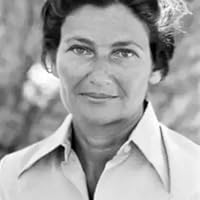
“La politique me passionne, mais dès qu’elle devient politicienne, elle cesse de m’intéresser.”
― Une vie
― Une vie

“... This is all just too much to bear[,] so / Don’t get put off if you’ve fallen. / Don’t expect a veil or lending hand. / The world takes no pity, doesn’t glimpse at // Any of it, pain or death, the immanence of / Hell upon hell in every place and time. // Know it all[,] if you will. / Be it. Do it. / Take from / It, for it—this uncertain climb you’ve made [in] / Proceeding to [your own] skull ...”
― Easy Noumenon: Early Poems
― Easy Noumenon: Early Poems

“The two worlds formed before my eyes in gold dust: Camelot, towering above the cliffs with its marketplaces and forts and tiny knights jousting in the fields; Avalon, a riot of trees and waves through which beings flitted too fast to be seen. As I watched, they merged together, each going about their own business, oblivious to each other's affairs.
"They overlay each other," Merlin said, "separated by what we can call a veil. See?" I could see: a thin layer of light shimmering between the two worlds, like the sheen of a bubble or the gauze of a cobweb. "Usually that veil is impermeable. At different times and in different places, it thins. Midsummer's Eve is the thinnest it stretches, which is why we do rites on that night. But it can be glimpsed at other times. Dreams pass through it often. People with fae blood, like you, can usually see it better than most, and that ability can be taught and refined. Animals see it best of all.”
― The Witch Below the Dreaming Wood
"They overlay each other," Merlin said, "separated by what we can call a veil. See?" I could see: a thin layer of light shimmering between the two worlds, like the sheen of a bubble or the gauze of a cobweb. "Usually that veil is impermeable. At different times and in different places, it thins. Midsummer's Eve is the thinnest it stretches, which is why we do rites on that night. But it can be glimpsed at other times. Dreams pass through it often. People with fae blood, like you, can usually see it better than most, and that ability can be taught and refined. Animals see it best of all.”
― The Witch Below the Dreaming Wood
“The veil thins for all sorts of reasons. It isn’t unusual for dreams to pass between the Otherworld and your world when times are dark. People reach out in their sleep for something to believe in, and brush against a legend or a story on the other side. And Arthur has very strong ties to his old kingdom. I wouldn’t be at all surprised if his people are reaching for him when they find themselves under threat.”
She was struggling to put the matter-of-fact words together. “Are you saying that Arthur is in Avalon? The real Arthur?”
“Of course he is. He was brought there after the Battle of Camlann— don’t you know the myth?”
“We knew it in our day,” Marian put in. “Back in Sherwood Forest. The minstrels told tales of Arthur all the time.”
She did know the myth, of course. After his final battle with Mordred, Arthur was taken to the edge of a lake, barely alive. In Malory, he commanded Sir Bedivere to throw Excalibur into the waters, and come back and tell him what he saw. A barge arrived across the lake, helmed by a queen and many fair ladies, and bore Arthur away to Avalon. In some versions, the queen in the barge was Morgan le Fay, the Lady of the Lake. If that was the case, then something in her dreams was going to change, and soon. The Morgan le Fay she knew had no desire to see Arthur saved.”
― The Witch Below the Dreaming Wood
She was struggling to put the matter-of-fact words together. “Are you saying that Arthur is in Avalon? The real Arthur?”
“Of course he is. He was brought there after the Battle of Camlann— don’t you know the myth?”
“We knew it in our day,” Marian put in. “Back in Sherwood Forest. The minstrels told tales of Arthur all the time.”
She did know the myth, of course. After his final battle with Mordred, Arthur was taken to the edge of a lake, barely alive. In Malory, he commanded Sir Bedivere to throw Excalibur into the waters, and come back and tell him what he saw. A barge arrived across the lake, helmed by a queen and many fair ladies, and bore Arthur away to Avalon. In some versions, the queen in the barge was Morgan le Fay, the Lady of the Lake. If that was the case, then something in her dreams was going to change, and soon. The Morgan le Fay she knew had no desire to see Arthur saved.”
― The Witch Below the Dreaming Wood
All Quotes
|
My Quotes
|
Add A Quote
Browse By Tag
- Love Quotes 102.5k
- Life Quotes 81k
- Inspirational Quotes 77.5k
- Humor Quotes 45.5k
- Philosophy Quotes 32k
- Inspirational Quotes Quotes 28.5k
- God Quotes 27k
- Wisdom Quotes 25k
- Romance Quotes 25k
- Truth Quotes 25k
- Poetry Quotes 24.5k
- Life Lessons Quotes 23k
- Quotes Quotes 21.5k
- Death Quotes 21k
- Happiness Quotes 19k
- Hope Quotes 19k
- Faith Quotes 18.5k
- Inspiration Quotes 18k
- Relationships Quotes 16k
- Spirituality Quotes 16k
- Motivational Quotes 16k
- Religion Quotes 15.5k
- Life Quotes Quotes 15.5k
- Writing Quotes 15k
- Love Quotes Quotes 15k
- Success Quotes 14.5k
- Motivation Quotes 14k
- Time Quotes 13k
- Science Quotes 12.5k
- Motivational Quotes Quotes 12k