
Find & Share Quotes with Friends
Weird Fiction Quotes
Quotes tagged as "weird-fiction"
Showing 1-30 of 91


“Every time you think you have the world figured, trust me, that’s just when the world’s got you figured and is about to spring and break your back”
― A Collapse of Horses
― A Collapse of Horses

“A vision of the Shining One swirling into our world, a monstrous, glorious flaming pillar of incarnate, eternal Evil--of people passing through its radiant embrace into that hideous, unearthly life-in-death which I had seen enfold the sacrifices--of armies trembling into dancing atoms of diamond dust beneath the green ray's rhythmic death--of cities rushing out into space upon the wings of that other demoniac force which Olaf had watched at work--of a haunted world through which the assassins of the Dweller's court stole invisible, carrying with them every passion of hell--of the rallying to the Thing of every sinister soul and of the weak and the unbalanced, mystics and carnivores of humanity alike; for well I knew that, once loosed, not any nation could hold the devil-god for long and that swiftly its blight would spread!”
― The Moon Pool
― The Moon Pool

“The Coach’s head was oblong with tiny slits that served as eyes, which drifted in tides slowly inward, as though the face itself were the sea or, in fact, a soup of macromolecules through which objects might drift, leaving in their wake, ripples of nothingness. The eyes—they floated adrift like land masses before locking in symmetrically at seemingly prescribed positions off-center, while managing to be so closely drawn into the very middle of the face section that it might have seemed unnecessary for there to have been two eyes when, quite likely, one would easily have sufficed. These aimless, floating eyes were not the Coach’s only distinctive feature—for, in fact, connected to the interior of each eyelid by a web-like layer of rubbery pink tissue was a kind of snout which, unlike the eyes, remained fixed in its position among the tides of the face, arcing narrowly inward at the edges of its sharp extremities into a serrated beak-like projection that hooked downward at its tip, in a fashion similar to that of a falcon’s beak. This snout—or beak, rather—was, in fact, so long and came to such a fine point that as the eyes swirled through the soup of macromolecules that comprised the man’s face, it almost appeared—due to the seeming thinness of the pink tissue—that the eyes functioned as kinds of optical tether balls that moved synchronously across the face like mirror images of one another.
'I wore my lizard mask as I entered the tram, last evening, and people found me fearless,' the Coach remarked, enunciating each word carefully through the hollow clack-clacking sound of his beak, as its edges clapped together. 'I might have exchanged it for that of an ox and then thought better. A lizard goes best with scales, don’t you think?' Bunnu nodded as he quietly wondered how the Coach could manage to fit that phallic monstrosity of a beak into any kind of mask, unless, in fact, this disguise of which he spoke, had been specially designed for his face and divided into sections in such a way that they could be readily attached to different areas—as though one were assembling a new face—in overlapping layers, so as to veil, or perhaps even amplify certain distinguishable features. All the same, in doing so, one could only imagine this lizard mask to be enormous to the extent that it would be disproportionate with the rest of the Coach’s body. But then, there were ways to mask space, as well—to bend light, perhaps, to create the illusion that something was perceptibly larger or smaller, wider or narrower, rounder or more linear than it was in actuality. That is to say, any form of prosthesis designed for the purposes of affecting remedial space might, for example, have had the capability of creating the appearance of a gap of void in occupied space. An ornament hangs from the chin, let’s say, as an accessory meant to contour smoothly inward what might otherwise appear to be hanging jowls. This surely wouldn’t be the exact use that the Coach would have for such a device—as he had no jowls to speak of—though he could certainly see the benefit of the accessory’s ingenuity. This being said, the lizard mask might have appeared natural rather than disproportionate given the right set of circumstances. Whatever the case, there was no way of even knowing if the Coach wasn’t, in fact, already wearing a mask, at this very moment, rendering Bunnu’s initial appraisal of his character—as determined by a rudimentary physiognomic analysis of his features—a matter now subject to doubt. And thus, any conjecture that could be made with respect to the dimensions or components of a lizard mask—not to speak of the motives of its wearer—seemed not only impractical, but also irrelevant at this point in time.”
― Don't Forget to Breathe
'I wore my lizard mask as I entered the tram, last evening, and people found me fearless,' the Coach remarked, enunciating each word carefully through the hollow clack-clacking sound of his beak, as its edges clapped together. 'I might have exchanged it for that of an ox and then thought better. A lizard goes best with scales, don’t you think?' Bunnu nodded as he quietly wondered how the Coach could manage to fit that phallic monstrosity of a beak into any kind of mask, unless, in fact, this disguise of which he spoke, had been specially designed for his face and divided into sections in such a way that they could be readily attached to different areas—as though one were assembling a new face—in overlapping layers, so as to veil, or perhaps even amplify certain distinguishable features. All the same, in doing so, one could only imagine this lizard mask to be enormous to the extent that it would be disproportionate with the rest of the Coach’s body. But then, there were ways to mask space, as well—to bend light, perhaps, to create the illusion that something was perceptibly larger or smaller, wider or narrower, rounder or more linear than it was in actuality. That is to say, any form of prosthesis designed for the purposes of affecting remedial space might, for example, have had the capability of creating the appearance of a gap of void in occupied space. An ornament hangs from the chin, let’s say, as an accessory meant to contour smoothly inward what might otherwise appear to be hanging jowls. This surely wouldn’t be the exact use that the Coach would have for such a device—as he had no jowls to speak of—though he could certainly see the benefit of the accessory’s ingenuity. This being said, the lizard mask might have appeared natural rather than disproportionate given the right set of circumstances. Whatever the case, there was no way of even knowing if the Coach wasn’t, in fact, already wearing a mask, at this very moment, rendering Bunnu’s initial appraisal of his character—as determined by a rudimentary physiognomic analysis of his features—a matter now subject to doubt. And thus, any conjecture that could be made with respect to the dimensions or components of a lizard mask—not to speak of the motives of its wearer—seemed not only impractical, but also irrelevant at this point in time.”
― Don't Forget to Breathe
“Sound waves, regardless of their frequency or intensity, can only be detected by the Mole Fly’s acute sense of smell—it is a little known fact that the Mole Fly’s auditory receptors do not, in fact, have a corresponding center in the brain designated for the purposes of processing sensory stimuli and so, these stimuli, instead of being siphoned out as noise, bypass the filters to be translated, oddly enough, by the part of the brain that processes smell. Consequently, the Mole Fly’s brain, in its inevitable confusion, understands sound as an aroma, rendering the boundary line between the auditory and olfactory sense indistinguishable.
Sounds, thus, come in a variety of scents with an intensity proportional to its frequency. Sounds of shorter wavelength, for example, are particularly pungent. What results is a species of creature that cannot conceptualize the possibility that sound and smell are separate entities, despite its ability to discriminate between the exactitudes of pitch, timbre, tone, scent, and flavor to an alarming degree of precision. Yet, despite this ability to hyper-analyze, they lack the cognitive skill to laterally link successions of either sound or smell into a meaningful context, resulting in the equivalent of a data overflow.
And this may be the most defining element of the Mole Fly’s behavior: a blatant disregard for the context of perception, in favor of analyzing those remote and diminutive properties that distinguish one element from another. While sensory continuity seems logical to their visual perception, as things are subject to change from moment-to-moment, such is not the case with their olfactory sense, as delays in sensing new smells are granted a degree of normality by the brain. Thus, the Mole Fly’s olfactory-auditory complex seems to be deprived of the sensory continuity otherwise afforded in the auditory senses of other species. And so, instead of sensing aromas and sounds continuously over a period of time—for example, instead of sensing them 24-30 times per second, as would be the case with their visual perception—they tend to process changes in sound and smell much more slowly, thereby preventing them from effectively plotting the variations thereof into an array or any kind of meaningful framework that would allow the information provided by their olfactory and auditory stimuli to be lasting in their usefulness.
The Mole flies, themselves, being the structurally-obsessed and compulsive creatures that they are, in all their habitual collecting, organizing, and re-organizing of found objects into mammoth installations of optimal functional value, are remarkably easy to control, especially as they are given to a rather false and arbitrary sense of hierarchy, ascribing positions—that are otherwise trivial, yet necessarily mundane if only to obscure their true purpose—with an unfathomable amount of honor, to the logical extreme that the few chosen to serve in their most esteemed ranks are imbued with a kind of obligatory arrogance that begins in the pupal stages and extends indefinitely, as they are further nurtured well into adulthood by a society that infuses its heroes of middle management with an immeasurable sense of importance—a kind of celebrity status recognized by the masses as a living embodiment of their ideals. And yet, despite this culture of celebrity worship and vicarious living, all whims and impulses fall subservient, dropping humbly to the knees—yes, Mole Flies do, in fact, have knees!—before the grace of the merciful Queen, who is, in actuality, just a puppet dictator installed by the Melic papacy, using an old recycled Damsel fly-fishing lure. The dummy is crude, but convincing, as the Mole flies treat it as they would their true-born queen.”
― Don't Forget to Breathe
Sounds, thus, come in a variety of scents with an intensity proportional to its frequency. Sounds of shorter wavelength, for example, are particularly pungent. What results is a species of creature that cannot conceptualize the possibility that sound and smell are separate entities, despite its ability to discriminate between the exactitudes of pitch, timbre, tone, scent, and flavor to an alarming degree of precision. Yet, despite this ability to hyper-analyze, they lack the cognitive skill to laterally link successions of either sound or smell into a meaningful context, resulting in the equivalent of a data overflow.
And this may be the most defining element of the Mole Fly’s behavior: a blatant disregard for the context of perception, in favor of analyzing those remote and diminutive properties that distinguish one element from another. While sensory continuity seems logical to their visual perception, as things are subject to change from moment-to-moment, such is not the case with their olfactory sense, as delays in sensing new smells are granted a degree of normality by the brain. Thus, the Mole Fly’s olfactory-auditory complex seems to be deprived of the sensory continuity otherwise afforded in the auditory senses of other species. And so, instead of sensing aromas and sounds continuously over a period of time—for example, instead of sensing them 24-30 times per second, as would be the case with their visual perception—they tend to process changes in sound and smell much more slowly, thereby preventing them from effectively plotting the variations thereof into an array or any kind of meaningful framework that would allow the information provided by their olfactory and auditory stimuli to be lasting in their usefulness.
The Mole flies, themselves, being the structurally-obsessed and compulsive creatures that they are, in all their habitual collecting, organizing, and re-organizing of found objects into mammoth installations of optimal functional value, are remarkably easy to control, especially as they are given to a rather false and arbitrary sense of hierarchy, ascribing positions—that are otherwise trivial, yet necessarily mundane if only to obscure their true purpose—with an unfathomable amount of honor, to the logical extreme that the few chosen to serve in their most esteemed ranks are imbued with a kind of obligatory arrogance that begins in the pupal stages and extends indefinitely, as they are further nurtured well into adulthood by a society that infuses its heroes of middle management with an immeasurable sense of importance—a kind of celebrity status recognized by the masses as a living embodiment of their ideals. And yet, despite this culture of celebrity worship and vicarious living, all whims and impulses fall subservient, dropping humbly to the knees—yes, Mole Flies do, in fact, have knees!—before the grace of the merciful Queen, who is, in actuality, just a puppet dictator installed by the Melic papacy, using an old recycled Damsel fly-fishing lure. The dummy is crude, but convincing, as the Mole flies treat it as they would their true-born queen.”
― Don't Forget to Breathe


“Talking about one’s stories is a little too much like nailing a dog to the floor—you can get it to stay put that way but it doesn’t do much for the dog.”
―
―

“Their surrealist, dadaist insect structures. Not quite mechanical. Not quite natural. Far too strange to belong in either world. And their colours! The boldest, most vibrant shades of green, blue, red, yellow. Each manifesting in only a single one. Burning with brilliantly compelling spectrums of light as they fluxed and synapsed around the recollection of their setting.”
― Doppelgängers
― Doppelgängers

“Life: never extinguished, simply traveling, from one perfect creation to the next. Pale flakes drift up around the undead and the dying, all of them heedless to the rising drifts, the pressing cold. Stars wheel and gyre mindlessly in the heavens above us. Branches dislodge their heavy wintery burden, anointing the heads of wolves with silver crowns. And all the terrors of the night have vanished, valiant Mina, deep into the obsidian oblivion of a sudden sleep. Is this not the most beautiful of all countries? Is this not the most wondrous of all nights?”
― Furnace
― Furnace
“In her tiny dorm room bathroom, under the bright buzz of fluorescent tubes, Knox and Severin silently draw. When they finish, they stare into the mirror, at themselves, at each other. Severin flicks off the light switch. The tiny room plunges into darkness, but their reflections remain bright in the silver glass, skin like pale moths, hair like flame, eyes like fireflies. Slender green threads of electricity travel up and down the spikes of their mohawked heads. Knox turns to her: their tongues touch tip to tip, briefly, and small sparks arc out from their blackened fingernails, leaving feathery singe marks on the yellowing countertop”
― Furnace
― Furnace
“In hindsight, we should have been more vigilant, more aware that these were the places of a town where spticemia and putrification creep in first, those lonely and familiar sections we slipped into and through every day without concern or care-not the seedy crumbling but flashy edges where decay was expected, and, from a certain element of our small society, even accepted and encouraged. These quiet streets of lonely backwater districts, these were the places we never gave a single thought about, because we thought they would be here forever, unchanging in the antiseptic amber of our fixed memories. These quiet streets of lonely backwater districts were always the first to go.”
― Furnace
― Furnace
“Honey,” said a woman’s voice. “Honey, wake up.”
It was his mother’s voice. For a moment he thought he was back in his bed at home, asleep, and she was waking him up for school. That was how she always used to wake him up. A gentle touch at first and then gently shaking him awake. But why wasn’t she calling him by his name? And what was his name again?
“Honey,” she said again, more insistently, and he opened his eyes.
Only he was not at home. He was in the hospital room, and it was not his mother. It wasn’t even a woman. In fact, there was no one there at all.”
― A Collapse of Horses
It was his mother’s voice. For a moment he thought he was back in his bed at home, asleep, and she was waking him up for school. That was how she always used to wake him up. A gentle touch at first and then gently shaking him awake. But why wasn’t she calling him by his name? And what was his name again?
“Honey,” she said again, more insistently, and he opened his eyes.
Only he was not at home. He was in the hospital room, and it was not his mother. It wasn’t even a woman. In fact, there was no one there at all.”
― A Collapse of Horses

“They’re pregnant all the time, but they never give birth, on account of how they’re pregnant with tomorrow and a year from now and alternate universes where everyone is half-bat.”
― Clarkesworld Magazine, Issue 100, January 2015
― Clarkesworld Magazine, Issue 100, January 2015
“The line between ghost and glitch grows thinner every day. One is a whisper from the past, the other a whisper from the machine—both leave traces, and neither likes to be ignored.”
―
―

“The part of us that's me argues about that; who defines love, what is love, isn't it all just chemical crap, invented by us, bought and sold by humans?
The part of us that's Axa tells me to shut up and LOVE, dammit.”
― My Name Isn't Paul: A Cosmic Horror Novella
The part of us that's Axa tells me to shut up and LOVE, dammit.”
― My Name Isn't Paul: A Cosmic Horror Novella

“I knew from the lingering shadows in his eyes that he had been to that site where diseased shadow crept into his pulsing heart and altered his sanity.”
― Gathered Dust and Others
― Gathered Dust and Others

“The ordinary face of collapse is not dramatic. It is a man in clean clothes deciding that his thirst matters more than a stranger's child.”
― LISTENING: From the Collapse Chronicles - Volume I
― LISTENING: From the Collapse Chronicles - Volume I
“A voice came then — simultaneously artificial and beautiful, organic and automated. A singular event in the vast spectrum of sound. It didn’t speak any tongue Alysse could recount. Perhaps it didn’t use language at all.”
― Doppelgängers
― Doppelgängers
“Evil has been usurped, has found its superior. And they called it humanity. But I won’t let anyone usurp me, Professor. I will be the superlative. And you will be my mother.”
― Doppelgängers
― Doppelgängers

“We are all of us lost in the vast and endless night that is ourselves. We wander, hopelessly and eternally abandoned, through our own secret chambers of hell. Just as shadows are devoured by the night so our souls cry out for their source.”
― The White Hands and Other Weird Tales
― The White Hands and Other Weird Tales
“How far does reality extend? That’s the question I keep asking myself.
Across billions of light-years to the mysterious point where the cosmos curves back on itself and the laws of time and space cease to apply? Only just as far as that visible universe mankind can detect and analyse with his instruments? Or is it confined solely within the limits of the skull of each and every isolated person who asks the question?
I think back to the half-ruined temple and its cryptic banners riddled with mandalas. A temple hidden high up on the mountain peak above the jungles of Chang-Yi province, right in the middle of the outland where wreathes the crimson fog and wherein dwell all the fiends with their rites of silent horror.”
― The Prozess Manifestations
Across billions of light-years to the mysterious point where the cosmos curves back on itself and the laws of time and space cease to apply? Only just as far as that visible universe mankind can detect and analyse with his instruments? Or is it confined solely within the limits of the skull of each and every isolated person who asks the question?
I think back to the half-ruined temple and its cryptic banners riddled with mandalas. A temple hidden high up on the mountain peak above the jungles of Chang-Yi province, right in the middle of the outland where wreathes the crimson fog and wherein dwell all the fiends with their rites of silent horror.”
― The Prozess Manifestations
“Consciousness seemed to mingle with dreams. The two states were becoming one, and I saw visions of some hellish ecstasy. […] And I could not help being reminded of the notion that what we term sanity is only a measure of success in concealing underlying madness.”
― The Age of Decayed Futurity: The Best of Mark Samuels
― The Age of Decayed Futurity: The Best of Mark Samuels
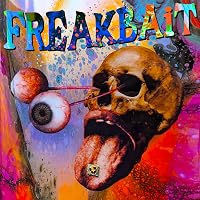
“You step forward, place the Remote on the plinth... and reality goatses your mind-asshole.”
― VOiDMAN: The Book
― VOiDMAN: The Book
“Your feet aren’t feet - they’re dick-shaped balloons. You try to scream, but all that comes out is a dial-up modem noise.”
― VOiDMAN: The Book
― VOiDMAN: The Book
“She rose to him, through daemonic darkness, and the splintered lips of her chiseled countenance curled with sardonic ecstasy as, pressed to living flesh, they claimed the poet with their kiss.”
― Some Unknown Gulf of Night
― Some Unknown Gulf of Night
“Brother of mine, tainted by my adoration, your breath is cosmic mistral that speaks the poison of Baudelaire, and I imbibe the alchemy. My star-brimmed eyes leak tears for you, beautiful and lonesome eidolon, my phantom-double; creature of desire and dismay.”
― An Ecstasy of Fear
― An Ecstasy of Fear
“They call to you with dreaming, from their sunken cities or their pits of cosmic void. They drink your lunacies and fears.”
― An Ecstasy of Fear
― An Ecstasy of Fear
“He liked to imagine that he would have preferred to have lived in an earlier era, a time when, perhaps, life would not have been so complicated for a fellow such as himself. He had often felt a loner in the modern world, which was one reason he loved books, that world into which he could escape neoteric time. He felt, here in this entrance way to the building, that he had stepped into an earlier epoch, away from the dull prevailing age.”
― An Ecstasy of Fear
― An Ecstasy of Fear
“We are the children of the valley. Borne of its magick, we must at some time return to its substance.”
― Dreams of Lovecraftian Horror
― Dreams of Lovecraftian Horror
All Quotes
|
My Quotes
|
Add A Quote
Browse By Tag
- Love Quotes 102.5k
- Life Quotes 81k
- Inspirational Quotes 77.5k
- Humor Quotes 45.5k
- Philosophy Quotes 32k
- Inspirational Quotes Quotes 29k
- God Quotes 27k
- Wisdom Quotes 25.5k
- Romance Quotes 25k
- Truth Quotes 25k
- Poetry Quotes 24.5k
- Life Lessons Quotes 23k
- Quotes Quotes 21.5k
- Death Quotes 21k
- Happiness Quotes 19k
- Hope Quotes 19k
- Faith Quotes 18.5k
- Inspiration Quotes 18k
- Spirituality Quotes 16k
- Relationships Quotes 16k
- Motivational Quotes 16k
- Religion Quotes 15.5k
- Life Quotes Quotes 15.5k
- Writing Quotes 15k
- Love Quotes Quotes 15k
- Success Quotes 14.5k
- Motivation Quotes 14k
- Time Quotes 13k
- Science Quotes 12.5k
- Motivational Quotes Quotes 12k