This will prevent Eugene from sending you messages, friend request or from viewing your profile. They will not be notified. Comments on discussion boards from them will be hidden by default.
(page 26 of 448)
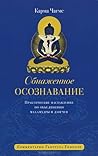
"Хорошее предисловие. Автор дифференцирует между буддизмом как обрядовой общественной религией и буддизом как Путём освобождения, стараясь адаптировать материал для нашего рационального соотечественника."
—Jul 14, 2015 02:10PM
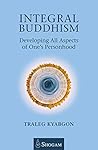
In that way we can look upon togal as a supercharge option in the BuSuKu retreat. If the trekcho is moving along smoothly, constantly producing new and vital experience, expanding our knowledge of the wheel of life and integrating memoryIn that way we can look upon togal as a supercharge option in the BuSuKu retreat. If the trekcho is moving along smoothly, constantly producing new and vital experience, expanding our knowledge of the wheel of life and integrating memory into the process of automatic release, there is no need for togal. If we need an extra push, however, then the togal supercharge will provide it. We will have to work hard for that extra mileage....more
“М. К. Петров отмечает, что впервые проблему преемственной связи поколений, условий, при которых осуществляется контакт поколений, иными словами, проблему человеческого творения истории поставили Маркс и Энгельс в их концепции материалистического понимания истории. Эта концепция показывает, что каждая ступень истории застаёт в наличии определённый материальный результат, определённую сумму производительных сил, исторически создавшееся отношение людей к природе и друг к другу, застаёт передаваемую каждому последующему поколению предшествующим ему поколением массу производительных сил, капиталов и обстоятельств, которые, хотя, с одной стороны, и видоизменяются новым поколением, но, с другой стороны, предписывают ему его собственные условия жизни и придают ему определённое развитие, особый характер. Эта концепция показывает, таким образом, что обстоятельства в такой же мере творят людей, в какой люди творят обстоятельства. Характеризуя материалистическое понимание истории, М. К. Петров специально подчёркивает, что весь процесс освоения и изменения наследства осуществляется в соответствии с физическими и ментальными возможностями смертного человеческого индивида. Процесс наследования и творчества, механизм этого процесса оказываются лимитированными этими возможностями, а поэтому проблема человеческой размерности есть главное основание этого механизма. Иными словами, контакт поколений, замечает М. К. Петров, есть человекоразмерный фильтр, через который в принципе невозможно передать новому поколению для воспроизводства и пользования ничего, что превышало бы физическую и ментальную «вместимость» человека <…>.
М. К. Петров специально обращает внимание на то, что концепция материалистического понимания истории Маркса и Энгельса характеризуется не как «движение к», якобы реализующее некий предзаданный план исторического строительства, а как «движение от», т. е. как движение от суммы унаследованных данным поколением обстоятельств, которые обеспечивают предмет теоретической критики и соответствующей революционной практики данного поколения, которая направлена на трансформацию унаследованной суммы обстоятельств в какую-то новую, что и будет передано следующему поколению на предмет теоретической критики и практического изменения.”
―
В. Н. Дубровин,
М. К. Петров. Два эпизода и вся жизнь
“Professor A. H. Maslow, for example, has conducted a series of researches into extremely healthy people that have led him to conclude that health and optimism are far more positive principles in human psychology than Freud would ever have admitted.
Man is a slave to the delusion that he is a passive creature, a creature of circumstance; this is because he makes the mistake of identifying himself with his limited everyday consciousness, and is unaware of the immense forces that lie just beyond the threshold of consciousness. But these forces, although he is unaware of them on a conscious level, are still a far more active influence in his life than any external circumstances. Freudian psychology, for all its achievements, has made a twofold error: it has tried to anatomize the human mind as a pathologist would dissect a corpse, and it has limited its researches to sick human beings. Sick men talk about their illness far more than healthy people talk about their health; in fact, healthy people are usually too absorbed in living to bother with self-revelation. Psychology has consequently been inclined to divide the world into sick people and “normal” people, regarding occasional super-normality as the exception; Maslow has shown that super-normality is a great deal commoner than would be supposed; in fact as common as sub-normality. Ordinarily healthy people often experience a sense of intense life-affirmation (which Maslow calls “peak experiences”); and examination of peak experiences has led Maslow to conclude that the evolutionary drive (which is so clear in art and philosophy) is as basic a part of human psychology as the Freudian libido or the Adlerian will to self-assertion.
— Colin Wilson, “‘Six Thousand Feet Above Men and Time‘: Remarks on Nietzsche and Kierkegaard” (1965)
“When Schelling says that “to philosophize about nature means to create nature,” it should not be collapsed into the prima facie quite similar statement by Kant, that “He who would know the world must first manufacture it—in his own self, indeed.” Kant’s approach to the study of nature is grounded in subjective voluntarism, wherein the philosopher fabricates “nature” as his own object according to the transcendentally deduced categories delimiting his experience. Schelling’s Naturphilosophie, on the contrary, re-interprets the epistemic position of the natural scientist: where the post-Kantian scientist can only grasp himself as thinking about nature from beyond nature, Schelling’s scientific method involves awakening to oneself as “nature itself philosophizing (autophusis philosophia)” As Grant describes it, “What thinks in me is what is outside me.” If the Naturphilosoph is able to think as nature, she becomes “a new species equipped with new organs of thought.”
―
Matthew David Segall,
The Re-Emergence of Schelling: Philosophy in a Time of Emergency
“Чувство, что «человек» не есть нечто уже сложившееся, а есть требование Духа, отдаленная, столь же вожделенная, сколь и страшная возможность и что продвигаются на пути к ней всегда лишь мало-помалу, ценой ужасных муки экстазов, как раз те редкие одиночки, которых сегодня ждет эшафот, а завтра памятник, — это чувство живет и в Степном волке.
— Герман Гессе, «Степной волк» (пер. с нем. С. Апта)”
―
Герман Гессе,
Steppenwolf
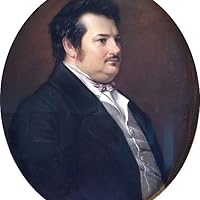
“Задача искусства не в том, чтобы копировать природу, но чтобы её выражать. … Всякое изображение есть целый мир — это портрет, моделью которого было величественное видение, озарённое светом, указанное нам внутренним голосом и предстающее перед нами без покровов, если небесный перст указует нам выразительные средства, источник которых — вся прошлая жизнь. («Неведомый шедевр», с. 14–15).”
―
Оноре де Бальзак,
Неведомый шедевр: новеллы, повесть











 Кен Уилбер и интегральный подход
— 9 members
— last activity Jun 14, 2014 06:15PM
Кен Уилбер и интегральный подход
— 9 members
— last activity Jun 14, 2014 06:15PM



