Home
My Books
Browse ▾
Recommendations
Choice Awards
Genres
Giveaways
New Releases
Lists
Explore
News & Interviews
Genres
Art
Biography
Business
Children's
Christian
Classics
Comics
Cookbooks
Ebooks
Fantasy
Fiction
Graphic Novels
Historical Fiction
History
Horror
Memoir
Music
Mystery
Nonfiction
Poetry
Psychology
Romance
Science
Science Fiction
Self Help
Sports
Thriller
Travel
Young Adult
More Genres
Community ▾
Groups
Quotes
Ask the Author
Sign In
Join
Sign up
View profile
Profile
Friends
Groups
Discussions
Comments
Reading Challenge
Kindle Notes & Highlights
Quotes
Favorite genres
Friends’ recommendations
Account settings
Help
Sign out
Home
My Books
Browse ▾
Recommendations
Choice Awards
Genres
Giveaways
New Releases
Lists
Explore
News & Interviews
Genres
Art
Biography
Business
Children's
Christian
Classics
Comics
Cookbooks
Ebooks
Fantasy
Fiction
Graphic Novels
Historical Fiction
History
Horror
Memoir
Music
Mystery
Nonfiction
Poetry
Psychology
Romance
Science
Science Fiction
Self Help
Sports
Thriller
Travel
Young Adult
More Genres
Community ▾
Groups
Quotes
Ask the Author
Discover new books on Goodreads
Meet your next favorite book
Join Goodreads
169 ratings
(4.06 avg)
17 reviews
Vincent
Follow
Add friend
More
Compare books
Report this account
Block this member
Block
Vincent
?
This will prevent
Vincent
from sending you messages, friend request or from viewing your profile. They will not be notified. Comments on discussion boards from them will be hidden by default.
Confirm
Cancel
Sign in to Goodreads to learn more about Vincent.
Sign In
Vincent’s favorite books
More…
Vincent’s Bookshelves
to-read (1316)
currently-reading (10)
read (188)
did-not-finish (0)
by-audio-book (4)
read-in-compendia (2)
favorites (0)
Stats
|
More…
Vincent is Currently Reading
Vincent
is currently reading
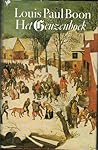
Het geuzenboek
by
Louis Paul Boon
bookshelves:
currently-reading
Want to Read
saving…
Want to Read
Currently Reading
Read
Did Not Finish
Error rating book. Refresh and try again.
Rate this book
Clear rating
1 of 5 stars
2 of 5 stars
3 of 5 stars
4 of 5 stars
5 of 5 stars
Mar 26, 2026 05:44AM
Vincent
is currently reading
Cycles of Time: An Extraordinary New View of the Universe
by
Roger Penrose
bookshelves:
currently-reading
Want to Read
saving…
Error rating book. Refresh and try again.
Rate this book
Clear rating
1 of 5 stars
2 of 5 stars
3 of 5 stars
4 of 5 stars
5 of 5 stars
Dec 14, 2025 10:08AM
Vincent
is currently reading
Middlemarch
by
George Eliot
bookshelves:
currently-reading
Want to Read
saving…
Error rating book. Refresh and try again.
Rate this book
Clear rating
1 of 5 stars
2 of 5 stars
3 of 5 stars
4 of 5 stars
5 of 5 stars
progress:
(65%)
—
Jul 14, 2026 12:04PM
Oct 08, 2025 05:58AM
See all 10 books that Vincent is reading…
Vincent’s Quotes
“Faithless is he that says farewell when the road darkens.”
―
J.R.R. Tolkien,
The Fellowship of the Ring
tags:
faith
8717 likes
“The mind is its own place, and in itself can make a heaven of hell, a hell of heaven..”
―
John Milton,
Paradise Lost
tags:
inspirational
,
religion
8541 likes
“The truth is rarely pure and never simple.”
―
Oscar Wilde,
The Importance of Being Earnest
tags:
truth
17464 likes
“At the age of six I wanted to be a cook. At seven I wanted to be Napoleon. And my ambition has been growing steadily ever since.”
―
Salvador Dali
tags:
age
,
ambition
,
dreaming
,
dreams
,
youth
657 likes
“I am so clever that sometimes I don't understand a single word of what I am saying.”
―
Oscar Wilde,
The Happy Prince and Other Stories
tags:
intelligence
,
self-deprecation
71897 likes
More of Vincent’s quotes…
2026 Reading Challenge
2026
READING
CHALLENGE
Vincent has read 10 of 100 books.
10%
View more
Vincent’s Year In Books
Vincent’s 2025 Year in Books
Take a look at Vincent’s Year in Books, including some fun facts about their reading.
Go to Vincent’s 2025 Year in Books
Vincent’s Friends (17)
Callum's Column
559 books
|
3,364 friends
Jacky
512 books
|
53 friends
vorona
320 books
|
74 friends
Suzanzanzan
298 books
|
14 friends
Daniël
159 books
|
15 friends
Emma
122 books
|
21 friends
Weslyv8
54 books
|
11 friends
Iris
33 books
|
8 friends
More friends…
People Vincent is Following
More…
2 people are following Vincent
Listopia Votes
Best Books of the 19th Century
1,744 books — 6,936 voters
Best Poets
529 books — 415 voters
More…
Favorite Genres
Art
,
Classics
,
Ebooks
,
Fantasy
,
Fiction
,
Historical fiction
,
History
,
Mystery
,
Philosophy
,
Poetry
,
Politics
,
Psychology
,
Religion
,
logic
,
academic
,
political-science
,
european-history
, and
world-history
Polls voted on by Vincent
Lists liked by Vincent