This will prevent Eden from sending you messages, friend request or from viewing your profile. They will not be notified. Comments on discussion boards from them will be hidden by default.
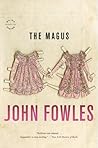
“Men love war because it allows them to look serious. Because they imagine it is the one thing that stops women laughing at them. In it they can reduce women to the status of objects. That is the great distinction between the sexes. Men see objects, women see relationship between objects. Whether the objects love each other, need each other, match each other. It is an extra dimension of feeling we men are without and one that makes war abhorrent to all real women - and absurd. I will tell you what war is. War is a psychosis caused by an inability to see relationships. Our relationship with our fellow-men. Our relationship with our economic and historical situation. And above all our relationship to nothingness. To death.”
―
John Fowles,
The Magus
“To love at all is to be vulnerable. Love anything and your heart will be wrung and possibly broken. If you want to make sure of keeping it intact you must give it to no one, not even an animal. Wrap it carefully round with hobbies and little luxuries; avoid all entanglements. Lock it up safe in the casket or coffin of your selfishness. But in that casket, safe, dark, motionless, airless, it will change. It will not be broken; it will become unbreakable, impenetrable, irredeemable. To love is to be vulnerable.”
―
C.S. Lewis,
The Four Loves
“We are living in a culture entirely hypnotized by the illusion of time, in which the so-called present moment is felt as nothing but an infintesimal hairline between an all-powerfully causative past and an absorbingly important future. We have no present. Our consciousness is almost completely preoccupied with memory and expectation. We do not realize that there never was, is, nor will be any other experience than present experience. We are therefore out of touch with reality. We confuse the world as talked about, described, and measured with the world which actually is. We are sick with a fascination for the useful tools of names and numbers, of symbols, signs, conceptions and ideas.”
―
Alan Wilson Watts
“My passionate sense of social justice and social responsibility has always contrasted oddly with my pronounced lack of need for direct contact with other human beings and human communities. I am truly a 'lone traveler' and have never belonged to my country, my home, my friends, or even my immediate family, with my whole heart; in the face of all these ties, I have never lost a sense of distance and a need for solitude… ”
―
Albert Einstein,
Ideas and Opinions
“The pro-death view should be of interest even to those who do not accept it. One of its valuable features is that it offers a unique challenge to those pro-lifers who reject a legal right to abortion. Whereas a legal pro-choice position does not require a pro-lifer to have an abortion—it allows a choice—a legal pro-life position does prevent a pro-choicer from having an abortion. Those who think that the law should embody the pro-life position might want to ask themselves what they would say about a lobby group that, contrary to my arguments in Chapter 4 but in accordance with pro-lifers’ commitment to the restriction of procreative freedom, recommended that the law become pro-death. A legal pro-death policy would require even pro-lifers to have abortions. Faced with this idea, legal pro-lifers might have a newfound interest in the value of choice.”
―
David Benatar,
Better Never to Have Been: The Harm of Coming into Existence