
Discover new books on Goodreads
Meet your next favorite book




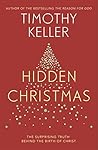
Christians have historically understood passages such as Philippians 2:5–11 as teaching that when the Son of God became human he did not lay aside his deity. He was still God, but he emptied himself of his glory—of his divine prerogatives.
...more


“God created things which had free will. That means creatures which can go wrong or right. Some people think they can imagine a creature which was free but had no possibility of going wrong, but I can't. If a thing is free to be good it's also free to be bad. And free will is what has made evil possible. Why, then, did God give them free will? Because free will, though it makes evil possible, is also the only thing that makes possible any love or goodness or joy worth having. A world of automata -of creatures that worked like machines- would hardly be worth creating. The happiness which God designs for His higher creatures is the happiness of being freely, voluntarily united to Him and to each other in an ecstasy of love and delight compared with which the most rapturous love between a man and a woman on this earth is mere milk and water. And for that they've got to be free.
Of course God knew what would happen if they used their freedom the wrong way: apparently, He thought it worth the risk. (...) If God thinks this state of war in the universe a price worth paying for free will -that is, for making a real world in which creatures can do real good or harm and something of real importance can happen, instead of a toy world which only moves when He pulls the strings- then we may take it it is worth paying.”
― The Case for Christianity
Of course God knew what would happen if they used their freedom the wrong way: apparently, He thought it worth the risk. (...) If God thinks this state of war in the universe a price worth paying for free will -that is, for making a real world in which creatures can do real good or harm and something of real importance can happen, instead of a toy world which only moves when He pulls the strings- then we may take it it is worth paying.”
― The Case for Christianity

“And now brothers, I will ask you a terrible question, and God knows I ask it also of myself. Is the truth beyond all truths, beyond the stars, just this: that to live without him is the real death, that to die with him the only life?”
― The Magnificent Defeat
― The Magnificent Defeat

“Those who love their dream of a Christian community more than they love the Christian community itself become destroyers of that Christian community even though their personal intentions may be ever so honest, earnest and sacrificial. God hates this wishful dreaming because it makes the dreamer proud and pretentious. Those who dream of this idolized community demand that it be fulfilled by God, by others and by themselves. They enter the community of Christians with their demands set up by their own law, and judge one another and God accordingly. It is not we who build. Christ builds the church. Whoever is mindful to build the church is surely well on the way to destroying it, for he will build a temple to idols without wishing or knowing it. We must confess he builds. We must proclaim, he builds. We must pray to him, and he will build. We do not know his plan. We cannot see whether he is building or pulling down. It may be that the times which by human standards are the times of collapse are for him the great times of construction. It may be that the times which from a human point are great times for the church are times when it's pulled down. It is a great comfort which Jesus gives to his church. You confess, preach, bear witness to me, and I alone will build where it pleases me. Do not meddle in what is not your providence. Do what is given to you, and do it well, and you will have done enough.... Live together in the forgiveness of your sins. Forgive each other every day from the bottom of your hearts.”
―
―
“Make no mistake,' He says, 'if you let me, I will make you perfect. The moment you put yourself in My hands, that is what you are in for. Nothing less, or other, than that. You have free will, and if you choose, you can push Me away. But if you do not push Me away, understand that I am going to see this job through. Whatever suffering it may cost you in your earthly life, whatever inconceivable purification it may cost you after death, whatever it costs Me, I will never rest, nor let you rest, until you are literally perfect - until my Father can say without reservation that He is well pleased with you, as He said He was well pleased with me. This I can do and will do. But I will not do anything less.”
―
―
“From the essay on Love, in which he describes as a wilderness experience his daily visits with his wife to a hospital 3,000 miles from home in a strange city, where someone he loves is in danger of dying.
“When the worst finally happens, or almost happens, a kind of peace comes. I had passed beyond grief, beyond terror, all but beyond hope, and it was thee, in that wilderness, that for the first time in my life I caught sight of something of what it must be like to love God truly. It was only a glimpse, but it was like stumbling on fresh water in the desert, like remembering something so huge and extraordinary that my memory had been unable to contain it. Though God was nowhere to be clearly seen, nowhere to be clearly heard, I had to be near him—even in the elevator riding up to her floor, even walking down the corridor to the one door among all those doors that had her name taped on it. I loved him because there was nothing else left. I loved him because he seemed to have made himself as helpless in his might as I was in my helplessness. I loved him not so much in spite of there being nothing in it for me but almost because there was nothing in it for me. For the first time in my life, there in that wilderness, I caught a glimpse of what it must be like to love God truly, for his own sake, to love him no matter what. If I loved him with less than all my heart, soul, and will, I loved him with at least as much of them as I had left for loving anything…
I did not love God, God knows, because I was some sort of saint or hero. I did not love him because I suddenly saw the light (there was almost no light at all) or because I hoped by loving him to persuade him to heal the young woman I loved. I loved him because I couldn’t help myself. I loved him because the one who commands us to love is the one who also empowers us to love, as there in the wilderness of that dark and terrible time I was, through no doing of my own, empowered to love him at least a little, at least enough to survive. And in the midst of it, these small things happened that were as big as heaven and earth because through them a hope beyond hopelessness happened. “O Israel, hope in the Lord from this time forth and for evermore.”…
The final secret, I think, is this: that the words “You shall love the Lord your God” become in the end less a command than a promise.”
― A Room Called Remember: Uncollected Pieces
“When the worst finally happens, or almost happens, a kind of peace comes. I had passed beyond grief, beyond terror, all but beyond hope, and it was thee, in that wilderness, that for the first time in my life I caught sight of something of what it must be like to love God truly. It was only a glimpse, but it was like stumbling on fresh water in the desert, like remembering something so huge and extraordinary that my memory had been unable to contain it. Though God was nowhere to be clearly seen, nowhere to be clearly heard, I had to be near him—even in the elevator riding up to her floor, even walking down the corridor to the one door among all those doors that had her name taped on it. I loved him because there was nothing else left. I loved him because he seemed to have made himself as helpless in his might as I was in my helplessness. I loved him not so much in spite of there being nothing in it for me but almost because there was nothing in it for me. For the first time in my life, there in that wilderness, I caught a glimpse of what it must be like to love God truly, for his own sake, to love him no matter what. If I loved him with less than all my heart, soul, and will, I loved him with at least as much of them as I had left for loving anything…
I did not love God, God knows, because I was some sort of saint or hero. I did not love him because I suddenly saw the light (there was almost no light at all) or because I hoped by loving him to persuade him to heal the young woman I loved. I loved him because I couldn’t help myself. I loved him because the one who commands us to love is the one who also empowers us to love, as there in the wilderness of that dark and terrible time I was, through no doing of my own, empowered to love him at least a little, at least enough to survive. And in the midst of it, these small things happened that were as big as heaven and earth because through them a hope beyond hopelessness happened. “O Israel, hope in the Lord from this time forth and for evermore.”…
The final secret, I think, is this: that the words “You shall love the Lord your God” become in the end less a command than a promise.”
― A Room Called Remember: Uncollected Pieces

Jono’s 2025 Year in Books
Take a look at Jono’s Year in Books, including some fun facts about their reading.

152 books
|
17 friends

155 books
|
10 friends

1,597 books
|
75 friends

232 books
|
98 friends

91 books
|
8 friends

17 books
|
90 friends

0 books
|
6 friends

0 books
|
10 friends
More friends…


Favorite Genres
Adult Fiction, Biography, Book Club, Ebooks, Fantasy, Fiction, Horror, Mystery, Paranormal, Politics, Religion, Romance, Science, Science fiction, Young-adult, and War
Polls voted on by Jono
Lists liked by Jono