
Cindy Vallar's Blog - Posts Tagged "legacy"
Review of Angela C. Sutton's Pirates of the Slave Trade
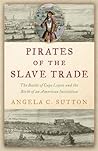 Pirates of the Slave Trade: The Battle of Cape Lopez and the Birth of an American Institution by Angela C. Sutton
My rating: 5 of 5 stars
History is required in school, but during my youth at least, my teachers didn’t always show how what happened one place was connected with or impacted events happening elsewhere. My research into pirates and the past has taught me that these interconnections do exist. More and more, books that come across my desk strive to show this bigger, often global picture. Pirates of the Slave Trade is one such book.
At first glance, readers may wonder what was the Battle of Cape Lopez. Those familiar with pirate history know of it but more because of what happened at this fight than by its name. It took place off the coast of West Africa on 10 February 1722. The outcome brought about the demise of one of the most prolific pirates of the Golden Age of Piracy, Bartholomew Roberts. The subsequent trials at Cape Coast Castle led to mass hangings of fifty-two pirates. Captain Chaloner Ogle of the British Royal Navy would be honored with knighthood. Piracy began to wane, whereas the buying and selling of slaves increased in scope and intensity. In turn, this led to changes in how Europeans viewed Africans and how Britain and her colonies, especially in what would become the United States, characterized those who were enslaved.
This is, in essence, what Pirates of the Slave Trade is about, but Sutton touches on many peripheral topics related to piracy and slavery. After setting the scene and introducing the main characters, she examines what drew Roberts and his men to Africa. He was neither a stranger to the slave trade – his sailing career started aboard slave ships – nor unknown when he returned to African waters in 1722. (He was already a notorious pirate, having captured more than 400 vessels and murdered a governor.) Captain Ogle, on the other hand, was a pirate hunter, a man determined to end Roberts’s depredations and he possessed the authority to do whatever it took to accomplish the pirates’ eradication.
Sutton also introduces a third man to this equation: John Conny, an Ahantan king who learned the ins and outs of European slave trading operations firsthand and used them to his advantage in what is now Ghana. As he grew more influential and powerful, he sheltered pirates and made it possible for them to prey on ships of the various West India companies in African waters.
The book is divided into two parts. “The Battle of Cape Lopez” identifies principal players and establishes the parameters that lead to the final confrontation between the Royal Navy and the pirates. “The Birth of an American Institution” delves into the battle’s legacy, asking and seeking answers to:
Who were the real gentlemen of fortune here?
And who are they today?
Who benefits from global extraction-based exploitative processes that change the face of the entire world?
And who among us (“us” meaning the national as well as the global population) are left behind? (143-144)
Maps, artwork, and tables accompany the narrative. Footnotes provide additional information on topics mentioned in the text, while endnotes provide citations to source material consulted. There is an index, but no bibliography.
Sutton deftly lays the groundwork on the slave trade and slavery, piracy in Africa, and the people and places involved to orient the reader in the primary purpose of this book. She discusses the trading companies to a fuller degree than is often covered in history volumes. Readers gain a better understanding of before and after, especially as regards slavery in America. She skillfully shows how one incident leads to another and another, showing their interconnectedness and the resultant outcomes. In addition, she utilizes the words and deeds of William Snelgrave, a captain engaged in the slave trade who also became a captive of three pirates, to graphically depict the before and after changes.
Many authors writing books about pirates and their connections to slavery tend to gloss over the details, preferring to mention rather than elucidate. Sutton dares to venture much further into what is a provocative and sometimes incendiary discussion; she does so “with an antiracist lens.” (238) She explains why and lets readers know that they can effect change – a fact that resonates today. Pirates of the Slave Trade is enlightening, thought-provoking, and a must read for anyone who wants a fuller picture of the connections between piracy, the slave trade, and the legacy the downfall of one created for the other.
(This review originally appeared at Pirates & Privateers: http://www.cindyvallar.com/Sutton.html)
View all my reviews


A Novel of Chinese Pirates
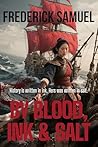 By Blood, Ink & Salt by Frederick Samuel
My rating: 5 of 5 stars
This is not a biography. It is the hush between waves – and what rises when you listen.
Thus begins Samuel’s story of Shek Ying (also known as Zheng Yi Sao). This is not a normal rendering of historical fiction. It is lyrical. With well-chosen words and phrases, Samuel instills in readers a sense of place – of China, of sea, of Asian piracy instead of Western. He captures the essence of the woman and the formidable confederation she devises. At its core is the Code.
Shek Ying does not begin life as a pirate. She pleasures men, one of whom is a successful captain of sea bandits. Zheng Yi wants her join him. She agrees because she will longer walk in someone’s shadow. She will be his equal.
Each band has its own leader, but they sometimes work in consort. Zheng Yi commands the Red Fleet. Shek Ying sees potential, and devises principles that, if followed, will bring them success far greater than they have alone. It will also protect them from those who would destroy them. Although all the captains sign, they do not pledge loyalty to her or the Code. They merely watch and wait.
High-ranking and low-ranking sea bandits test her. She offers those on land a way to live rather than subsist or starve. In return, she receives loyalty that is shown by the vital information they share. Through blood, ink, and salt (a form of currency), Shek Ying “becomes the tide they follow.”
The more powerful they become, the more others feel threatened. The British, the Dutch, and the Triads seek illicit trade alliances involving guns and opium. Such partnerships will absorb the sea bandits until they disappear. Shek Ying understands this and acts to preserve the confederation and her fellow sea bandits. When gifts do not bring forth the desired alliances, their enemies find alternatives to gain objectives. Spies, saboteurs, forgers, and traitors work from within, and Zheng Yi vanishes during a storm. His loss is grievous, but Shek Ying is determined to cut out the rot that threatens to destroy them.
On occasion, I do not explicitly understand what transpires, but the significance is always clear. Chapter 55 seems to be a fitting end to the story, but subsequent chapters are a mix of past and present, and cover a wide span of years. In response to my question about this, Samuel responds:
Once the fleet surrenders, the book moves away from a purely chronological progression and becomes something more reflective – a way of exploring meaning, memory, and legacy rather than simply recounting events in order.
I chose this structure because it echoes the way memory actually works: not as a straight line, but as a series of the most resonant memories. By placing scenes out of order – for example, showing the surrender before the betrayals that led to it – the story highlights the hidden personal struggles behind the official history. And through these time jumps, we get to see Shek Ying in her fullness: not just as a leader at a single point in time, but as a woman defined by her choices, her sacrifices, and ultimately the legend she becomes.
In essence, the narrative shifts from a straightforward historical account into a more poetic reflection on what remains after everything is over – how we remember, and what truly endures.
As a result, readers become immersed in a story in which fact and fiction are interwoven with a weaver’s expertise. Although predominately from Shek Ying’s perspective, the story occasionally unfolds from other points of view – a Qing governor, a pirate captain, a pirate archivist, a foster son, and a silent watcher -- to provide a broader picture of the confederation’s birth, rise, downfall, and legacy. Key components that flesh out the story are endurance, greed, and power. What Samuel deftly shows is that no matter how often the authorities attempt to erase Shek Ying from history, she remains as powerful a figure as she was in the early 19th century. He writes in present tense and the imagery he wields is vivid. Some action is subtle; some is not. This is a pirate tale, just not the one readers expect. Instead, this passage sums up the reading experience: “No sirens. No panic. Only the steady rise of the Pearl River, slipping under doorways, over thresholds, until streets carry water like veins carry blood.”
This review originally appeared at Pirates and Privateers: http://www.cindyvallar.com/FSamuel.html
View all my reviews


