Lance Tyson's Blog - Posts Tagged "sales-advice"
Gaining the Edge: 3 Steps to Taking the Lead in Sales

I recently made a visit to the orthopedic surgeon to check in on a shoulder issue. I didn’t walk in the door wanting to sign up for surgery.
After spending a bit of time in the waiting room, I was led back to another part of the office, where a nurse practitioner asked me a number of questions about my health, took notes on my weight, temperature, and blood pressure and interviewed me about my health history. They gathered lots of information about me in order to help the doctor accurately evaluate my condition.
And, all the while, I was evaluating them, too – on the thoroughness of their process.
COMPETITIVE EDGE INSIGHTS FROM THE MEDICAL FIELD
When the orthopedic surgeon came into the room, he took the time to connect with me personally. He immediately developed a rapport with me, just the way most good salespeople are able to do with their prospects. But, beyond that, he established his credibility by demonstrating his expertise and showing me that he had done this before. His questions were focused, and he was clearly asking them in order to understand me better rather than simply waiting to respond.
When the doctor segued into a diagnosis, he had my full attention. His bedside manner, the questions he asked, and the level to which he appeared to be interested in listening to my answers all played a key role in how I reacted to his diagnosis and my willingness to accept that it was accurate. By the time he moved from the diagnosis into a prescription, I was already sold. I could have opted to get a second opinion or go down another path, but he had already gained my confidence through his open-ended questions and the way he skillfully guided the conversation.
GETTING TO THE RIGHT SELLING SOLUTION
In today’s complex selling environment, salespeople need to make the buyer a partner in getting to the right solution. But there’s a common misconception that sales is all about building relationships. In reality, though, sales is about developing three essential elements: credibility, rapport, and understanding the prospect’s needs. Relationships are a byproduct.
Everything salespeople say and do, including their appearance, adds or detracts from their credibility. Credibility yields trust and, in turn, improves rapport.
When good rapport is developed, the buyer feels confident sharing more information, which increases understanding. Only when those three elements are established in equal measure can salespeople achieve the right solution and gain a competitive edge.
FOUR THINGS EVERY SALESPERSON MUST DO TO GAIN A COMPETITIVE EDGE
That’s why the diagnosis step is critical when it comes to transforming indifference into interest in the buyer’s mind. The job of the salesperson is to:
- address the buyer’s doubts,
- establish credibility,
- ask the right questions to get an accurate read on the buyer’s situation, and
- adjust the diagnosis based on the buyer’s input and needs.
Once you get to the correct diagnosis, the next step is to prescribe a solution. The right solution to the wrong problem is worse than the wrong solution to the right problem, so it’s crucial to get to the correct diagnosis. In sales we tailor the solution as much as possible to the specific needs of the buyer. At this point, the buyer will have lots of questions: What is it? How does it work? Who says so, besides you? Can you prove it? To overcome doubt in the buyer’s mind, the salesperson needs to give the buyer exactly the right amount of information, and no more, about the solution.
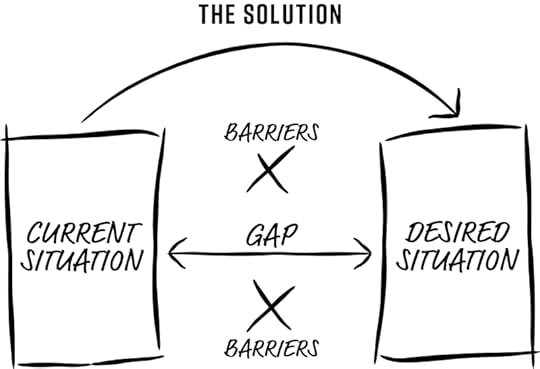
This is a step-by step process and takes place within a fluid world. It might be possible to cover both the diagnosis and prescription in one meeting, or even a conference call. Or, in a more complex sale, it might take three or four meetings to connect, evaluate, and diagnose – leading to a prescriptive presentation. The pace and complexity of a sale are dictated by the marketplace and the product.
Regardless of the time horizon or complexity of the sale, the process and steps remain the same. They can be adapted to suit any situation or customer, but the sequence remains constant.
WANT TO KNOW MORE ABOUT HONING YOUR TEAM’S COMPETITIVE EDGE?
Purchase a copy of my best-selling book, Selling is an Away Game, here
To learn more about how away-game selling can give you a competitive edge, contact Tyson Group here.


3 KEYS TO ACHIEVING SALES SUCCESS

SALES WISDOM I’VE DISCOVERED IN MY CAREER
Throughout my time in sales, I’ve researched numerous complex theories, process descriptions, tactics, and strategies. In addition to these, I have also come across a number of quips from sales gurus who try to encapsulate sales success in a simple phrase that can be easily understood, even by a 5th grader.
For example, Zig Ziglar was famous for saying, “Either you’re green and growing or you’re ripe and rotten.”
Not only is this a nice example of an analogy, but it’s a message to all salespeople, young and old, that you need to be learning new stuff all the time. Otherwise, you’ve reached the end of your useful life.
Throughout my training sessions, speaking engagements, and lectures, I’ve peppered my talks with my own version of these sales success tips based on my own experiences. In my book, Selling is an Away Game, they are referred to as “Lance-isms.” Here are a few you can use to put you on the path to your own sales success.
SALES SUCCESS KEY: BE YOUR OWN ARCHITECT. THE WORLD IS YOUR OYSTER.
This is one I actually heard from my father. I still use it in my sessions to impart upon salespeople that they have the freedom, power, and responsibility to visualize and create their own outcomes. They simply must do the work necessary to reach those outcomes. But as we teach in our sales leadership programs, people will work willingly in a world they help create. And they will work tirelessly to reach a goal they set. So, we coach and encourage salespeople to set meaningful and relevant goals that support the world they envision. In doing so, they find the motivation to propel themselves forward as opposed to having the sales manager hold their hands, constantly micromanage their activities, and sometimes even give them a push.
So, to sales leaders I say coach your people to be independent. Give them the responsibility to act.
And to salespeople striving for sales success, I say be your own architect. The world is your oyster.
SALES SUCCESS KEY: DON’T CONFUSE ACTIVITY WITH RESULTS
Back when I ran several training franchises in Ohio, I had a new sales rep who spent a lot of time developing a territory about 70 miles north of our office location. He cultivated some good leads, made some good contacts and we held a few training events in the area. But the trip there and back cost him over two hours every day. That was over two hours every day that he wasn’t in front of a prospect. That was over two hours every day that he wasn’t selling. That activity may have been necessary to get him up to the area, but it wasn’t getting him the results that he wanted, more sales.
I see this all the time. Sales reps getting caught up in performing busy maintenance work, like updating the CRM – important functions to be sure. But these aren’t selling activities. These are maintenance activities. Remember, don’t confuse activity with results. Use activity to build habits and skills. Then use those habits and skills to get the results you want. If you aren’t getting results, build up some different habits and skills. But focus on getting the results you want. If you do that, you’ll have an easier time of identifying and performing the necessary activities.
SALES SUCCESS KEY: STOP SPRAYING AND PRAYING
I was once in the presence of a gifted sales rep who was producing mediocre results. The guy was able to read people quickly and easily. The challenge was in his selling method. He would sit across from the prospect, rifle through a list of features, and watch the prospect for a reaction. When he got a reaction, he would focus on the feature that got him the reaction.
The problem here is that you aren’t interacting with your prospect. You aren’t performing any type of diagnostic conversation. You aren’t helping them to identify and acknowledge their challenges. You’re simply poking them with a variety of sticks, looking for that one, magic stick that will make them jump.
And then you’ll keep poking them with that magic stick hoping for a sale.
Add to the fact that not every sales rep has the skill or temperament to read people that well. They are simply praying that something they sprayed will stick.
Look, to produce consistent results and achieve sales success, you must be like a scientist or an engineer and adhere to a reproducible and repeatable process. Showing up at a prospect’s door, spraying out a bunch of product features, and praying that something will stick is not a recipe for reproducible results. Be investigative in your approach. Diagnose your prospect’s challenges. Design solutions that solve their challenges or create opportunities for them. And above all else, stick to your sales process.
Remember, If you have to pray for a result, your activity isn’t producing it.
For additional Lance-isms and ideas on achieving sales success, pick up a copy of Selling is an Away Game, available online at Amazon, fine bookstores and many Hudson News locations.
2 Things to Avoid When Opening a Sales Call

Sales reps are still being taught old school tactics that don’t work in today’s digital business environment. In a previous post, I reviewed how the much maligned cold call has become ineffective because of the outdated practices still being used to execute them.
The same can be said for opening a sales call. If you want to to be effective when opening a sales call, you need to drop the old-school behaviors that some organizations are still teaching. Here are two examples of behaviors you need to stop right now when opening a sales call.
WHEN OPENING A SALES CALL, DON’T READ YOUR SCRIPT
One morning recently, I received a call from someone offering a free executive report as a “reward” for subscribing to an online publication. I can appreciate what these sales reps are doing. However, if you’re targeting executives, your communication style needs to be executive-like.
I was in the middle of a task when my phone rang. Like most people in business, I didn’t want to stop what I was doing. So, I looked at my smartphone and made a decision based on the caller ID.
Usually, when the caller ID is “unknown” I do what most business people do and let the call go to voicemail. However, I was curious this time. So I answered, half expecting the call to be a marketing robocall that I could easily drop.
Instead, I got “Bobbi”. She opened her call with, “Hi my name is “Bobbi and I’m with High Tech Magazine. May I speak with Lance?”
Now, I typically answer the phone by stating my name, “Lance Tyson”, and today was no different. So when somebody responds with , “Hello, Lance?” or, “Lance?” my perception is, “OK. They have poor cell phone reception” or “They are re-affirming my name because I didn’t speak plainly enough.”
But when they begin with a “Hello this is Bobbi from High Tech Magazines, Inc. May I please speak with Lance?” after I just said, “Hello, Lance Tyson” it says to me that they are reading from a script.
When opening a sales call, perception is everything. If you sell over the phone, especially in a B2B environment, drop the script. Stay focused on the conversation and respond to your contact accordingly. Stay present and aware. Managers and executives have no time for sales reps who are mentally unavailable.
WHEN OPENING A SALES CALL, RESPECT THEIR SCHEDULE
After Bobbi opened her sales call with her less-than-stellar attention-getter, she proceeded to read the rest of her script. She outlined the benefits of this report and how it was going to reveal secrets about the sales industry. But, before she could send it to me, she needed to confirm some information.
Remember, I’m preoccupied with my own tasks. So, I tell her that I’m currently in the middle of a meeting.
Now, here’s a question for you readers out there: How many of you are in the middle of a couple of tasks when you get an unsolicited phone call?
As I’ve said in many of my training sessions, no one is sitting at their desk waiting for a salesperson to call them. Your prospects are always preoccupied with something at any given time.
After I tell her that I’m in a meeting, she paused, and then said, “I apologize for the interruption. I just need to verify a few pieces of information”. She did not say, “I apologize, is there a better time to talk” or “I’ll call back at a more opportune time.” She sent the unspoken message, “I’m sorry, but this is more important. So drop what you’re doing and give me your information.”
If your contact says that they don’t have time right now or they are in a meeting, don’t double-down on your request. Use the few seconds you do have with them to set up a future meeting.
Remember, perception is key. How you respond to your prospect’s statement of “I don’t have time right now” goes beyond simply getting the calls in to make a quota. It reveals to your contacts how you view them: either as a number on a spreadsheet or a valued professional.
TWO THINGS YOUR PROSPECTS ARE SHORT ON – ATTENTION AND TIME
Today, business people are being pulled in multiple directions. The attention span of the people you are contacting is limited, fractured, and split among 5 to 7 different projects. And your call is just one more item thrown into the mix, adding to their mental burden and their frustration.
Now, I realize that sales reps have more channels like LinkedIn to communicate with their prospects in addition to picking up the phone and making a call. However, if your prospect is so busy that they can’t respond at that moment, then the issue is less about the media used and more about you doing a better job of breaking their preoccupation and getting their attention.
You won’t break their preoccupation by reading a phone script. And you certainly won’t win their respect by disrespecting their time.
In review, when someone says that they don’t have the time to talk at that moment, schedule time in the future with them and move on to your next prospect. But before you move on, perform a quick review of the call. Determine how you failed to break the prospect’s preoccupation and win their attention. Now, you’ve set yourself up for the next prospect on your list. And you have the high ground when you call your busy prospect back.
DO YOU WANT MORE POWERFUL IDEAS ON OPENING A SALES CALL?
Because the two are so similar, many of the ideas we use when opening a sales presentation are similar to those in opening a sales call. For additional ideas on getting your audience’s attention, from a single prospect to a room full of decision makers, download our digital publication, Basics of Dynamic Sales Presentations, here.
Check out Lance Tyson’s book, Selling Is An Away Game, available on Amazon, for additional methods and sales strategy. Get your copy today!