Lance Tyson's Blog - Posts Tagged "communication-skills"
Gaining the Edge: 3 Steps to Taking the Lead in Sales

I recently made a visit to the orthopedic surgeon to check in on a shoulder issue. I didn’t walk in the door wanting to sign up for surgery.
After spending a bit of time in the waiting room, I was led back to another part of the office, where a nurse practitioner asked me a number of questions about my health, took notes on my weight, temperature, and blood pressure and interviewed me about my health history. They gathered lots of information about me in order to help the doctor accurately evaluate my condition.
And, all the while, I was evaluating them, too – on the thoroughness of their process.
COMPETITIVE EDGE INSIGHTS FROM THE MEDICAL FIELD
When the orthopedic surgeon came into the room, he took the time to connect with me personally. He immediately developed a rapport with me, just the way most good salespeople are able to do with their prospects. But, beyond that, he established his credibility by demonstrating his expertise and showing me that he had done this before. His questions were focused, and he was clearly asking them in order to understand me better rather than simply waiting to respond.
When the doctor segued into a diagnosis, he had my full attention. His bedside manner, the questions he asked, and the level to which he appeared to be interested in listening to my answers all played a key role in how I reacted to his diagnosis and my willingness to accept that it was accurate. By the time he moved from the diagnosis into a prescription, I was already sold. I could have opted to get a second opinion or go down another path, but he had already gained my confidence through his open-ended questions and the way he skillfully guided the conversation.
GETTING TO THE RIGHT SELLING SOLUTION
In today’s complex selling environment, salespeople need to make the buyer a partner in getting to the right solution. But there’s a common misconception that sales is all about building relationships. In reality, though, sales is about developing three essential elements: credibility, rapport, and understanding the prospect’s needs. Relationships are a byproduct.
Everything salespeople say and do, including their appearance, adds or detracts from their credibility. Credibility yields trust and, in turn, improves rapport.
When good rapport is developed, the buyer feels confident sharing more information, which increases understanding. Only when those three elements are established in equal measure can salespeople achieve the right solution and gain a competitive edge.
FOUR THINGS EVERY SALESPERSON MUST DO TO GAIN A COMPETITIVE EDGE
That’s why the diagnosis step is critical when it comes to transforming indifference into interest in the buyer’s mind. The job of the salesperson is to:
- address the buyer’s doubts,
- establish credibility,
- ask the right questions to get an accurate read on the buyer’s situation, and
- adjust the diagnosis based on the buyer’s input and needs.
Once you get to the correct diagnosis, the next step is to prescribe a solution. The right solution to the wrong problem is worse than the wrong solution to the right problem, so it’s crucial to get to the correct diagnosis. In sales we tailor the solution as much as possible to the specific needs of the buyer. At this point, the buyer will have lots of questions: What is it? How does it work? Who says so, besides you? Can you prove it? To overcome doubt in the buyer’s mind, the salesperson needs to give the buyer exactly the right amount of information, and no more, about the solution.
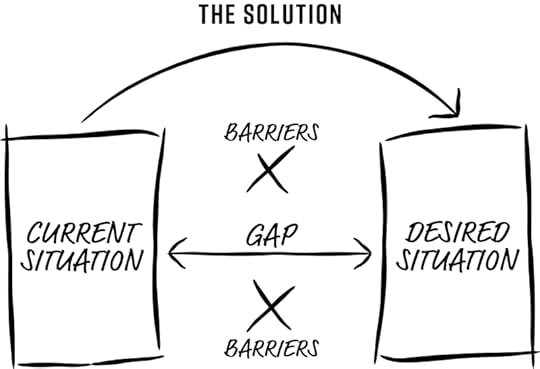
This is a step-by step process and takes place within a fluid world. It might be possible to cover both the diagnosis and prescription in one meeting, or even a conference call. Or, in a more complex sale, it might take three or four meetings to connect, evaluate, and diagnose – leading to a prescriptive presentation. The pace and complexity of a sale are dictated by the marketplace and the product.
Regardless of the time horizon or complexity of the sale, the process and steps remain the same. They can be adapted to suit any situation or customer, but the sequence remains constant.
WANT TO KNOW MORE ABOUT HONING YOUR TEAM’S COMPETITIVE EDGE?
Purchase a copy of my best-selling book, Selling is an Away Game, here
To learn more about how away-game selling can give you a competitive edge, contact Tyson Group here.


Raise the Volume: 6 Simple Tools To Improve Your Listening Skills

In a previous post, we talked about the cushion. It’s one of the communication tools you must develop if you want to dominate resolving objections. Another communication tool you’ll need to develop are your listening skills.
We cover listening skills extensively in our sales leadership and sales coaching sessions. However, these skills are also critical when you are opening a sales call, sitting across from your prospect conducting an analysis, and especially when responding to your client’s objections.
Typically, when you’re in a situation requires your listening skills, there’s a certain listening level to which we typically rise. Different situations will cause us to rise to different levels of listening. For example, you will listen to a child telling you about their school day at a different level than you would listen to your doctor talking about your test results.
5 LEVELS OF LISTENING
Here are the 5 levels of listening we review in our sessions:
Ignore: At this level, we intentionally don’t listen. This is your level of engagement when you want to get rid of someone who is wasting your time. Yes, this level does have its uses.
Pretend: At this level, you create the illusion that you are listening. Usually, you’ll use your body language and modulate your voice to make the other party believe you are listening to them. But in reality, you are not paying close attention to what they are saying.
Selective: Here, you are listening for the things you want to hear and can use. Typically, couples having an argument will settle in this level. They listen for the appropriate place to intervene so they can make their point.
Attentive: Here, you listen carefully to the message content.
Empathetic: At this level, you listen from the other person’s perspective and can identify the content and emotion that the sender is expressing. At this level, you don’t judge the message. You are only attempting to understand as the other party sees and delivers the message.
LISTENING SKILLS IN RESOLVING OBJECTIONS
Now, when you are resolving objections, you are using your language to engage your prospect or client. And you’re listening to the responses to honestly see things from their perspective. Naturally, you want to be at the attentive or empathetic level to be in the best position to resolve the objection.
Now remember, your prospect or client is also at a listening level. If they are at the attentive or empathetic level, then you are resolving a real objection. However, if they are trying to get you out of their office by ignoring you, pretending to listen, or sometimes even selectively listening for the right trigger phrase, then you are engaged in a put-off. It’s time to head back to the start of your sales process.
6 TACTICS TO STRENGTHEN YOUR LISTENING SKILLS
Here are 6 specific tactics to strengthen your listening skills:
LOOK AT THE OTHER PERSON
Not looking at the other person in the conversation is a dead give-away that you are preoccupied. Either that or you’re simply not interested in what your presenter has to say. It sends a nonverbal signal that there is something more deserving of your attention than the current conversation.
ASK QUESTIONS
Asking questions and summarizing what you heard are verbal ways to let the other person know you are paying attention. If you are using the telephone as your communication tool and you don’t have the advantage of looking at your prospect or client, you’ll need to lean more heavily on asking questions and summarizing what you heard.
DON’T INTERRUPT
We’ve all had those moments where the light bulb went off, we understood what our prospect or client was saying, and we wanted to prove it by jumping in and finishing their thought. Please refrain from doing this. Interrupting the other person when presenting their ideas also sends an unspoken message – what they are saying isn’t important to you. Let the other person know that their ideas and what they have to say are important. This is critical in resolving objections. And it’s absolutely vital in your coaching sessions.
STAY ON SUBJECT
Naturally, you want to stay focused on the subject at hand. While it may make sense to bring in a related topic or solution, you don’t want to stray too far off course and send the unspoken message that something you are thinking about is more important than the current conversation. Stay focused on the current topic at hand.
EMOTIONAL CONTROL
You want to be engaged. You want to be animated. And you want to express your views with passion. What you don’t want is to be controlled by emotions and have your conversation partner control you with a few, well placed words. I have seen sales reps lose deals because they had to be right and argued with the prospect. Reps have lost deals because they encountered an objection that they didn’t feel comfortable with and found themselves controlled by fear and desperation. I’ve seen reps lose sales because they got angry over a competitor sowing fear, uncertainty, and doubt. Remember, emotional content is a good thing to have, but only if you maintain control.
APPROPRIATE RESPONSES
Lastly, you want to be sure your response is appropriate to the situation at hand. You want to show that you were paying attention to the conversation. If you are at the highest level of listening, your response can be anything from an acknowledgement giving them the green light to continue to a summary of what you heard from their conversation followed by a trial close question. Just remember, to respond appropriately, you must pay attention to your prospect or client. You need to truly see things from their perspective.Here are 6 tactics to develop your listening skills and enhance your ability to communicate with your clients and prospects.
SUMMARY OF DEVELOPING YOUR LISTENING SKILLS
This is a quick summary of the levels of listening and tactics to enhance your listening skills and to resolving objections faster. In your endeavor to communicate with your prospects and clients, the more skilled you are at using your language to shape the conversation, the faster and easier you will find your sales process moving forward. Use this article as a training guide to help you develop your skills and become one of the top sales reps in your organization.
We’ll talk more about communication and listening skills in the future when we review coaching procedures for your team. But for now, realize that any process that makes you a more adept communicator will ease any friction in the sales process and make you a more efficient, and effective sales rep.
Discover more about resolving objections. Click here to get your copy of 7 Steps to Resolving Objections. A quick how-to guide to help sales reps resolve objections quicker and more efficiently.
Be sure to check out Lance Tyson’s book, Selling Is An Away Game: Close Business and Compete in a Complex World available on Amazon. Get your copy today!
Contact Tyson Group here to learn more about how away-game selling can give you a competitive edge.
2 Things to Avoid When Opening a Sales Call

Sales reps are still being taught old school tactics that don’t work in today’s digital business environment. In a previous post, I reviewed how the much maligned cold call has become ineffective because of the outdated practices still being used to execute them.
The same can be said for opening a sales call. If you want to to be effective when opening a sales call, you need to drop the old-school behaviors that some organizations are still teaching. Here are two examples of behaviors you need to stop right now when opening a sales call.
WHEN OPENING A SALES CALL, DON’T READ YOUR SCRIPT
One morning recently, I received a call from someone offering a free executive report as a “reward” for subscribing to an online publication. I can appreciate what these sales reps are doing. However, if you’re targeting executives, your communication style needs to be executive-like.
I was in the middle of a task when my phone rang. Like most people in business, I didn’t want to stop what I was doing. So, I looked at my smartphone and made a decision based on the caller ID.
Usually, when the caller ID is “unknown” I do what most business people do and let the call go to voicemail. However, I was curious this time. So I answered, half expecting the call to be a marketing robocall that I could easily drop.
Instead, I got “Bobbi”. She opened her call with, “Hi my name is “Bobbi and I’m with High Tech Magazine. May I speak with Lance?”
Now, I typically answer the phone by stating my name, “Lance Tyson”, and today was no different. So when somebody responds with , “Hello, Lance?” or, “Lance?” my perception is, “OK. They have poor cell phone reception” or “They are re-affirming my name because I didn’t speak plainly enough.”
But when they begin with a “Hello this is Bobbi from High Tech Magazines, Inc. May I please speak with Lance?” after I just said, “Hello, Lance Tyson” it says to me that they are reading from a script.
When opening a sales call, perception is everything. If you sell over the phone, especially in a B2B environment, drop the script. Stay focused on the conversation and respond to your contact accordingly. Stay present and aware. Managers and executives have no time for sales reps who are mentally unavailable.
WHEN OPENING A SALES CALL, RESPECT THEIR SCHEDULE
After Bobbi opened her sales call with her less-than-stellar attention-getter, she proceeded to read the rest of her script. She outlined the benefits of this report and how it was going to reveal secrets about the sales industry. But, before she could send it to me, she needed to confirm some information.
Remember, I’m preoccupied with my own tasks. So, I tell her that I’m currently in the middle of a meeting.
Now, here’s a question for you readers out there: How many of you are in the middle of a couple of tasks when you get an unsolicited phone call?
As I’ve said in many of my training sessions, no one is sitting at their desk waiting for a salesperson to call them. Your prospects are always preoccupied with something at any given time.
After I tell her that I’m in a meeting, she paused, and then said, “I apologize for the interruption. I just need to verify a few pieces of information”. She did not say, “I apologize, is there a better time to talk” or “I’ll call back at a more opportune time.” She sent the unspoken message, “I’m sorry, but this is more important. So drop what you’re doing and give me your information.”
If your contact says that they don’t have time right now or they are in a meeting, don’t double-down on your request. Use the few seconds you do have with them to set up a future meeting.
Remember, perception is key. How you respond to your prospect’s statement of “I don’t have time right now” goes beyond simply getting the calls in to make a quota. It reveals to your contacts how you view them: either as a number on a spreadsheet or a valued professional.
TWO THINGS YOUR PROSPECTS ARE SHORT ON – ATTENTION AND TIME
Today, business people are being pulled in multiple directions. The attention span of the people you are contacting is limited, fractured, and split among 5 to 7 different projects. And your call is just one more item thrown into the mix, adding to their mental burden and their frustration.
Now, I realize that sales reps have more channels like LinkedIn to communicate with their prospects in addition to picking up the phone and making a call. However, if your prospect is so busy that they can’t respond at that moment, then the issue is less about the media used and more about you doing a better job of breaking their preoccupation and getting their attention.
You won’t break their preoccupation by reading a phone script. And you certainly won’t win their respect by disrespecting their time.
In review, when someone says that they don’t have the time to talk at that moment, schedule time in the future with them and move on to your next prospect. But before you move on, perform a quick review of the call. Determine how you failed to break the prospect’s preoccupation and win their attention. Now, you’ve set yourself up for the next prospect on your list. And you have the high ground when you call your busy prospect back.
DO YOU WANT MORE POWERFUL IDEAS ON OPENING A SALES CALL?
Because the two are so similar, many of the ideas we use when opening a sales presentation are similar to those in opening a sales call. For additional ideas on getting your audience’s attention, from a single prospect to a room full of decision makers, download our digital publication, Basics of Dynamic Sales Presentations, here.
Check out Lance Tyson’s book, Selling Is An Away Game, available on Amazon, for additional methods and sales strategy. Get your copy today!
3 Valuable Secrets to Building Better Rapport with Your Prospects

Here’s a revelation about the sales process from our Director of Technology, followed by a few ideas on leveraging the power of rapport and becoming a valuable asset.
THERE IS NO MAGICAL ONE-CALL CLOSE. PROSPECTS MUST GO THROUGH THEIR BUYING PROCESS
I remember a situation from years ago when I worked as an outside sales rep during the day and taught presentation programs in the evening.
I had just finished a sales call, closed the deal, gotten the order, and I was ecstatic. The lead coordinator told me that this lead was hot and he was right.
When I got back to the office, I began entering the information into our CRM system. At that time, we were using individual copies of ACT synchronized to a central database. Seems like stone-age technology compared to how we coordinate our sales and marketing activities today with SalesForce and Hubspot.
Upon synchronizing my activities in ACT, not only did I find another record for this customer, but discovered that a fellow sales rep, Bob, had been working with them. He had sent out literature by the box load, made dozens of phone calls, contacted the client numerous times, and still made no headway in moving the prospect through the sales process.
Yet, on this day, I had walked in, met the customer once, and closed the deal.
I’ve never been a believer in the “one call close”. No one walks in a new account cold and sells the management team on the first day. In those instances, there’s always some unseen prep work and relationship building. It can happen from another sales rep, your competition, some marketing material, or a whole lot of online research from the prospect. If you are meeting with a prospect for the first time and they buy, someone else did the heavy lifting to get their attention and spark their interest. And in this particular case, that person was Bob.
BECOMING A VALUABLE ASSET BEGINS WITH ACHIEVING RAPPORT AND LEAVING A FAVORABLE IMPRESSION.
I felt low. I liked Bob. He’s a stand-up guy. The last thing I wanted to do was sneak in behind him and grab the sale after he did all the heavy lifting of educating the customer.
So I approached Bob the next day and told him what had happened.
His comment was “That’s alright. If they couldn’t remember me after all the time I’ve spent with them, then I wasn’t effective in making a lasting impression and I don’t deserve the business.”
Over the past few years I’ve often thought about that situation. I can remember similar sales calls where I did all of the heavy lifting with a prospect, spending time building rapport and educating them. And at the 11th hour, another sales rep swooped in behind me and closed the sale.
It didn’t feel good.
Still, I think of Bob’s statement and his attitude often:
If I don’t do enough to achieve rapport and leave a favorable impression with the prospect, then I don’t deserve the business.
Of course I’ve had those other conversations with clients that sounded like this:
“Yeah, we got a call from someone in your company yesterday, but we told them that we had a rep from your company taking care of us.”
Now if the client said that to another rep in my company, I can imagine what they said to a competitor trying to bring in alternate solutions or quick fixes.
THERE ARE NO MORE ORDER-TAKERS. 3 RAPPORT IDEAS TO MAKING YOURSELF A VALUABLE ASSET
Using rapport to becoming a valuable asset doesn’t have to be an exotic blend of special tactics. In our training and consultation sessions, we tie it to a process involving three simple ideas:
Identify. Connect with your prospect as a person. Remember, people do business with people, not businesses.
Understand Their Needs and Wants. In order to understand what they want, you need to get out of your head. Selling is an away game. It happens in the customer’s mind.
Credibility. Bring to bear your unique insights, and ideas as they relate to the client’s situation.
Three simple ideas to having your customers telling your competition, “We already have a rep taking care of our needs”. You don’t like it when you hear a lead say that phrase to you. But it sure helps you sleep at night when your prospects and customers use it in your defense.
Ultimately, it comes down to your prospects and customers viewing you as a valued addition to their business model.
In this Internet age, your customers and prospects can buy anything they want online with no hassles at all. And they have access to all of the information, recommendations, and social referrals they will ever need. So ask yourself, what value do you bring to the table that justifies your customers spending time with you?
But for now, simply jot down 5 activities that you do to get your customers and prospects to remember you as a valuable asset when you aren’t there with them. Because I can guarantee you, your competition is actively looking for ways to unseat you.
Don’t make it easy for them.
Good Selling!
WANT MORE POWERFUL IDEAS ON OPENING SALES CALLS?
Because the two are so similar, many of the ideas we use when opening a sales presentation are similar to those in opening sales calls. For additional ideas on getting your audience’s attention, from a single prospect to a room full of decision makers, download our digital publication, Basics of Dynamic Sales Presentations, here.
Also, be sure to check out my book, Selling Is An Away Game, available on Amazon, for additional methods and sales strategy. Get your copy today!
What Not To Do: Tips For Cold Calling Success

I was reading a blog post put out by another sales trainer titled “7 Ways to Make Cold Calling Easier”. It got me wondering, where do these tips come from? Were these ideas formulated by this trainer or were his insights rehashed from basic advice you can find anywhere? Was his advice based on empirical data, or was it based on opinions from his experiences in sales? And at that moment, I had an epiphany. This wasn’t the first time I came across a basic ‘tips to cold calling’ post. And it wasn’t the first time I was turned off by an article like this.
WHAT TO WATCH FOR WHEN GETTING COLD CALLING TIPS.
You could choke an entire farm of horses with the various articles published every day about cold calling. In fact, Google users search the term “cold calling tips” on average about 2,000 times every month. However, if you type “cold calling tips” into the Google machine, it will return over 100 million posts, pages, and articles. And most of these, like the previously mentioned post, are based on opinions, personal experience, or just vague, common sense ideas. You need to be careful not to follow fluff or general opinionated advice. Rather, make sure the advice and ideas you find are practical, have some data-based evidence behind them, and they work for your team.
Over the 5 years we ran our call center, our team made over 1,250,000 outbound cold calls and talked to over 150,000 C-Suite, VP, and Director Level decision makers on behalf of B2B organizations in a multitude of industries. Additionally, we have spent the past 15 years training over 10,000 sales professionals. So when you talk about empirical data, we’ve got it!
Based on the tens of thousands of cold calls we have made, the countless crap articles I have read on cold calling, and where we have truly seen sales professionals make cold calling work for them, I wanted to provide you with 7 cold calling tips to avoid, and what you should focus on instead.
Are you ready to perform a checkup on your sales process? Take the Tyson Group assessment here and strengthen the weak spots in your sales process.
WHEN COLD CALLING, DON’T READ THE SCRIPT. OWN YOUR MATERIAL!
Many trainers tell you to write out a script for your cold calling sessions. A script that you stick to implies you know what the prospect is going to say. You have no idea what your prospect is going to say. No one does, not even the best salespeople. Good sales calls are bob-and-weave conversations. Own the conversation!
Higher Success Rate Tip: Map out talking points and give yourself the freedom and ability to maneuver. Build guide posts, like a sales GPS to help you navigate the sales landscape with agility. Ask questions around pain points, issues, and the topics they are getting heat from their bosses about at the moment. Learn the ins and outs of your product so you can suggest next steps. Also remember: there’s a difference between “this is what our product does” and “this is what our product will do for you.” People are more responsive to the latter.
PRACTICE DOESN’T MAKE PERFECT, IT MAKES PERMANENT!
Many trainers say, “Practice, practice, practice”. Wow, that’s novel! This isn’t advice. It’s common sense. Ever heard of Malcolm Gladwell and the 10,000-hour rule? Practice does make you better when you are practicing the right thing. I practiced my golf swing a ton without a coach. That resulted in me perfecting my hook! You must practice with the right coaching!
Here is the problem. Often, these training sessions will have you practicing with peers. That’s not a good approach. Rather, record yourself. Judge the feel; the look; how you sound. Also, make sure you press your trainer to show you how it’s done. If they’re coaching you on cold calls, have them pick up the phone and make a few calls. If they can’t make the call themselves, then you know you’ve got someone who can’t practice what they teach! Theories suck unless you can execute on them.
Higher Success Rate Tip: Practice with actual prospects. Start with “colder” calls that you can afford to mess up. Work through conversations and issues that come up on those calls, as opposed to practicing scripts with your peers.
Take a look at any field — notably medicine. It’s nearly impossible to get better unless you fail, fail, and fail again.That’s how products in medicine get to market. It’s the same with sales. Through testing, you become acutely sensitive of what works and what to change. You’ll have some awful calls in this period, but it shapes you for later.
Here’s a test. Ask your trainer to make a few cold calls in front of the team. Did they get a target decision maker on the phone? Were they able to move the conversation to an appointment? How ‘practiced’ are they?
“SET ASIDE SOME TIME FOR A CALL” IS THE WRONG APPROACH.
Some trainers focus on this: “set aside time to make your calls.” Again, this isn’t a strategy, it’s common sense. Plus, you need to keep your prospects in mind when you are picking the times to call. Just because Mondays and Wednesdays between 10-2 are convenient for YOU to make calls won’t yield a high success rate if all of your prospects are busy at that time.
Higher Success Rate Tip: Understand the best times to call. For example, there’s a 164% better connection rate from 4-5pm local time zone than 1-2pm. Many people would totally miss that, assuming that prospects are checked out by 4pm. However, the best times to call are usually the AM. That’s just a random fact to showcase how people often don’t base decisions off real data. There’s tons of data out there about sales call optimization. Use it.
Additionally, leave voicemails. The voicemail may be dying, but it ain’t dead yet. And voicemail still counts as a sales touch. Also, follow up your calling activity with emails. Emails are ridiculously easy to send and customize in modern business. If you do 10 calls and don’t get a connection, send out 10 personalized emails later that day.
WARMING UP FOR COLD CALLING SESSIONS ISN’T NECESSARY.
Trainers will tell you to spend time warming up before you start making calls. You’re not a relief pitcher in the ALCS. You’re cold calling. Dive right in and start talking to people. Smile, dial, use the trial and go the extra mile!
Higher Success Rate Tip: You do need some type of plan for how you’re prospecting. Ideally this plan would be strategic and group prospects a certain way according to potential need or market. But if you’re not at a strategic level yet, at least have an operational plan for calling. If you know you’re not a morning person, plan your calls for the afternoon. At 1pm, be ready to start dialing and conversing. When you have a plan, warming up becomes irrelevant.
DON’T WAIT FOR THE REJECTION. BUILD IT INTO YOUR CONVERSATION.
Many sales trainers tell you to write out potential rebuttals for different arguments, wait for the arguments, and deliver the scripted rebuttals. Sometimes this can work, but not as often as you think. Here’s a subtle distinction you need to understand. Objections happen at the closing stages of a sale and actually signify interest in your product or service. In the early stages, like when you’re cold calling, what you get is called a put-off. When you get a put-off, there’s a good chance that the prospect has already made up their mind.
Higher Success Rate Tip: Track your put-offs. What are the common ones? Pricing? Approach? Not right now? Once you know the common ones, you revise your messaging so that you address the put-offs before the prospect can bring them up. For example, if everyone is hitting you on price, get price out in the open quickly with some context. In doing so, you remove a put-off from the prospect’s table. They may still say “no”, but the conversation just shifted a bit, giving you a new window to explore.
Also, ask questions to overcome put-offs. There is almost nothing better in sales conversations than the ability to ask intelligent, prospect-centric questions.
YOU DON’T HAVE TIME FOR A PRESENTATION.
I hate it when trainers over-focus on the presentation. In a cold calling context, there really isn’t a presentation. You have 4-7 seconds to get someone’s attention and 7-21 seconds to keep someone’s interest. That’s not a presentation.
That’s not even one slide.
Higher Success Rate Tip: Consider starting with an email. Introduce yourself, mention one connection point you have with the prospect, for example, someone on LinkedIn, explain what you’re selling, briefly mention where you see a value for the prospect, and say you’ll be calling within a specific time period..
Create affinity, build rapport, and connect!
The most common response you will get is “send me information”. That’s fine. It’s not even a put-off. Now you need to figure out what resources to send this person to move to the next step. Remember, humans are typically visual, so don’t send another text-driven email. Insert a chart, graph, product feature, or other another visual that will help capture their attention.
ENCOURAGEMENT IS GOOD. COACHING IS MUCH BETTER.
Bad sales trainers are usually cheerleaders, not coaches. If a Patriots wide receiver drops a ball and trots back past a cheerleader, she’ll probably say, “It’s OK, you’ll get it next time!” When that wide receiver gets to Belichick, what do you think he’ll say — if he even speaks to the guy?
That’s the difference. During a cold calling session, a mediocre sales trainer will give your sales rep a pat on the back and say, “Keep at it and you’ll get there.” That isn’t good enough. Good sales trainers are coaches. They will give your team communication ideas, listen in, and coach them to improve your cold calling skills.
Higher Success Rate Tip: Find a trainer who can listen in on your cold calling sessions, identify the areas where you fall short, and help you create a plan to improve those areas. You have a process for the way you sell. You can perform a checkup on your sales process here. But realize that you should have a process for the way you improve as well. If your organization isn’t getting ideas to build a documented improvement process from your sales trainer, then most of what they’re doing is feel-good fluff.
Hopefully the above 7 tips help you elevate your game and provide a little more substance than other blogs and articles you’ve come across. Remember when you are prepared and hone your craft, success will follow.
For additional insights and wisdom into prospecting and the sales process, pick up a copy of Selling is an Away Game, available online at Amazon, fine bookstores and many Hudson News locations.