Lance Tyson's Blog - Posts Tagged "sales-negotiations"
Closing in a Complex World: Landing the Deal

For sales professionals, there is perhaps no single word more enshrouded in mystery than “closing.” If you check out the descriptions for sales jobs, you’ll find that companies are always looking to hire closers. There’s a kind of mythology built around closing that implies a rarefied skill possessed by only a few elite salespeople.
But, in reality, closers are like pixies or leprechauns – they don’t exist. That’s because there’s no special skill required to close business.
TO CLOSE MORE SALES, PREPARE TO LOSE SALES
A few weeks ago, I was conducting sales training for a major NBA team. At the break, one of the sales reps approached me and asked for some advice on how to become a better closer. I asked him to clarify what he meant by that, and he said, “I want to close more sales.”
My response back to him was: “Are you also ready to lose more sales?” He gave me a look of pure confusion. So, we walked over to the door of the training room, which was standing wide open. I said, “See this door?” He nodded. I slammed the door shut as hard as I could. “Now it’s closed.”
My point was not to act like a jerk or make the sales rep feel small – I was simply trying to illustrate that the act of closing business means bringing the deal to its final conclusion. As long as that door stands open, the deal is still a possibility.
As human beings, we tend to accept maybes because they allow us to keep the door open indefinitely. But clinging to “maybe” actually prevents us from closing the deal.
THE TOUGHEST QUESTION IN SELLING
If you want to close a deal, you have to be willing to ask the toughest question in sales – “Are you in or out?” And, before you do that, you have to accept the fact that you might not like the answer. Because sometimes this question serves as a catalyst to help us close business. In other cases, it means walking away so we can find another, more suitable prospect.
That’s why I believe there’s no specialized skill to closing. You simply have to decide whether you are ready and willing to shut the door.
Is the timing right to close? To find out, ask yourself these four questions. Have you:
- successfully established a rapport with the buyer?
- done your homework in evaluating and diagnosing the problem?
- offered a carefully considered prescription?
- had a frank dialogue about objections?
If your answers to these questions are “yes,” then the timing is probably right to close.
Successful sales reps need to be confident – or at least act confident. Don’t be willing to live in a world of perpetual maybes. It’s okay to let the cake sit on the table and cool down a bit, but at least be ready and willing to ask buyers if they want a slice.
A FEW STRATEGIES TO CLOSE BUSINESS
I travel about 50 times per year, and I still marvel at the fact that a 60-ton piece of steel tubing can thrust itself through the air at a speed of hundreds of miles per hour and manage to stay up. By contrast, landing makes sense to me. After all, we have gravity in our favor – inevitably, the plane will come down.
Closing business is like landing a plane – at its core, it’s simply the act of bringing the deal to its natural conclusion.
That said, there are a few strategies for closing, and it helps (before you hit the runway) to choose which one you want to work with:
THE DIRECT CLOSE
I always prefer this approach, which can be summed up in the words of Nike: “Just do it.” In this variant, you just ask the question directly, “What are your thoughts on this – do you want to do it?” At the very worst, the answer may mean walking away from the deal. But, if you’ve taken the other previous steps in the sales process, chances are that it will move you more quickly toward a positive resolution and closure.
THE ALTERNATE CHOICE CLOSE
In cases where the direct close seems too presumptuous or risky, you might opt for the Alternate Choice Close, where you offer a couple of options, e.g., “Do you want to go with the three-year contract or the seven-year contract?”
THE MINOR POINT CLOSE
If you encounter a situation where the buyer’s position is opaque and they claim to still be thinking about it, you could try the Minor Point Close. Ask how the buyer feels about a particular section of the contract (or some other minor point) to gauge interest and move the dialogue forward.
THE NEXT STEP CLOSE
When we are setting up a sales training at a hotel, often the sales rep will actually show us a room and ask us, “What are your thoughts on this?” They are literally helping us see beyond the close to the next step, which can be quite effective.
THE OPPORTUNITY CLOSE
Often, organizations will pressure buyers by giving them a limited time frame – telling them that, if they act now, they will get a discount. Infomercials and timeshares are notorious for this type of close. Be careful with this one, however, because it’s the most manipulative kind of close, and it can backfire. But sometimes it works like a charm.
THE BALANCING CLOSE
In this approach, the sales rep helps buyers weigh the pros and cons in order to make an informed decision. There’s something to be said for taking the higher ground and helping someone go back through their consideration process to make sure they will be happy with the outcome. It helps build trust and can produce great results.
Remember: Closing is based on the momentum you have already established during the course of the flight. How quickly and smoothly you bring the deal in for a landing is just a matter of how well you direct it toward the runway.
PUT YOUR TEAM ON THE FAST TRACK OF HOW TO CLOSE BUSINESS IN A COMPLEX WORLD
To learn more about how away-game selling can give you a competitive edge, contact Tyson Group here.
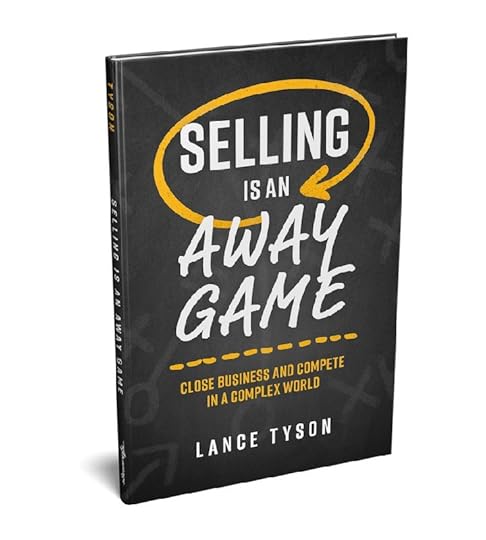
Purchase a copy of Lance's best-selling book, Selling is an Away Game, here.
Tyson Group received honorable mention in SellingPower’s prestigious list of Top 20 Sales Training Companies in 2018 and 2019 for excellence in sales training. Lance Tyson is a regular SellingPower blog contributor.


Raise the Volume: 6 Simple Tools To Improve Your Listening Skills

In a previous post, we talked about the cushion. It’s one of the communication tools you must develop if you want to dominate resolving objections. Another communication tool you’ll need to develop are your listening skills.
We cover listening skills extensively in our sales leadership and sales coaching sessions. However, these skills are also critical when you are opening a sales call, sitting across from your prospect conducting an analysis, and especially when responding to your client’s objections.
Typically, when you’re in a situation requires your listening skills, there’s a certain listening level to which we typically rise. Different situations will cause us to rise to different levels of listening. For example, you will listen to a child telling you about their school day at a different level than you would listen to your doctor talking about your test results.
5 LEVELS OF LISTENING
Here are the 5 levels of listening we review in our sessions:
Ignore: At this level, we intentionally don’t listen. This is your level of engagement when you want to get rid of someone who is wasting your time. Yes, this level does have its uses.
Pretend: At this level, you create the illusion that you are listening. Usually, you’ll use your body language and modulate your voice to make the other party believe you are listening to them. But in reality, you are not paying close attention to what they are saying.
Selective: Here, you are listening for the things you want to hear and can use. Typically, couples having an argument will settle in this level. They listen for the appropriate place to intervene so they can make their point.
Attentive: Here, you listen carefully to the message content.
Empathetic: At this level, you listen from the other person’s perspective and can identify the content and emotion that the sender is expressing. At this level, you don’t judge the message. You are only attempting to understand as the other party sees and delivers the message.
LISTENING SKILLS IN RESOLVING OBJECTIONS
Now, when you are resolving objections, you are using your language to engage your prospect or client. And you’re listening to the responses to honestly see things from their perspective. Naturally, you want to be at the attentive or empathetic level to be in the best position to resolve the objection.
Now remember, your prospect or client is also at a listening level. If they are at the attentive or empathetic level, then you are resolving a real objection. However, if they are trying to get you out of their office by ignoring you, pretending to listen, or sometimes even selectively listening for the right trigger phrase, then you are engaged in a put-off. It’s time to head back to the start of your sales process.
6 TACTICS TO STRENGTHEN YOUR LISTENING SKILLS
Here are 6 specific tactics to strengthen your listening skills:
LOOK AT THE OTHER PERSON
Not looking at the other person in the conversation is a dead give-away that you are preoccupied. Either that or you’re simply not interested in what your presenter has to say. It sends a nonverbal signal that there is something more deserving of your attention than the current conversation.
ASK QUESTIONS
Asking questions and summarizing what you heard are verbal ways to let the other person know you are paying attention. If you are using the telephone as your communication tool and you don’t have the advantage of looking at your prospect or client, you’ll need to lean more heavily on asking questions and summarizing what you heard.
DON’T INTERRUPT
We’ve all had those moments where the light bulb went off, we understood what our prospect or client was saying, and we wanted to prove it by jumping in and finishing their thought. Please refrain from doing this. Interrupting the other person when presenting their ideas also sends an unspoken message – what they are saying isn’t important to you. Let the other person know that their ideas and what they have to say are important. This is critical in resolving objections. And it’s absolutely vital in your coaching sessions.
STAY ON SUBJECT
Naturally, you want to stay focused on the subject at hand. While it may make sense to bring in a related topic or solution, you don’t want to stray too far off course and send the unspoken message that something you are thinking about is more important than the current conversation. Stay focused on the current topic at hand.
EMOTIONAL CONTROL
You want to be engaged. You want to be animated. And you want to express your views with passion. What you don’t want is to be controlled by emotions and have your conversation partner control you with a few, well placed words. I have seen sales reps lose deals because they had to be right and argued with the prospect. Reps have lost deals because they encountered an objection that they didn’t feel comfortable with and found themselves controlled by fear and desperation. I’ve seen reps lose sales because they got angry over a competitor sowing fear, uncertainty, and doubt. Remember, emotional content is a good thing to have, but only if you maintain control.
APPROPRIATE RESPONSES
Lastly, you want to be sure your response is appropriate to the situation at hand. You want to show that you were paying attention to the conversation. If you are at the highest level of listening, your response can be anything from an acknowledgement giving them the green light to continue to a summary of what you heard from their conversation followed by a trial close question. Just remember, to respond appropriately, you must pay attention to your prospect or client. You need to truly see things from their perspective.Here are 6 tactics to develop your listening skills and enhance your ability to communicate with your clients and prospects.
SUMMARY OF DEVELOPING YOUR LISTENING SKILLS
This is a quick summary of the levels of listening and tactics to enhance your listening skills and to resolving objections faster. In your endeavor to communicate with your prospects and clients, the more skilled you are at using your language to shape the conversation, the faster and easier you will find your sales process moving forward. Use this article as a training guide to help you develop your skills and become one of the top sales reps in your organization.
We’ll talk more about communication and listening skills in the future when we review coaching procedures for your team. But for now, realize that any process that makes you a more adept communicator will ease any friction in the sales process and make you a more efficient, and effective sales rep.
Discover more about resolving objections. Click here to get your copy of 7 Steps to Resolving Objections. A quick how-to guide to help sales reps resolve objections quicker and more efficiently.
Be sure to check out Lance Tyson’s book, Selling Is An Away Game: Close Business and Compete in a Complex World available on Amazon. Get your copy today!
Contact Tyson Group here to learn more about how away-game selling can give you a competitive edge.
From Lemons to Lemonade: Turn Sales Objections Into Opportunities

We’ve all had experiences when we felt a sale was going pretty well, and we felt the momentum gaining. Then, out of the blue, brake lights. Everything comes to a screeching halt. A prospect will suddenly tell you that your price is too high, or that they don’t have the budget, or that they aren’t sure your product or solution really has value.
The job of the sales professional is to take those sales objections and turn them into opportunities. Sometimes, the best outcomes stem from situations where you have to overcome the greatest obstacles.
THE VALUE OF PROACTIVE DIALOGUE
The other day I was driving down the highway when, all of a sudden, another car swerved in front of me and cut me off. My initial reaction was fear, because I had narrowly avoided a serious accident. Then, on the heels of a rush of adrenaline, I became angry at the other driver’s carelessness.
There were three levels to my reaction, with varying degrees of control:
React. I immediately hit the brakes and honked. This reaction was pure reflex, and I had very little control over it.
Respond. I considered whether I should find a safe place to pull over and regroup, or catch up to the other driver and flip him off. Ultimately, I chose not to do either, but considering these options required me to evaluate the situation and make some sort of decision, which offered me a bit more control.
Anticipate. I realized I had just experienced a near miss, and recognized I was still upset. Instead of responding to the other driver directly, I turned my thoughts toward figuring out how to avoid having this kind of experience again. I then took some proactive, corrective action by lowering my speed and leaving over 30 feet between me and the vehicle in front of me. This option enabled me to exercise some influence over my experience, and afforded the greatest amount of control.
Salespeople are faced with the same levels of reaction and control every day. They can either choose to react reflexively when an objection comes up, or they can choose to take proactive control of the situation by having a dialogue that addresses the objection before the prospect raises it.
If, for example, the objection is about price, salespeople can either get blindsided and lose the sale, or they can start talking about value well before it turns into a problem.
HOW TO RESOLVE SALES OBJECTIONS
Salespeople often get caught in a trap of reactivity around objections. When this happens, they start throwing better deals at the buyer without truly understanding what the objection is about. This puts the salesperson into a reactionary stance, and turns the negotiating process into a game of Whack-a-Mole.
Cost. Value. Budget. Price. Those words mean very different things to different people. In every single sale, be it complex or simple, there comes a time when you’re going to have to get the prospect to define, explain, and defend how they are defining these terms.
Rather than being reactive, it’s better to have a candid, proactive dialogue about objections. This enables us to get a clear understanding of what the buyer is actually saying, rather than making incorrect assumptions.
To establish a dialogue, follow these four steps:
Extract the sales objections. Rather than hiding from potential obstacles, good salespeople lean directly into them. Ask the prospect, “What is your biggest concern about this deal?” or, “Is there anything that could derail this?” It’s important to have this dialogue early in the process so you can identify potential problems before they arise.
Clarify concerns/issues. Make sure you understand what the prospect is really saying. Don’t assume you know – instead, have the courage to ask the tough questions.
Find points of agreement. Identify common ground, and keep the end objective of the deal at top of mind.
Resolve the sales objections. You won’t be able to negotiate unless the objections get resolved, so find ways to either remove the obstacles or navigate around them, in order to move forward.
For additional insights and wisdom about the sales process, pick up a copy of Selling is an Away Game, available online at Amazon.
TRAIN YOUR SALES TEAM TO RESOLVE OBJECTIONS WITH PRECISION
To learn more about how away-game selling can give you a competitive edge, contact Tyson Group here.