Lance Tyson's Blog - Posts Tagged "sales-process"
Closing in a Complex World: Landing the Deal

For sales professionals, there is perhaps no single word more enshrouded in mystery than “closing.” If you check out the descriptions for sales jobs, you’ll find that companies are always looking to hire closers. There’s a kind of mythology built around closing that implies a rarefied skill possessed by only a few elite salespeople.
But, in reality, closers are like pixies or leprechauns – they don’t exist. That’s because there’s no special skill required to close business.
TO CLOSE MORE SALES, PREPARE TO LOSE SALES
A few weeks ago, I was conducting sales training for a major NBA team. At the break, one of the sales reps approached me and asked for some advice on how to become a better closer. I asked him to clarify what he meant by that, and he said, “I want to close more sales.”
My response back to him was: “Are you also ready to lose more sales?” He gave me a look of pure confusion. So, we walked over to the door of the training room, which was standing wide open. I said, “See this door?” He nodded. I slammed the door shut as hard as I could. “Now it’s closed.”
My point was not to act like a jerk or make the sales rep feel small – I was simply trying to illustrate that the act of closing business means bringing the deal to its final conclusion. As long as that door stands open, the deal is still a possibility.
As human beings, we tend to accept maybes because they allow us to keep the door open indefinitely. But clinging to “maybe” actually prevents us from closing the deal.
THE TOUGHEST QUESTION IN SELLING
If you want to close a deal, you have to be willing to ask the toughest question in sales – “Are you in or out?” And, before you do that, you have to accept the fact that you might not like the answer. Because sometimes this question serves as a catalyst to help us close business. In other cases, it means walking away so we can find another, more suitable prospect.
That’s why I believe there’s no specialized skill to closing. You simply have to decide whether you are ready and willing to shut the door.
Is the timing right to close? To find out, ask yourself these four questions. Have you:
- successfully established a rapport with the buyer?
- done your homework in evaluating and diagnosing the problem?
- offered a carefully considered prescription?
- had a frank dialogue about objections?
If your answers to these questions are “yes,” then the timing is probably right to close.
Successful sales reps need to be confident – or at least act confident. Don’t be willing to live in a world of perpetual maybes. It’s okay to let the cake sit on the table and cool down a bit, but at least be ready and willing to ask buyers if they want a slice.
A FEW STRATEGIES TO CLOSE BUSINESS
I travel about 50 times per year, and I still marvel at the fact that a 60-ton piece of steel tubing can thrust itself through the air at a speed of hundreds of miles per hour and manage to stay up. By contrast, landing makes sense to me. After all, we have gravity in our favor – inevitably, the plane will come down.
Closing business is like landing a plane – at its core, it’s simply the act of bringing the deal to its natural conclusion.
That said, there are a few strategies for closing, and it helps (before you hit the runway) to choose which one you want to work with:
THE DIRECT CLOSE
I always prefer this approach, which can be summed up in the words of Nike: “Just do it.” In this variant, you just ask the question directly, “What are your thoughts on this – do you want to do it?” At the very worst, the answer may mean walking away from the deal. But, if you’ve taken the other previous steps in the sales process, chances are that it will move you more quickly toward a positive resolution and closure.
THE ALTERNATE CHOICE CLOSE
In cases where the direct close seems too presumptuous or risky, you might opt for the Alternate Choice Close, where you offer a couple of options, e.g., “Do you want to go with the three-year contract or the seven-year contract?”
THE MINOR POINT CLOSE
If you encounter a situation where the buyer’s position is opaque and they claim to still be thinking about it, you could try the Minor Point Close. Ask how the buyer feels about a particular section of the contract (or some other minor point) to gauge interest and move the dialogue forward.
THE NEXT STEP CLOSE
When we are setting up a sales training at a hotel, often the sales rep will actually show us a room and ask us, “What are your thoughts on this?” They are literally helping us see beyond the close to the next step, which can be quite effective.
THE OPPORTUNITY CLOSE
Often, organizations will pressure buyers by giving them a limited time frame – telling them that, if they act now, they will get a discount. Infomercials and timeshares are notorious for this type of close. Be careful with this one, however, because it’s the most manipulative kind of close, and it can backfire. But sometimes it works like a charm.
THE BALANCING CLOSE
In this approach, the sales rep helps buyers weigh the pros and cons in order to make an informed decision. There’s something to be said for taking the higher ground and helping someone go back through their consideration process to make sure they will be happy with the outcome. It helps build trust and can produce great results.
Remember: Closing is based on the momentum you have already established during the course of the flight. How quickly and smoothly you bring the deal in for a landing is just a matter of how well you direct it toward the runway.
PUT YOUR TEAM ON THE FAST TRACK OF HOW TO CLOSE BUSINESS IN A COMPLEX WORLD
To learn more about how away-game selling can give you a competitive edge, contact Tyson Group here.
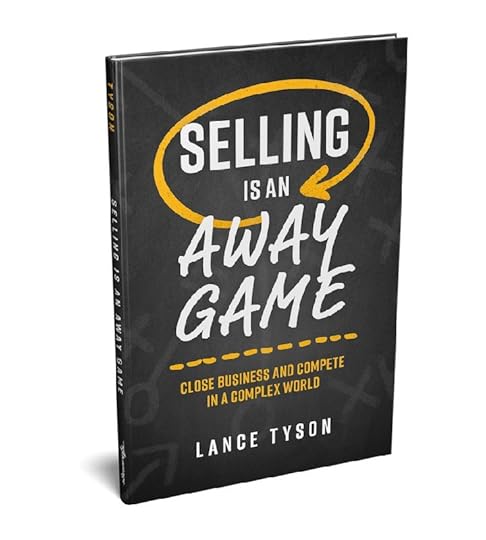
Purchase a copy of Lance's best-selling book, Selling is an Away Game, here.
Tyson Group received honorable mention in SellingPower’s prestigious list of Top 20 Sales Training Companies in 2018 and 2019 for excellence in sales training. Lance Tyson is a regular SellingPower blog contributor.


Master to Win: Away-Game Selling Strategies

I’m addicted to my Fitbit. It keeps my diet on track, helps me work out longer and more frequently, and basically keeps me on my game regardless of whether I’m at home or on the road.
But the thing I love the most about my Fitbit is that it’s mine and mine alone. Even though the basic hardware is off the shelf, it feels like it’s been tailored just for me because it uses my unique data.
Devices like Fitbit have inspired a wave of interest in products and solutions that feel tailored. In this era of 24/7 connectivity, the sales process needs to be tailored in a similar fashion.
Buyers are armed with more information than they would have been in the past, which gives them an advantage. When buying a product online, 92 percent of consumers spend time reading online reviews ahead of time – and 40 percent of those consumers form an opinion by reading just 1-3 reviews. They read those reviews, insert their own confirmation biases, and make quick decisions based on how well they believe that product or solution will be customized for their own pre-determined needs before they even speak with a salesperson.
The ready availability of information is fundamentally changing how they buy, across the board. The biggest challenge for salespeople today is having to make constant decisions on the fly as they adapt to the needs of the buyer.
These are just a few of the factors that have turned selling into an “away game.” Just like a sports team must overcome a disadvantage when playing on the opponent’s field, salespeople need to be prepared to play on a dynamically changing field, adapting to what the buyer already knows or wants.
THE FOUR ELEMENTS OF AWAY-GAME SELLING
In away-game selling, successful salespeople need to be more like the Waze App than a printed map. They need to constantly adjust in real time, based on the feedback they receive from the buyer and from other drivers, and continually update with relevant, customized information depending on where the buyer wants to go. That said, it’s essential for the salesperson to have a predictable process with repeatable steps.
There are four interrelated elements to the away-game sales process, shifting dynamically to accommodate one another in real time. Here are tips on how to succeed:
UNDERSTAND THE BUYER’S MINDSET
The buyer’s mindset is like a prism through which to view the decision-making process. To align with what is in the buyer’s mind, you need to mirror every action that person would normally take when buying something: get the attention of prospects, qualify them to see if they fit the business parameters, engage them in some kind of request for their time, ask them a series of questions, and create a scenario in which you can present ideas and start to create an opportunity.
DEVELOP A STRATEGY
To adapt to the buyer’s mindset, you need a sales strategy that is flexible enough to be tailored to individual clients, yet sturdy enough to be scalable and repeatable. Find a way to engage buyers in conversation and convince them you are a person worth listening to.
EMPLOY BATTLE-TESTED TACTICS
Your sales strategy needs to be supported by a set of tried-and-true tactics: “If this, then that.” For example, if you get someone’s voicemail, what will you say? How will you start the sales conversation? If you encounter an objection about price, how will you respond? It’s important to have a deep repertoire of tactics for every step of the sales process, but it’s equally important to stay in the moment and continue looking for opportunities to adapt to the buyer’s mindset.
HONE YOUR SKILLS
You need a skill set that is versatile enough to support your process. The basic toolkit should include a range of skills, including verbal brevity, selling time and awareness, communicating value, resolving objections, facilitating, and selling over the phone vs. selling in person.
To win this game, you’ve got to be like the Waze app – find out where your buyer wants to go and identify and eliminate potential roadblocks or other issues that might get in the way. Learn more about the landscape continuously so you can adjust your strategy accordingly. Then, use your acquired tactics and skills to help buyers reach their destination.
Want more? Purchase a copy of my best-selling book, Selling is an Away Game, here.
To learn more about how away-game selling can give you a competitive edge, contact Tyson Group here.
-----------------------------------------------------
This article was originally posted on March 25, 2019 by Lance Tyson in SellingPower
Powerful Impact Statements: The Key to a Great Sales Opening

In a previous post, we introduced the concept of the Impact Statement and using that tool to focus the opening of your sales call. Remember, as stated before, no one is sitting by the phone waiting for your unsolicited call, and sometimes, not even your scheduled phone call. People are busy. They have things that they need to get done, especially if they are in any kind of decision making capacity. So once you break their preoccupation and get their attention, you have to build their interest. And for that you need an effective Impact Statement to tell your story.
WHAT IS THE IMPACT STATEMENT?
In its most basic form, the Impact Statement is an elevator pitch. You’re trying to get across very succinctly the primary benefits of doing business with you. Salespeople often fail on this point. Without a solid Impact Statement, your average salesperson will meet a prospect with a laundry list of what their company does without making any connection with the buyer. In short, they spray and pray.
The Impact Statement should be a thirty-to-forty-five-second commercial. And like a commercial, the Impact Statement should speak the buyer’s language, not yours. It needs to tap into the buyer’s mind-set, address their needs, and create opportunities.
WHAT IS THE BASIC FRAMEWORK OF THE STATEMENT?
There are 4 basic components of your Impact Statement that, when melded together, will deliver an impactful message that will generate interest from your client. Here are those components:
Provide the general benefits you bring to the table. This is where you give a general challenge your other customers in your prospect’s industry have faced in the past, and a solution to that challenge.
Give a brief overview of how you work or provide an example. Here is where you provide a brief synopsis of how you work, how your product or service has provided the general benefits for your other customers. This part gives your statement credibility.
Suggest similar benefits are possible for them. This part pulls back and adds a sense of realism to the statement. In an earlier post, I recounted how my team of new salespeople, fresh out of college, were calling their prospect base and promising to deliver 10 to 40% increases in revenue when they knew nothing about the prospect’s business. You can’t make promises like that. But you can imply a correlation with a statement like, “We’ve done this for our clients. We might be able to do the same for you.” That’s not a claim. It’s a potential opportunity for the prospect.
Trial close – Get an appointment or advance the sale. Usually, this last component is the trial close. You’re asking the prospect if they are willing to walk through this discovery process with you. You’re asking them to take the next step.
WHAT DOES A GOOD IMPACT STATEMENT LOOK LIKE?
Remember my encounter with the financial advisor, Doug? He might say something like:
“You know, if you’re like a lot of the folks we work with, you’re probably looking to sustain your lifestyle over a period of time, get your best return, create an income even as you sleep, ensure the success or legacy of your family. We help our clientele do that by getting a clear understanding of where they are and where they’re going. And we also design and build options for them to execute that long-term plan and, ultimately, we measure results. We might be able to do the same for you. Would you mind if I ask you some questions about your financial situation?”
Do you see the four components in this example? Using something like the above Impact Statement, a financial advisor can communicate a succinct message in a predictable way. They aren’t talking about their financial services business. But they are talking about what their financial services business does for people like their clients.
WHAT SITUATIONS ARE BEST FOR THE IMPACT STATEMENT?
The Impact Statement can be used in all sorts of scenarios where a salesperson is trying to get the prospect to be more receptive. It will do two things. First, it will qualify the prospect to see if they’re a good fit for the salesperson’s services. Secondly, it will qualify the salesperson in the prospect’s eyes. Remember, they are also judging how the salesperson builds rapport, trust, and understanding of the prospect.
Here are some examples of where you can use an effective Impact Statement to generate some initial interest:
- Business Development to set appointments.
- Face-to-face meetings.
- Social Selling situations.
- Networking events.
One of the drills that we work on with the salespeople we train is: “Can you tell a prospect or a prospective buyer what you do in less than thirty seconds?”
Here’s another example. If I were selling accounting software like QuickBooks and I get an entrepreneur on the phone, I might say something like the following to get an appointment with them:
“Look, if you’re like a lot of entrepreneurs, you’re probably concerned with money in, money out, accounts out the door, and taking care of all the taxes and things you’re responsible for as a business. We’re able to help businesses like yours because we have an understanding of what they’re trying to do, what kind of business they’re in. We have a couple different versions of software that are less complicated for different kinds of businesses, and then we teach you how to use it so it becomes part of your system. I’m not sure we can do the same thing for you. Do you mind if I ask you a couple of questions, or would you be willing to meet over a cup of coffee?”
A FANTASTIC OPENING IS THE BASIS FOR POWERFUL SALES CALLS
Remember, when opening your sales call, you’ve got to be able to speak with impact and credibility. You put in plenty of work to break your prospect’s preoccupation and win their attention. Don’t waste it with a lukewarm effort to get their interest or use the time in a fishing expedition. Instead, know how you are going to work with this prospect to cultivate interest. Your goal is to reach the point where they want to know more when you arrive at the trial close.
So, I leave you with this action to take. Before talking with your next prospect, create your own Impact Statement by answering this question: what can I say about my business that answers what I do, how I do it, and why it would be important to them?
Once you have your Impact Statement, you have to present it in a compelling way. Be sure to download our digital publication, Basics of Dynamic Sales Presentations, here and give yourself a tactical advantage when opening your sales call.
Want more? Purchase your copy of my best-selling book, Selling is an Away Game, here.
HOW TO INFLUENCE SALES BY TURNING THEIR IDEAS INTO YOUR IDEAS

In a previous post, I spoke about empathy and sympathy and how it’s better to be sympathetic to the client’s situation vs being empathetic and joining them in the situation. Let’s delve a little deeper into that and see how we can use this to influence the sale process.
Diagnosing is a delicate business. Doesn’t matter if I’m solving a need or creating an opportunity when I’m selling my product or service. I need to be sympathetic to the prospect’s conditions and help them face their situation. In other words, I have to do something I said previously I would never do. I have to tell the prospect in a nice way that “their kid is ugly.”
Diagnosing is a delicate business. Essentially, we need to tell our prospect in a nice way that their kid is ugly.
As salespeople, we are identifying that gap between where a prospect is and where they want to be. Essentially, we’re telling them that they have a problem, need to make a change, or need to make a commitment. And we have to be careful when stating our diagnosis. We don’t want to make the prospect feel the pain or imply that they are incapable of taking action.
Remember, we are selling to people. And people are creatures of emotion. Now, your prospect is stuck at an impasse that they can’t or don’t want to address. Otherwise, they would already have moved from where they are to where they want to be. There would be no gap and no reason for you be talking with them. So break out the velvet before using the hammer. Be respectful and sympathetic to their situation, but also be firm and dedicated to addressing the problem.
INFLUENCE IS NOT MANIPULATION
Picture this: you are at a nice restaurant with people you want to impress. So you order a fine Napa Cabernet. After a few moments, the sommelier comes back with an alternative bottle because the one you ordered was out of stock. There’s that moment of sheer panic when you see the bottle they’ve selected is way out of your price range. And addressing the situation at that moment is just awkward. So what do you do?
Well, a good salesperson would have read the situation and presented you with a comparable bottle. A bad salesperson, however, might take advantage of the situation to stick you with a $400 Merlot that has been sitting in the cellar for twenty years. They are banking on the fact that you wouldn’t ask the price in front of your guests. Or they believe they can easily guilt you into buying it if by chance you did happen to ask.
Manipulating and guilting someone into a buy is just a sucky way to do business. Period. Don’t do it.
The key to good diagnosing is leading the buyer to the gap. Ultimately, if you asked the right questions, you can actually make it their idea. It’s a lot harder for someone to walk away from their own idea than it is from your idea.
ACHIEVING INFLUENCE BY ALIGNING YOUR IDEAS WITH THEIRS
Here’s an example. We had an opportunity to pitch to an iconic pro-sports team, the Boston Red Sox (Fenway Sports Management). We had initial meetings with senior-level executives and got to meet with their EVP of Sales and Operations, John Clark. In this meeting, John did a wonderful job describing the historical significance of Fenway Park, how his business ran at all levels, their sales philosophy, how they were managed, how they sold and marketed, and how the marketplace perceived them. As we guided him through the questions about his current and past situations, he found it easier to talk about what needed to change and what needed to get better.
We also asked him, if he were in our position, how he would approach training his sales team and coaching his sales managers. He was then able to talk about the same things, but in the frame of the desired situation. He told us where he was, where he wanted to go, and how he would approach things if he were us.
We came back to him a few weeks later. But instead of submitting a run-of-the-mill proposal, we presented a tailored discussion document.
Our first two pages listed what he said about his current and desired situations. Essentially, we showed him the gap between where he currently was and where he wanted to be.
When we presented our recommendations, we based them all on his ideas. Remember, it’s hard to argue against your own ideas. Guess who was influenced to act by the recommendations?
SALES DEBRIEF: ACHIEVING INFLUENCE IN THE SALES PROCESS
Let’s revisit the doctor visit analogy. You go into the doctor’s office for an exam. You review all of your vitals like weight and blood pressure. Then, you review your symptoms to find out how sick you are, and comparing everything to what they should be. The remedy is more of a realization of what it will take to get well. Eventually it becomes your idea.
The skillful salesperson designs questions that lead buyers to realize there’s an opportunity to fill a gap or address a need. Don’t let your questioning process be a haphazard collection of curiosities. As you lead your prospect through the sales process, use your questions to reach a diagnosis with your prospect that’s going to solve their problem.
You’ll find more ideas on achieving influence through your questioning process in Lance Tyson’s book, Selling Is An Away Game: Close Business and Compete in a Complex World available on Amazon. Get your copy today!
Raise the Volume: 6 Simple Tools To Improve Your Listening Skills

In a previous post, we talked about the cushion. It’s one of the communication tools you must develop if you want to dominate resolving objections. Another communication tool you’ll need to develop are your listening skills.
We cover listening skills extensively in our sales leadership and sales coaching sessions. However, these skills are also critical when you are opening a sales call, sitting across from your prospect conducting an analysis, and especially when responding to your client’s objections.
Typically, when you’re in a situation requires your listening skills, there’s a certain listening level to which we typically rise. Different situations will cause us to rise to different levels of listening. For example, you will listen to a child telling you about their school day at a different level than you would listen to your doctor talking about your test results.
5 LEVELS OF LISTENING
Here are the 5 levels of listening we review in our sessions:
Ignore: At this level, we intentionally don’t listen. This is your level of engagement when you want to get rid of someone who is wasting your time. Yes, this level does have its uses.
Pretend: At this level, you create the illusion that you are listening. Usually, you’ll use your body language and modulate your voice to make the other party believe you are listening to them. But in reality, you are not paying close attention to what they are saying.
Selective: Here, you are listening for the things you want to hear and can use. Typically, couples having an argument will settle in this level. They listen for the appropriate place to intervene so they can make their point.
Attentive: Here, you listen carefully to the message content.
Empathetic: At this level, you listen from the other person’s perspective and can identify the content and emotion that the sender is expressing. At this level, you don’t judge the message. You are only attempting to understand as the other party sees and delivers the message.
LISTENING SKILLS IN RESOLVING OBJECTIONS
Now, when you are resolving objections, you are using your language to engage your prospect or client. And you’re listening to the responses to honestly see things from their perspective. Naturally, you want to be at the attentive or empathetic level to be in the best position to resolve the objection.
Now remember, your prospect or client is also at a listening level. If they are at the attentive or empathetic level, then you are resolving a real objection. However, if they are trying to get you out of their office by ignoring you, pretending to listen, or sometimes even selectively listening for the right trigger phrase, then you are engaged in a put-off. It’s time to head back to the start of your sales process.
6 TACTICS TO STRENGTHEN YOUR LISTENING SKILLS
Here are 6 specific tactics to strengthen your listening skills:
LOOK AT THE OTHER PERSON
Not looking at the other person in the conversation is a dead give-away that you are preoccupied. Either that or you’re simply not interested in what your presenter has to say. It sends a nonverbal signal that there is something more deserving of your attention than the current conversation.
ASK QUESTIONS
Asking questions and summarizing what you heard are verbal ways to let the other person know you are paying attention. If you are using the telephone as your communication tool and you don’t have the advantage of looking at your prospect or client, you’ll need to lean more heavily on asking questions and summarizing what you heard.
DON’T INTERRUPT
We’ve all had those moments where the light bulb went off, we understood what our prospect or client was saying, and we wanted to prove it by jumping in and finishing their thought. Please refrain from doing this. Interrupting the other person when presenting their ideas also sends an unspoken message – what they are saying isn’t important to you. Let the other person know that their ideas and what they have to say are important. This is critical in resolving objections. And it’s absolutely vital in your coaching sessions.
STAY ON SUBJECT
Naturally, you want to stay focused on the subject at hand. While it may make sense to bring in a related topic or solution, you don’t want to stray too far off course and send the unspoken message that something you are thinking about is more important than the current conversation. Stay focused on the current topic at hand.
EMOTIONAL CONTROL
You want to be engaged. You want to be animated. And you want to express your views with passion. What you don’t want is to be controlled by emotions and have your conversation partner control you with a few, well placed words. I have seen sales reps lose deals because they had to be right and argued with the prospect. Reps have lost deals because they encountered an objection that they didn’t feel comfortable with and found themselves controlled by fear and desperation. I’ve seen reps lose sales because they got angry over a competitor sowing fear, uncertainty, and doubt. Remember, emotional content is a good thing to have, but only if you maintain control.
APPROPRIATE RESPONSES
Lastly, you want to be sure your response is appropriate to the situation at hand. You want to show that you were paying attention to the conversation. If you are at the highest level of listening, your response can be anything from an acknowledgement giving them the green light to continue to a summary of what you heard from their conversation followed by a trial close question. Just remember, to respond appropriately, you must pay attention to your prospect or client. You need to truly see things from their perspective.Here are 6 tactics to develop your listening skills and enhance your ability to communicate with your clients and prospects.
SUMMARY OF DEVELOPING YOUR LISTENING SKILLS
This is a quick summary of the levels of listening and tactics to enhance your listening skills and to resolving objections faster. In your endeavor to communicate with your prospects and clients, the more skilled you are at using your language to shape the conversation, the faster and easier you will find your sales process moving forward. Use this article as a training guide to help you develop your skills and become one of the top sales reps in your organization.
We’ll talk more about communication and listening skills in the future when we review coaching procedures for your team. But for now, realize that any process that makes you a more adept communicator will ease any friction in the sales process and make you a more efficient, and effective sales rep.
Discover more about resolving objections. Click here to get your copy of 7 Steps to Resolving Objections. A quick how-to guide to help sales reps resolve objections quicker and more efficiently.
Be sure to check out Lance Tyson’s book, Selling Is An Away Game: Close Business and Compete in a Complex World available on Amazon. Get your copy today!
Contact Tyson Group here to learn more about how away-game selling can give you a competitive edge.
5 Winning Tips To Close More Sales

When we conduct our sales training, a fast rule we follow is that there are no special skills in closing. In a different article, the Myth of the Perfect Closing Script, I relayed as much. Those closing scripts and closing techniques are a part of a different era, a different environment, and different customer culture.
Today, the reason we say there is no special skill in closing is because we believe that closing has more to do with the sales reps confidence, not his or her ability to follow a script.
In all the assessments that we have done prior to conducting our training sessions, I’ve seen that the ability to close is related to how an individual deals with scarcity and abundance. For instance, if the salesperson is operating out of a scarcity mentality, and they don’t have much in their sales pipeline, they’ll be more likely to accept a “maybe” from the prospect. They may be opposed to challenging the prospect, vetting out objections, clarifying objections, and using any language that may put the relationship at risk. They can’t afford to lose any opportunities.
On the other hand, when we find sales reps with a more abundant mentality, their pipeline is might be three or five times their goal, and they are more apt to give a prospect a push, try some new techniques, and challenge their objections. They don’t lose sight of their people skills, but they are a little more assertive when dealing with buyers.
SALES AS A SERIES OF YESES
In looking for sales closing tips, we realize that closing in today’s complex selling environment is not something that is tacked on at the end of the sales process as an afterthought. It happens throughout the sales process. Selling is a series of yeses:
“Yes. I’ll meet with you.”
“Yes, you can ask me questions.”
“Yes, you can present something to me or prescribe something to me.”
“Yes, you addressed and resolved my objections.”
“Yes, I’ll buy from you.”
You’ve got about 5 necessary yeses when shepherding your prospect through your sales process.
When you look at the sales process this way, we see there are 5 critical junctions where you must overcome some type of resistance, or “objections”. Understanding where you are in the sales process and understanding the type of resistance, or objections, you are facing will help you close better.
CLOSING TIP 1: KNOW WHAT A BUYING SIGNAL IS
Our first sales closing tip is being able to identify a buying signal. Looking back at the collected sales wisdom of the past, we have ample descriptions of buying signals from the experts. Your prospect is sitting across from you: they are leaning forward, they look attentive, maybe they are rubbing their chin, perhaps they are asking clarifying questions…all are buying signals.
However, an alternate narrative might be they are confused, and they are trying to understand what you are saying. Perhaps they have an itchy chin, or they need a shave.
The truth is you don’t know which explanation adequately explains what you are seeing.
So, what’s a buying signal? A buying signal is anything a buyer says or does that indicates some level of interest.
CLOSING TIP 2: KNOW WHAT A WARNING SIGNAL IS
Now, let’s flip the coin over and look at the other side. What’s a warning signal?
Again, going back to all those sales books and psychology books that made attempts at codifying body language, we can look at past descriptions. Your prospect is sitting across from you with their arms crossed. They aren’t paying attention. Perhaps even looking at their phone. Alternately, they could be cold and trying to keep warm. Maybe they’ve got another meeting scheduled and your session is bumping into that time. Or maybe they just got a call from home.
Again, we don’t know which description explains your observations. And again, we are left with trying to define a warning signal.
A warning signal is anything the buyer says or does that indicates disinterest at some level.
The question becomes, for both buying and warning signals: if you can see what they buyer does and you can hear what the buyer says, how do you know if they are interested or disinterested? The answer is: you test them by asking a trial close question. It might be something like, “how does this sound so far?”
This is like sticking a toothpick in a cupcake to determine if it’s done. If the toothpick comes out clean, then you are ready to move to the next phase. But if the toothpick comes out with stuff attached, then you have some more cooking to do.
CLOSING TIP 3: IDENTIFYING AN OBJECTION
A third closing tip is to recognize an objection.
We have different categories of objections. In my best-selling book, Selling is an Away Game, we talk more about your financial marketplace-driven objections. There are objections that are wrapped in cost, value, price, or budget.
An objection, one that we typically think of as a sales objection, comes after you’ve proposed or prescribed your solution to your prospect. And objections, by their nature, reflect a certain level of interest in your solution.
An objection is anything the buyer says or does that indicates hesitation to move the sale forward.
CLOSING TIP 4: DISTINGUISH YOUR INHERENT OBJECTIONS
In a previous article, I mentioned an inherent objection. These are objections that occur because you didn’t do something well in the sales process.
I was recently with a group, the Baltimore Ravens, and we were discussing objections. Someone in the session said, “What if your prospect just doesn’t want to meet with you? Is that an objection?”
Well, this is what we call a put-off because the “objection” is more about you and your process and not about any solution you’ve offered.
Inherent objections mostly occur early in the sales process and often relate to your prospect being preoccupied, busy, distracted, or not wanting to meet with you. You find a level of disinterest or disengagement with your prospect. These all occur without you offering any type of solution to their problem.
You need to be able to distinguish these inherent objections (the ones in which you have not yet gained the prospect’s trust) from your standard sales objections (the ones in which your prospect is interested in your offering and might move forward if you can resolve the issue at hand).
CLOSING TIP 5: ASKING FOR THE BUSINESS
The fifth sales closing tip is to close once you’ve pitched a real solution. Following the sales process will get you most of the way to the close. However, you still must ask for the business.
As we’ve stated before, the close is not something that is forced at the end. When you walk your prospect through your sales process, the close flows naturally. But it won’t happen on its own. You still must ask the question. And so many sales reps miss this. They either try to force the close or they become shy as the end approaches, as if they’re afraid that they’ll scare off the prospect by asking for the business.
Most of the time, the simplest close is the best. I’ve seen sales reps try to overcomplicate the close by cloaking it in some “mystical language” that only sales people can understand. Don’t get fancy. Just ask if they are ready to proceed.
I can’t emphasize this enough. If you have followed your process and addressed their concerns, then the close is merely the doorway to the next phase in the customer lifecycle. Simply ask them if they are ready to move forward. If the buyer says yes, then move forward. And if the buyer says no, then treat the response as an objection and find a way to overcome it. Either way, you’re moving forward. So stop hedging and start moving!
WANT MORE IDEAS ON ASSESSING YOUR SALES REPS AND TO MOTIVATE YOUR TEAM?
To learn more about how away-game selling can give you a competitive edge, contact Tyson Group here.
Also, be sure to check out my book, Selling Is An Away Game, available on Amazon, for additional methods and sales strategy. Get your copy today!
3 Valuable Secrets to Building Better Rapport with Your Prospects

Here’s a revelation about the sales process from our Director of Technology, followed by a few ideas on leveraging the power of rapport and becoming a valuable asset.
THERE IS NO MAGICAL ONE-CALL CLOSE. PROSPECTS MUST GO THROUGH THEIR BUYING PROCESS
I remember a situation from years ago when I worked as an outside sales rep during the day and taught presentation programs in the evening.
I had just finished a sales call, closed the deal, gotten the order, and I was ecstatic. The lead coordinator told me that this lead was hot and he was right.
When I got back to the office, I began entering the information into our CRM system. At that time, we were using individual copies of ACT synchronized to a central database. Seems like stone-age technology compared to how we coordinate our sales and marketing activities today with SalesForce and Hubspot.
Upon synchronizing my activities in ACT, not only did I find another record for this customer, but discovered that a fellow sales rep, Bob, had been working with them. He had sent out literature by the box load, made dozens of phone calls, contacted the client numerous times, and still made no headway in moving the prospect through the sales process.
Yet, on this day, I had walked in, met the customer once, and closed the deal.
I’ve never been a believer in the “one call close”. No one walks in a new account cold and sells the management team on the first day. In those instances, there’s always some unseen prep work and relationship building. It can happen from another sales rep, your competition, some marketing material, or a whole lot of online research from the prospect. If you are meeting with a prospect for the first time and they buy, someone else did the heavy lifting to get their attention and spark their interest. And in this particular case, that person was Bob.
BECOMING A VALUABLE ASSET BEGINS WITH ACHIEVING RAPPORT AND LEAVING A FAVORABLE IMPRESSION.
I felt low. I liked Bob. He’s a stand-up guy. The last thing I wanted to do was sneak in behind him and grab the sale after he did all the heavy lifting of educating the customer.
So I approached Bob the next day and told him what had happened.
His comment was “That’s alright. If they couldn’t remember me after all the time I’ve spent with them, then I wasn’t effective in making a lasting impression and I don’t deserve the business.”
Over the past few years I’ve often thought about that situation. I can remember similar sales calls where I did all of the heavy lifting with a prospect, spending time building rapport and educating them. And at the 11th hour, another sales rep swooped in behind me and closed the sale.
It didn’t feel good.
Still, I think of Bob’s statement and his attitude often:
If I don’t do enough to achieve rapport and leave a favorable impression with the prospect, then I don’t deserve the business.
Of course I’ve had those other conversations with clients that sounded like this:
“Yeah, we got a call from someone in your company yesterday, but we told them that we had a rep from your company taking care of us.”
Now if the client said that to another rep in my company, I can imagine what they said to a competitor trying to bring in alternate solutions or quick fixes.
THERE ARE NO MORE ORDER-TAKERS. 3 RAPPORT IDEAS TO MAKING YOURSELF A VALUABLE ASSET
Using rapport to becoming a valuable asset doesn’t have to be an exotic blend of special tactics. In our training and consultation sessions, we tie it to a process involving three simple ideas:
Identify. Connect with your prospect as a person. Remember, people do business with people, not businesses.
Understand Their Needs and Wants. In order to understand what they want, you need to get out of your head. Selling is an away game. It happens in the customer’s mind.
Credibility. Bring to bear your unique insights, and ideas as they relate to the client’s situation.
Three simple ideas to having your customers telling your competition, “We already have a rep taking care of our needs”. You don’t like it when you hear a lead say that phrase to you. But it sure helps you sleep at night when your prospects and customers use it in your defense.
Ultimately, it comes down to your prospects and customers viewing you as a valued addition to their business model.
In this Internet age, your customers and prospects can buy anything they want online with no hassles at all. And they have access to all of the information, recommendations, and social referrals they will ever need. So ask yourself, what value do you bring to the table that justifies your customers spending time with you?
But for now, simply jot down 5 activities that you do to get your customers and prospects to remember you as a valuable asset when you aren’t there with them. Because I can guarantee you, your competition is actively looking for ways to unseat you.
Don’t make it easy for them.
Good Selling!
WANT MORE POWERFUL IDEAS ON OPENING SALES CALLS?
Because the two are so similar, many of the ideas we use when opening a sales presentation are similar to those in opening sales calls. For additional ideas on getting your audience’s attention, from a single prospect to a room full of decision makers, download our digital publication, Basics of Dynamic Sales Presentations, here.
Also, be sure to check out my book, Selling Is An Away Game, available on Amazon, for additional methods and sales strategy. Get your copy today!
From Lemons to Lemonade: Turn Sales Objections Into Opportunities

We’ve all had experiences when we felt a sale was going pretty well, and we felt the momentum gaining. Then, out of the blue, brake lights. Everything comes to a screeching halt. A prospect will suddenly tell you that your price is too high, or that they don’t have the budget, or that they aren’t sure your product or solution really has value.
The job of the sales professional is to take those sales objections and turn them into opportunities. Sometimes, the best outcomes stem from situations where you have to overcome the greatest obstacles.
THE VALUE OF PROACTIVE DIALOGUE
The other day I was driving down the highway when, all of a sudden, another car swerved in front of me and cut me off. My initial reaction was fear, because I had narrowly avoided a serious accident. Then, on the heels of a rush of adrenaline, I became angry at the other driver’s carelessness.
There were three levels to my reaction, with varying degrees of control:
React. I immediately hit the brakes and honked. This reaction was pure reflex, and I had very little control over it.
Respond. I considered whether I should find a safe place to pull over and regroup, or catch up to the other driver and flip him off. Ultimately, I chose not to do either, but considering these options required me to evaluate the situation and make some sort of decision, which offered me a bit more control.
Anticipate. I realized I had just experienced a near miss, and recognized I was still upset. Instead of responding to the other driver directly, I turned my thoughts toward figuring out how to avoid having this kind of experience again. I then took some proactive, corrective action by lowering my speed and leaving over 30 feet between me and the vehicle in front of me. This option enabled me to exercise some influence over my experience, and afforded the greatest amount of control.
Salespeople are faced with the same levels of reaction and control every day. They can either choose to react reflexively when an objection comes up, or they can choose to take proactive control of the situation by having a dialogue that addresses the objection before the prospect raises it.
If, for example, the objection is about price, salespeople can either get blindsided and lose the sale, or they can start talking about value well before it turns into a problem.
HOW TO RESOLVE SALES OBJECTIONS
Salespeople often get caught in a trap of reactivity around objections. When this happens, they start throwing better deals at the buyer without truly understanding what the objection is about. This puts the salesperson into a reactionary stance, and turns the negotiating process into a game of Whack-a-Mole.
Cost. Value. Budget. Price. Those words mean very different things to different people. In every single sale, be it complex or simple, there comes a time when you’re going to have to get the prospect to define, explain, and defend how they are defining these terms.
Rather than being reactive, it’s better to have a candid, proactive dialogue about objections. This enables us to get a clear understanding of what the buyer is actually saying, rather than making incorrect assumptions.
To establish a dialogue, follow these four steps:
Extract the sales objections. Rather than hiding from potential obstacles, good salespeople lean directly into them. Ask the prospect, “What is your biggest concern about this deal?” or, “Is there anything that could derail this?” It’s important to have this dialogue early in the process so you can identify potential problems before they arise.
Clarify concerns/issues. Make sure you understand what the prospect is really saying. Don’t assume you know – instead, have the courage to ask the tough questions.
Find points of agreement. Identify common ground, and keep the end objective of the deal at top of mind.
Resolve the sales objections. You won’t be able to negotiate unless the objections get resolved, so find ways to either remove the obstacles or navigate around them, in order to move forward.
For additional insights and wisdom about the sales process, pick up a copy of Selling is an Away Game, available online at Amazon.
TRAIN YOUR SALES TEAM TO RESOLVE OBJECTIONS WITH PRECISION
To learn more about how away-game selling can give you a competitive edge, contact Tyson Group here.