Lance Tyson's Blog
January 7, 2020
From Lemons to Lemonade: Turn Sales Objections Into Opportunities

We’ve all had experiences when we felt a sale was going pretty well, and we felt the momentum gaining. Then, out of the blue, brake lights. Everything comes to a screeching halt. A prospect will suddenly tell you that your price is too high, or that they don’t have the budget, or that they aren’t sure your product or solution really has value.
The job of the sales professional is to take those sales objections and turn them into opportunities. Sometimes, the best outcomes stem from situations where you have to overcome the greatest obstacles.
THE VALUE OF PROACTIVE DIALOGUE
The other day I was driving down the highway when, all of a sudden, another car swerved in front of me and cut me off. My initial reaction was fear, because I had narrowly avoided a serious accident. Then, on the heels of a rush of adrenaline, I became angry at the other driver’s carelessness.
There were three levels to my reaction, with varying degrees of control:
React. I immediately hit the brakes and honked. This reaction was pure reflex, and I had very little control over it.
Respond. I considered whether I should find a safe place to pull over and regroup, or catch up to the other driver and flip him off. Ultimately, I chose not to do either, but considering these options required me to evaluate the situation and make some sort of decision, which offered me a bit more control.
Anticipate. I realized I had just experienced a near miss, and recognized I was still upset. Instead of responding to the other driver directly, I turned my thoughts toward figuring out how to avoid having this kind of experience again. I then took some proactive, corrective action by lowering my speed and leaving over 30 feet between me and the vehicle in front of me. This option enabled me to exercise some influence over my experience, and afforded the greatest amount of control.
Salespeople are faced with the same levels of reaction and control every day. They can either choose to react reflexively when an objection comes up, or they can choose to take proactive control of the situation by having a dialogue that addresses the objection before the prospect raises it.
If, for example, the objection is about price, salespeople can either get blindsided and lose the sale, or they can start talking about value well before it turns into a problem.
HOW TO RESOLVE SALES OBJECTIONS
Salespeople often get caught in a trap of reactivity around objections. When this happens, they start throwing better deals at the buyer without truly understanding what the objection is about. This puts the salesperson into a reactionary stance, and turns the negotiating process into a game of Whack-a-Mole.
Cost. Value. Budget. Price. Those words mean very different things to different people. In every single sale, be it complex or simple, there comes a time when you’re going to have to get the prospect to define, explain, and defend how they are defining these terms.
Rather than being reactive, it’s better to have a candid, proactive dialogue about objections. This enables us to get a clear understanding of what the buyer is actually saying, rather than making incorrect assumptions.
To establish a dialogue, follow these four steps:
Extract the sales objections. Rather than hiding from potential obstacles, good salespeople lean directly into them. Ask the prospect, “What is your biggest concern about this deal?” or, “Is there anything that could derail this?” It’s important to have this dialogue early in the process so you can identify potential problems before they arise.
Clarify concerns/issues. Make sure you understand what the prospect is really saying. Don’t assume you know – instead, have the courage to ask the tough questions.
Find points of agreement. Identify common ground, and keep the end objective of the deal at top of mind.
Resolve the sales objections. You won’t be able to negotiate unless the objections get resolved, so find ways to either remove the obstacles or navigate around them, in order to move forward.
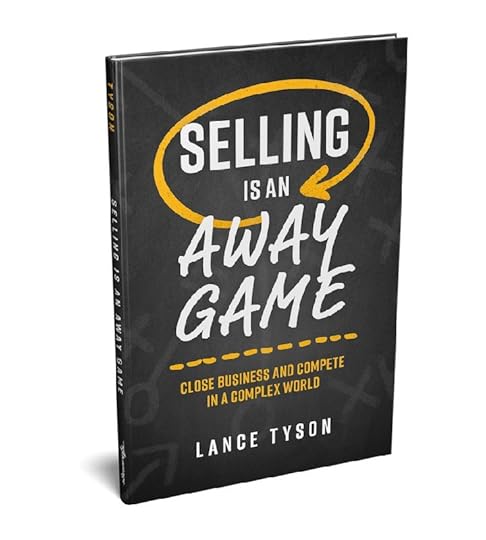
For additional insights and wisdom about the sales process, pick up a copy of Selling is an Away Game, available online at Amazon.
TRAIN YOUR SALES TEAM TO RESOLVE OBJECTIONS WITH PRECISION
To learn more about how away-game selling can give you a competitive edge, contact Tyson Group here.


What Not To Do: Tips For Cold Calling Success

I was reading a blog post put out by another sales trainer titled “7 Ways to Make Cold Calling Easier”. It got me wondering, where do these tips come from? Were these ideas formulated by this trainer or were his insights rehashed from basic advice you can find anywhere? Was his advice based on empirical data, or was it based on opinions from his experiences in sales? And at that moment, I had an epiphany. This wasn’t the first time I came across a basic ‘tips to cold calling’ post. And it wasn’t the first time I was turned off by an article like this.
WHAT TO WATCH FOR WHEN GETTING COLD CALLING TIPS.
You could choke an entire farm of horses with the various articles published every day about cold calling. In fact, Google users search the term “cold calling tips” on average about 2,000 times every month. However, if you type “cold calling tips” into the Google machine, it will return over 100 million posts, pages, and articles. And most of these, like the previously mentioned post, are based on opinions, personal experience, or just vague, common sense ideas. You need to be careful not to follow fluff or general opinionated advice. Rather, make sure the advice and ideas you find are practical, have some data-based evidence behind them, and they work for your team.
Over the 5 years we ran our call center, our team made over 1,250,000 outbound cold calls and talked to over 150,000 C-Suite, VP, and Director Level decision makers on behalf of B2B organizations in a multitude of industries. Additionally, we have spent the past 15 years training over 10,000 sales professionals. So when you talk about empirical data, we’ve got it!
Based on the tens of thousands of cold calls we have made, the countless crap articles I have read on cold calling, and where we have truly seen sales professionals make cold calling work for them, I wanted to provide you with 7 cold calling tips to avoid, and what you should focus on instead.
Are you ready to perform a checkup on your sales process? Take the Tyson Group assessment here and strengthen the weak spots in your sales process.
WHEN COLD CALLING, DON’T READ THE SCRIPT. OWN YOUR MATERIAL!
Many trainers tell you to write out a script for your cold calling sessions. A script that you stick to implies you know what the prospect is going to say. You have no idea what your prospect is going to say. No one does, not even the best salespeople. Good sales calls are bob-and-weave conversations. Own the conversation!
Higher Success Rate Tip: Map out talking points and give yourself the freedom and ability to maneuver. Build guide posts, like a sales GPS to help you navigate the sales landscape with agility. Ask questions around pain points, issues, and the topics they are getting heat from their bosses about at the moment. Learn the ins and outs of your product so you can suggest next steps. Also remember: there’s a difference between “this is what our product does” and “this is what our product will do for you.” People are more responsive to the latter.
PRACTICE DOESN’T MAKE PERFECT, IT MAKES PERMANENT!
Many trainers say, “Practice, practice, practice”. Wow, that’s novel! This isn’t advice. It’s common sense. Ever heard of Malcolm Gladwell and the 10,000-hour rule? Practice does make you better when you are practicing the right thing. I practiced my golf swing a ton without a coach. That resulted in me perfecting my hook! You must practice with the right coaching!
Here is the problem. Often, these training sessions will have you practicing with peers. That’s not a good approach. Rather, record yourself. Judge the feel; the look; how you sound. Also, make sure you press your trainer to show you how it’s done. If they’re coaching you on cold calls, have them pick up the phone and make a few calls. If they can’t make the call themselves, then you know you’ve got someone who can’t practice what they teach! Theories suck unless you can execute on them.
Higher Success Rate Tip: Practice with actual prospects. Start with “colder” calls that you can afford to mess up. Work through conversations and issues that come up on those calls, as opposed to practicing scripts with your peers.
Take a look at any field — notably medicine. It’s nearly impossible to get better unless you fail, fail, and fail again.That’s how products in medicine get to market. It’s the same with sales. Through testing, you become acutely sensitive of what works and what to change. You’ll have some awful calls in this period, but it shapes you for later.
Here’s a test. Ask your trainer to make a few cold calls in front of the team. Did they get a target decision maker on the phone? Were they able to move the conversation to an appointment? How ‘practiced’ are they?
“SET ASIDE SOME TIME FOR A CALL” IS THE WRONG APPROACH.
Some trainers focus on this: “set aside time to make your calls.” Again, this isn’t a strategy, it’s common sense. Plus, you need to keep your prospects in mind when you are picking the times to call. Just because Mondays and Wednesdays between 10-2 are convenient for YOU to make calls won’t yield a high success rate if all of your prospects are busy at that time.
Higher Success Rate Tip: Understand the best times to call. For example, there’s a 164% better connection rate from 4-5pm local time zone than 1-2pm. Many people would totally miss that, assuming that prospects are checked out by 4pm. However, the best times to call are usually the AM. That’s just a random fact to showcase how people often don’t base decisions off real data. There’s tons of data out there about sales call optimization. Use it.
Additionally, leave voicemails. The voicemail may be dying, but it ain’t dead yet. And voicemail still counts as a sales touch. Also, follow up your calling activity with emails. Emails are ridiculously easy to send and customize in modern business. If you do 10 calls and don’t get a connection, send out 10 personalized emails later that day.
WARMING UP FOR COLD CALLING SESSIONS ISN’T NECESSARY.
Trainers will tell you to spend time warming up before you start making calls. You’re not a relief pitcher in the ALCS. You’re cold calling. Dive right in and start talking to people. Smile, dial, use the trial and go the extra mile!
Higher Success Rate Tip: You do need some type of plan for how you’re prospecting. Ideally this plan would be strategic and group prospects a certain way according to potential need or market. But if you’re not at a strategic level yet, at least have an operational plan for calling. If you know you’re not a morning person, plan your calls for the afternoon. At 1pm, be ready to start dialing and conversing. When you have a plan, warming up becomes irrelevant.
DON’T WAIT FOR THE REJECTION. BUILD IT INTO YOUR CONVERSATION.
Many sales trainers tell you to write out potential rebuttals for different arguments, wait for the arguments, and deliver the scripted rebuttals. Sometimes this can work, but not as often as you think. Here’s a subtle distinction you need to understand. Objections happen at the closing stages of a sale and actually signify interest in your product or service. In the early stages, like when you’re cold calling, what you get is called a put-off. When you get a put-off, there’s a good chance that the prospect has already made up their mind.
Higher Success Rate Tip: Track your put-offs. What are the common ones? Pricing? Approach? Not right now? Once you know the common ones, you revise your messaging so that you address the put-offs before the prospect can bring them up. For example, if everyone is hitting you on price, get price out in the open quickly with some context. In doing so, you remove a put-off from the prospect’s table. They may still say “no”, but the conversation just shifted a bit, giving you a new window to explore.
Also, ask questions to overcome put-offs. There is almost nothing better in sales conversations than the ability to ask intelligent, prospect-centric questions.
YOU DON’T HAVE TIME FOR A PRESENTATION.
I hate it when trainers over-focus on the presentation. In a cold calling context, there really isn’t a presentation. You have 4-7 seconds to get someone’s attention and 7-21 seconds to keep someone’s interest. That’s not a presentation.
That’s not even one slide.
Higher Success Rate Tip: Consider starting with an email. Introduce yourself, mention one connection point you have with the prospect, for example, someone on LinkedIn, explain what you’re selling, briefly mention where you see a value for the prospect, and say you’ll be calling within a specific time period..
Create affinity, build rapport, and connect!
The most common response you will get is “send me information”. That’s fine. It’s not even a put-off. Now you need to figure out what resources to send this person to move to the next step. Remember, humans are typically visual, so don’t send another text-driven email. Insert a chart, graph, product feature, or other another visual that will help capture their attention.
ENCOURAGEMENT IS GOOD. COACHING IS MUCH BETTER.
Bad sales trainers are usually cheerleaders, not coaches. If a Patriots wide receiver drops a ball and trots back past a cheerleader, she’ll probably say, “It’s OK, you’ll get it next time!” When that wide receiver gets to Belichick, what do you think he’ll say — if he even speaks to the guy?
That’s the difference. During a cold calling session, a mediocre sales trainer will give your sales rep a pat on the back and say, “Keep at it and you’ll get there.” That isn’t good enough. Good sales trainers are coaches. They will give your team communication ideas, listen in, and coach them to improve your cold calling skills.
Higher Success Rate Tip: Find a trainer who can listen in on your cold calling sessions, identify the areas where you fall short, and help you create a plan to improve those areas. You have a process for the way you sell. You can perform a checkup on your sales process here. But realize that you should have a process for the way you improve as well. If your organization isn’t getting ideas to build a documented improvement process from your sales trainer, then most of what they’re doing is feel-good fluff.
Hopefully the above 7 tips help you elevate your game and provide a little more substance than other blogs and articles you’ve come across. Remember when you are prepared and hone your craft, success will follow.
For additional insights and wisdom into prospecting and the sales process, pick up a copy of Selling is an Away Game, available online at Amazon, fine bookstores and many Hudson News locations.
December 20, 2019
3 Valuable Secrets to Building Better Rapport with Your Prospects

Here’s a revelation about the sales process from our Director of Technology, followed by a few ideas on leveraging the power of rapport and becoming a valuable asset.
THERE IS NO MAGICAL ONE-CALL CLOSE. PROSPECTS MUST GO THROUGH THEIR BUYING PROCESS
I remember a situation from years ago when I worked as an outside sales rep during the day and taught presentation programs in the evening.
I had just finished a sales call, closed the deal, gotten the order, and I was ecstatic. The lead coordinator told me that this lead was hot and he was right.
When I got back to the office, I began entering the information into our CRM system. At that time, we were using individual copies of ACT synchronized to a central database. Seems like stone-age technology compared to how we coordinate our sales and marketing activities today with SalesForce and Hubspot.
Upon synchronizing my activities in ACT, not only did I find another record for this customer, but discovered that a fellow sales rep, Bob, had been working with them. He had sent out literature by the box load, made dozens of phone calls, contacted the client numerous times, and still made no headway in moving the prospect through the sales process.
Yet, on this day, I had walked in, met the customer once, and closed the deal.
I’ve never been a believer in the “one call close”. No one walks in a new account cold and sells the management team on the first day. In those instances, there’s always some unseen prep work and relationship building. It can happen from another sales rep, your competition, some marketing material, or a whole lot of online research from the prospect. If you are meeting with a prospect for the first time and they buy, someone else did the heavy lifting to get their attention and spark their interest. And in this particular case, that person was Bob.
BECOMING A VALUABLE ASSET BEGINS WITH ACHIEVING RAPPORT AND LEAVING A FAVORABLE IMPRESSION.
I felt low. I liked Bob. He’s a stand-up guy. The last thing I wanted to do was sneak in behind him and grab the sale after he did all the heavy lifting of educating the customer.
So I approached Bob the next day and told him what had happened.
His comment was “That’s alright. If they couldn’t remember me after all the time I’ve spent with them, then I wasn’t effective in making a lasting impression and I don’t deserve the business.”
Over the past few years I’ve often thought about that situation. I can remember similar sales calls where I did all of the heavy lifting with a prospect, spending time building rapport and educating them. And at the 11th hour, another sales rep swooped in behind me and closed the sale.
It didn’t feel good.
Still, I think of Bob’s statement and his attitude often:
If I don’t do enough to achieve rapport and leave a favorable impression with the prospect, then I don’t deserve the business.
Of course I’ve had those other conversations with clients that sounded like this:
“Yeah, we got a call from someone in your company yesterday, but we told them that we had a rep from your company taking care of us.”
Now if the client said that to another rep in my company, I can imagine what they said to a competitor trying to bring in alternate solutions or quick fixes.
THERE ARE NO MORE ORDER-TAKERS. 3 RAPPORT IDEAS TO MAKING YOURSELF A VALUABLE ASSET
Using rapport to becoming a valuable asset doesn’t have to be an exotic blend of special tactics. In our training and consultation sessions, we tie it to a process involving three simple ideas:
Identify. Connect with your prospect as a person. Remember, people do business with people, not businesses.
Understand Their Needs and Wants. In order to understand what they want, you need to get out of your head. Selling is an away game. It happens in the customer’s mind.
Credibility. Bring to bear your unique insights, and ideas as they relate to the client’s situation.
Three simple ideas to having your customers telling your competition, “We already have a rep taking care of our needs”. You don’t like it when you hear a lead say that phrase to you. But it sure helps you sleep at night when your prospects and customers use it in your defense.
Ultimately, it comes down to your prospects and customers viewing you as a valued addition to their business model.
In this Internet age, your customers and prospects can buy anything they want online with no hassles at all. And they have access to all of the information, recommendations, and social referrals they will ever need. So ask yourself, what value do you bring to the table that justifies your customers spending time with you?
But for now, simply jot down 5 activities that you do to get your customers and prospects to remember you as a valuable asset when you aren’t there with them. Because I can guarantee you, your competition is actively looking for ways to unseat you.
Don’t make it easy for them.
Good Selling!
WANT MORE POWERFUL IDEAS ON OPENING SALES CALLS?
Because the two are so similar, many of the ideas we use when opening a sales presentation are similar to those in opening sales calls. For additional ideas on getting your audience’s attention, from a single prospect to a room full of decision makers, download our digital publication, Basics of Dynamic Sales Presentations, here.
Also, be sure to check out my book, Selling Is An Away Game, available on Amazon, for additional methods and sales strategy. Get your copy today!
5 Winning Tips To Close More Sales

When we conduct our sales training, a fast rule we follow is that there are no special skills in closing. In a different article, the Myth of the Perfect Closing Script, I relayed as much. Those closing scripts and closing techniques are a part of a different era, a different environment, and different customer culture.
Today, the reason we say there is no special skill in closing is because we believe that closing has more to do with the sales reps confidence, not his or her ability to follow a script.
In all the assessments that we have done prior to conducting our training sessions, I’ve seen that the ability to close is related to how an individual deals with scarcity and abundance. For instance, if the salesperson is operating out of a scarcity mentality, and they don’t have much in their sales pipeline, they’ll be more likely to accept a “maybe” from the prospect. They may be opposed to challenging the prospect, vetting out objections, clarifying objections, and using any language that may put the relationship at risk. They can’t afford to lose any opportunities.
On the other hand, when we find sales reps with a more abundant mentality, their pipeline is might be three or five times their goal, and they are more apt to give a prospect a push, try some new techniques, and challenge their objections. They don’t lose sight of their people skills, but they are a little more assertive when dealing with buyers.
SALES AS A SERIES OF YESES
In looking for sales closing tips, we realize that closing in today’s complex selling environment is not something that is tacked on at the end of the sales process as an afterthought. It happens throughout the sales process. Selling is a series of yeses:
“Yes. I’ll meet with you.”
“Yes, you can ask me questions.”
“Yes, you can present something to me or prescribe something to me.”
“Yes, you addressed and resolved my objections.”
“Yes, I’ll buy from you.”
You’ve got about 5 necessary yeses when shepherding your prospect through your sales process.
When you look at the sales process this way, we see there are 5 critical junctions where you must overcome some type of resistance, or “objections”. Understanding where you are in the sales process and understanding the type of resistance, or objections, you are facing will help you close better.
CLOSING TIP 1: KNOW WHAT A BUYING SIGNAL IS
Our first sales closing tip is being able to identify a buying signal. Looking back at the collected sales wisdom of the past, we have ample descriptions of buying signals from the experts. Your prospect is sitting across from you: they are leaning forward, they look attentive, maybe they are rubbing their chin, perhaps they are asking clarifying questions…all are buying signals.
However, an alternate narrative might be they are confused, and they are trying to understand what you are saying. Perhaps they have an itchy chin, or they need a shave.
The truth is you don’t know which explanation adequately explains what you are seeing.
So, what’s a buying signal? A buying signal is anything a buyer says or does that indicates some level of interest.
CLOSING TIP 2: KNOW WHAT A WARNING SIGNAL IS
Now, let’s flip the coin over and look at the other side. What’s a warning signal?
Again, going back to all those sales books and psychology books that made attempts at codifying body language, we can look at past descriptions. Your prospect is sitting across from you with their arms crossed. They aren’t paying attention. Perhaps even looking at their phone. Alternately, they could be cold and trying to keep warm. Maybe they’ve got another meeting scheduled and your session is bumping into that time. Or maybe they just got a call from home.
Again, we don’t know which description explains your observations. And again, we are left with trying to define a warning signal.
A warning signal is anything the buyer says or does that indicates disinterest at some level.
The question becomes, for both buying and warning signals: if you can see what they buyer does and you can hear what the buyer says, how do you know if they are interested or disinterested? The answer is: you test them by asking a trial close question. It might be something like, “how does this sound so far?”
This is like sticking a toothpick in a cupcake to determine if it’s done. If the toothpick comes out clean, then you are ready to move to the next phase. But if the toothpick comes out with stuff attached, then you have some more cooking to do.
CLOSING TIP 3: IDENTIFYING AN OBJECTION
A third closing tip is to recognize an objection.
We have different categories of objections. In my best-selling book, Selling is an Away Game, we talk more about your financial marketplace-driven objections. There are objections that are wrapped in cost, value, price, or budget.
An objection, one that we typically think of as a sales objection, comes after you’ve proposed or prescribed your solution to your prospect. And objections, by their nature, reflect a certain level of interest in your solution.
An objection is anything the buyer says or does that indicates hesitation to move the sale forward.
CLOSING TIP 4: DISTINGUISH YOUR INHERENT OBJECTIONS
In a previous article, I mentioned an inherent objection. These are objections that occur because you didn’t do something well in the sales process.
I was recently with a group, the Baltimore Ravens, and we were discussing objections. Someone in the session said, “What if your prospect just doesn’t want to meet with you? Is that an objection?”
Well, this is what we call a put-off because the “objection” is more about you and your process and not about any solution you’ve offered.
Inherent objections mostly occur early in the sales process and often relate to your prospect being preoccupied, busy, distracted, or not wanting to meet with you. You find a level of disinterest or disengagement with your prospect. These all occur without you offering any type of solution to their problem.
You need to be able to distinguish these inherent objections (the ones in which you have not yet gained the prospect’s trust) from your standard sales objections (the ones in which your prospect is interested in your offering and might move forward if you can resolve the issue at hand).
CLOSING TIP 5: ASKING FOR THE BUSINESS
The fifth sales closing tip is to close once you’ve pitched a real solution. Following the sales process will get you most of the way to the close. However, you still must ask for the business.
As we’ve stated before, the close is not something that is forced at the end. When you walk your prospect through your sales process, the close flows naturally. But it won’t happen on its own. You still must ask the question. And so many sales reps miss this. They either try to force the close or they become shy as the end approaches, as if they’re afraid that they’ll scare off the prospect by asking for the business.
Most of the time, the simplest close is the best. I’ve seen sales reps try to overcomplicate the close by cloaking it in some “mystical language” that only sales people can understand. Don’t get fancy. Just ask if they are ready to proceed.
I can’t emphasize this enough. If you have followed your process and addressed their concerns, then the close is merely the doorway to the next phase in the customer lifecycle. Simply ask them if they are ready to move forward. If the buyer says yes, then move forward. And if the buyer says no, then treat the response as an objection and find a way to overcome it. Either way, you’re moving forward. So stop hedging and start moving!
WANT MORE IDEAS ON ASSESSING YOUR SALES REPS AND TO MOTIVATE YOUR TEAM?
To learn more about how away-game selling can give you a competitive edge, contact Tyson Group here.
Also, be sure to check out my book, Selling Is An Away Game, available on Amazon, for additional methods and sales strategy. Get your copy today!
December 11, 2019
2 Things to Avoid When Opening a Sales Call

Sales reps are still being taught old school tactics that don’t work in today’s digital business environment. In a previous post, I reviewed how the much maligned cold call has become ineffective because of the outdated practices still being used to execute them.
The same can be said for opening a sales call. If you want to to be effective when opening a sales call, you need to drop the old-school behaviors that some organizations are still teaching. Here are two examples of behaviors you need to stop right now when opening a sales call.
WHEN OPENING A SALES CALL, DON’T READ YOUR SCRIPT
One morning recently, I received a call from someone offering a free executive report as a “reward” for subscribing to an online publication. I can appreciate what these sales reps are doing. However, if you’re targeting executives, your communication style needs to be executive-like.
I was in the middle of a task when my phone rang. Like most people in business, I didn’t want to stop what I was doing. So, I looked at my smartphone and made a decision based on the caller ID.
Usually, when the caller ID is “unknown” I do what most business people do and let the call go to voicemail. However, I was curious this time. So I answered, half expecting the call to be a marketing robocall that I could easily drop.
Instead, I got “Bobbi”. She opened her call with, “Hi my name is “Bobbi and I’m with High Tech Magazine. May I speak with Lance?”
Now, I typically answer the phone by stating my name, “Lance Tyson”, and today was no different. So when somebody responds with , “Hello, Lance?” or, “Lance?” my perception is, “OK. They have poor cell phone reception” or “They are re-affirming my name because I didn’t speak plainly enough.”
But when they begin with a “Hello this is Bobbi from High Tech Magazines, Inc. May I please speak with Lance?” after I just said, “Hello, Lance Tyson” it says to me that they are reading from a script.
When opening a sales call, perception is everything. If you sell over the phone, especially in a B2B environment, drop the script. Stay focused on the conversation and respond to your contact accordingly. Stay present and aware. Managers and executives have no time for sales reps who are mentally unavailable.
WHEN OPENING A SALES CALL, RESPECT THEIR SCHEDULE
After Bobbi opened her sales call with her less-than-stellar attention-getter, she proceeded to read the rest of her script. She outlined the benefits of this report and how it was going to reveal secrets about the sales industry. But, before she could send it to me, she needed to confirm some information.
Remember, I’m preoccupied with my own tasks. So, I tell her that I’m currently in the middle of a meeting.
Now, here’s a question for you readers out there: How many of you are in the middle of a couple of tasks when you get an unsolicited phone call?
As I’ve said in many of my training sessions, no one is sitting at their desk waiting for a salesperson to call them. Your prospects are always preoccupied with something at any given time.
After I tell her that I’m in a meeting, she paused, and then said, “I apologize for the interruption. I just need to verify a few pieces of information”. She did not say, “I apologize, is there a better time to talk” or “I’ll call back at a more opportune time.” She sent the unspoken message, “I’m sorry, but this is more important. So drop what you’re doing and give me your information.”
If your contact says that they don’t have time right now or they are in a meeting, don’t double-down on your request. Use the few seconds you do have with them to set up a future meeting.
Remember, perception is key. How you respond to your prospect’s statement of “I don’t have time right now” goes beyond simply getting the calls in to make a quota. It reveals to your contacts how you view them: either as a number on a spreadsheet or a valued professional.
TWO THINGS YOUR PROSPECTS ARE SHORT ON – ATTENTION AND TIME
Today, business people are being pulled in multiple directions. The attention span of the people you are contacting is limited, fractured, and split among 5 to 7 different projects. And your call is just one more item thrown into the mix, adding to their mental burden and their frustration.
Now, I realize that sales reps have more channels like LinkedIn to communicate with their prospects in addition to picking up the phone and making a call. However, if your prospect is so busy that they can’t respond at that moment, then the issue is less about the media used and more about you doing a better job of breaking their preoccupation and getting their attention.
You won’t break their preoccupation by reading a phone script. And you certainly won’t win their respect by disrespecting their time.
In review, when someone says that they don’t have the time to talk at that moment, schedule time in the future with them and move on to your next prospect. But before you move on, perform a quick review of the call. Determine how you failed to break the prospect’s preoccupation and win their attention. Now, you’ve set yourself up for the next prospect on your list. And you have the high ground when you call your busy prospect back.
DO YOU WANT MORE POWERFUL IDEAS ON OPENING A SALES CALL?
Because the two are so similar, many of the ideas we use when opening a sales presentation are similar to those in opening a sales call. For additional ideas on getting your audience’s attention, from a single prospect to a room full of decision makers, download our digital publication, Basics of Dynamic Sales Presentations, here.
Check out Lance Tyson’s book, Selling Is An Away Game, available on Amazon, for additional methods and sales strategy. Get your copy today!
December 9, 2019
The Top 4 Financial Sales Objections and How to Resolve Them

Here’s a quick story about the first step in resolving 4 common sales objections, assessing the objection.
Have you ever heard the story of how McIlhenny’s Tabasco sauce got started?
Before the Civil War, the McIlhenny family lived on an island along the coast of Louisiana called Avery Island. If you look at the bottle, you’ll see a picture of Avery Island, right there off the coast. The island was just a great place to live – it had sugar cane, fresh water, and cattle. The McIlhenny family loved it there.
When the Civil War broke out, some troops were stationed on the island, and they ended up killing the cattle, burning the sugar cane, polluting the water, and further devastating the island.
After the Civil War was over, the McIlhenny family were faced with a challenge. The way they had always lived and made a living was gone. So they sat down, assessed their situation, and essentially asked themselves what they had left. That’s when they realized they had a lot of old French perfume bottles still lying around from before the war, some salt, and a bunch of red-hot Mexican chili peppers. So they decided to go back to an old family recipe and developed the concept of Tabasco.
FACING ADVERSITY AND ASSESSING OBJECTIONS
Sometimes the best opportunities come out of facing adversity and assessing objections. Today, you find Tabasco in most fine restaurants and probably in every supermarket in the country, if not the world. It’s an extremely well-known brand.
In every single sale, be it complex or simple, there comes a time where you’re going to have to have a dialogue and assess what your buyer is thinking. Are they in or out? What do they like or dislike?
In our sales calls, we often hear things that make us think a sale is going pretty well. We can feel the momentum building towards a deal. And suddenly, brake lights! Everything comes to a screeching halt. Your prospect says:
Your price is too high….
It’s not in our budget…
I’m not sure about the cost…
I’m not sure if your product or solution really has value in my situation.
Just like the McIlhenny family, our job is to assess the objections and get the buyer to see opportunities instead.
UNDERSTANDING THE DIFFERENCE BETWEEN COST, PRICE, BUDGET AND VALUE
Cost.
Value.
Budget.
Price.
All those words mean very different things. And in a complex or simple sale, we need to understand the difference between those terms by putting a definition to those marketplace-driven objections we run into. On the surface, those words, and the financial objections derived from them, all seem like they’re the same thing. But in reality, they’re very different animals. The first thing we need to do is dig in and really understand those differences.
COMMON OBJECTION WE HEAR CONCERNING PRICE
Let’s start by asking: What does price mean? A lot of people say price is defined as the cost of somebody doing something. Fair enough. Sounds logical. The question then becomes: If price is the cost of doing something, then what is cost? If you asked most people, they would say It’s the price. See what I mean? Those words are used interchangeably, but there is a difference.
So let’s define price as what the market will bear to pay for a good or service. Take Amazon for instance. The number you see when you look at a product on their site is the price. If people buy it, then that’s the price they’re willing to pay. That’s evidence of what the market will bear.
THE DIFFERENCE BETWEEN PRICE AND COST
Now if somebody says that the cost is too high, do they actually mean cost, or do they mean price? Let’s define the word cost. Cost is the overhead that goes along with a product or service because of ownership. So if I pay a certain price for a home, my costs are things like maintenance, repair, water service, electric service, sewer… These are all costs associated with having a home. If I buy a car, regular replacement of the tires is a cost. Changing oil is a cost. Gasoline is a cost. Maintenance is a cost. Insurance is a cost.
Price and cost are clearly two different things. But the marketplace uses those words interchangeably. When our prospect uses these words in an objection, you need to get them to define what they mean before you can engage them in a dialogue about their objection.
THE BUDGET OBJECTION
Another objection that comes up in more complex sales is: it’s not in the budget. The questions you need to ask yourself at that point is: is my prospect referring to a number? Well, budget means a lot of things to different people. Budget is defined as an estimate of income and expenditure for a set period of time, a past performance that usually dictates future spending. But you have to ask yourself, “is my prospect using this as another way of saying that the price is too high? So you might need to educate your prospect to clear up the objection.
DETERMINING THE VALUE IN YOUR OFFER
Now, if somebody says, “I don’t see the value,” that’s a whole different story. The budget objection seems addressable if you can get them to identify what it is. But now we are talking about value. What we know about value is it’s defined as it’s perceived. It is truly in the eye of the beholder. And people can’t value what they can’t compare and contrast.
Money objections and financial objections can be the toughest objections to address. It’s our job as sales professionals to get the prospect to define and explain as much as possible about their objection. Once you’ve clarified the language the prospect is using and you have “gently encouraged” them to reflect on their real concerns, then are you ready to address your prospect’s objection.
In summary, before you assume you know what your prospect means when they say “your cost is too high,” stop and remember, price, cost, budget, and value all have different meanings. It’s up to you to respond to your prospect and get them to define and explain what their real challenges are before addressing their concerns.
Check out Lance Tyson’s book, Selling Is An Away Game, available on Amazon, for additional methods on resolving sales objections. Get your copy today!
December 6, 2019
Raise the Volume: 6 Simple Tools To Improve Your Listening Skills

In a previous post, we talked about the cushion. It’s one of the communication tools you must develop if you want to dominate resolving objections. Another communication tool you’ll need to develop are your listening skills.
We cover listening skills extensively in our sales leadership and sales coaching sessions. However, these skills are also critical when you are opening a sales call, sitting across from your prospect conducting an analysis, and especially when responding to your client’s objections.
Typically, when you’re in a situation requires your listening skills, there’s a certain listening level to which we typically rise. Different situations will cause us to rise to different levels of listening. For example, you will listen to a child telling you about their school day at a different level than you would listen to your doctor talking about your test results.
5 LEVELS OF LISTENING
Here are the 5 levels of listening we review in our sessions:
Ignore: At this level, we intentionally don’t listen. This is your level of engagement when you want to get rid of someone who is wasting your time. Yes, this level does have its uses.
Pretend: At this level, you create the illusion that you are listening. Usually, you’ll use your body language and modulate your voice to make the other party believe you are listening to them. But in reality, you are not paying close attention to what they are saying.
Selective: Here, you are listening for the things you want to hear and can use. Typically, couples having an argument will settle in this level. They listen for the appropriate place to intervene so they can make their point.
Attentive: Here, you listen carefully to the message content.
Empathetic: At this level, you listen from the other person’s perspective and can identify the content and emotion that the sender is expressing. At this level, you don’t judge the message. You are only attempting to understand as the other party sees and delivers the message.
LISTENING SKILLS IN RESOLVING OBJECTIONS
Now, when you are resolving objections, you are using your language to engage your prospect or client. And you’re listening to the responses to honestly see things from their perspective. Naturally, you want to be at the attentive or empathetic level to be in the best position to resolve the objection.
Now remember, your prospect or client is also at a listening level. If they are at the attentive or empathetic level, then you are resolving a real objection. However, if they are trying to get you out of their office by ignoring you, pretending to listen, or sometimes even selectively listening for the right trigger phrase, then you are engaged in a put-off. It’s time to head back to the start of your sales process.
6 TACTICS TO STRENGTHEN YOUR LISTENING SKILLS
Here are 6 specific tactics to strengthen your listening skills:
LOOK AT THE OTHER PERSON
Not looking at the other person in the conversation is a dead give-away that you are preoccupied. Either that or you’re simply not interested in what your presenter has to say. It sends a nonverbal signal that there is something more deserving of your attention than the current conversation.
ASK QUESTIONS
Asking questions and summarizing what you heard are verbal ways to let the other person know you are paying attention. If you are using the telephone as your communication tool and you don’t have the advantage of looking at your prospect or client, you’ll need to lean more heavily on asking questions and summarizing what you heard.
DON’T INTERRUPT
We’ve all had those moments where the light bulb went off, we understood what our prospect or client was saying, and we wanted to prove it by jumping in and finishing their thought. Please refrain from doing this. Interrupting the other person when presenting their ideas also sends an unspoken message – what they are saying isn’t important to you. Let the other person know that their ideas and what they have to say are important. This is critical in resolving objections. And it’s absolutely vital in your coaching sessions.
STAY ON SUBJECT
Naturally, you want to stay focused on the subject at hand. While it may make sense to bring in a related topic or solution, you don’t want to stray too far off course and send the unspoken message that something you are thinking about is more important than the current conversation. Stay focused on the current topic at hand.
EMOTIONAL CONTROL
You want to be engaged. You want to be animated. And you want to express your views with passion. What you don’t want is to be controlled by emotions and have your conversation partner control you with a few, well placed words. I have seen sales reps lose deals because they had to be right and argued with the prospect. Reps have lost deals because they encountered an objection that they didn’t feel comfortable with and found themselves controlled by fear and desperation. I’ve seen reps lose sales because they got angry over a competitor sowing fear, uncertainty, and doubt. Remember, emotional content is a good thing to have, but only if you maintain control.
APPROPRIATE RESPONSES
Lastly, you want to be sure your response is appropriate to the situation at hand. You want to show that you were paying attention to the conversation. If you are at the highest level of listening, your response can be anything from an acknowledgement giving them the green light to continue to a summary of what you heard from their conversation followed by a trial close question. Just remember, to respond appropriately, you must pay attention to your prospect or client. You need to truly see things from their perspective.Here are 6 tactics to develop your listening skills and enhance your ability to communicate with your clients and prospects.
SUMMARY OF DEVELOPING YOUR LISTENING SKILLS
This is a quick summary of the levels of listening and tactics to enhance your listening skills and to resolving objections faster. In your endeavor to communicate with your prospects and clients, the more skilled you are at using your language to shape the conversation, the faster and easier you will find your sales process moving forward. Use this article as a training guide to help you develop your skills and become one of the top sales reps in your organization.
We’ll talk more about communication and listening skills in the future when we review coaching procedures for your team. But for now, realize that any process that makes you a more adept communicator will ease any friction in the sales process and make you a more efficient, and effective sales rep.
Discover more about resolving objections. Click here to get your copy of 7 Steps to Resolving Objections. A quick how-to guide to help sales reps resolve objections quicker and more efficiently.
Be sure to check out Lance Tyson’s book, Selling Is An Away Game: Close Business and Compete in a Complex World available on Amazon. Get your copy today!
Contact Tyson Group here to learn more about how away-game selling can give you a competitive edge.
Need to Motivate Your Sales Team? Try These 5 Tips

A question I often get in my consultation sessions is, “Bob’s not motivated. What’s the best way to motivate Bob to get out there and sell more?”
Well, I don’t know if there’s a best way to motivate sales people because I actually don’t believe motivation is an outward force. It’s not something you do to someone. Motivation comes from within the individual.
Now, there are some things you can do as a leader. In fact, there are some things you need to do as a leader to get your people off and running on all cylinders. But there is no special lightning-in-a-bottle that you can juice your whole team with to get them moving with gusto. In fact, there are probably some people in prison that are motivated by the same values as the sales reps on your team! Ultimately, we define motivation as coming from within the individual, not from something external to the person.
Now, from a sales leadership standpoint, I don’t believe your job is to motivate your people. I believe your job is to understand motivation to the point where you can help your people motivate themselves.
With that, here are 5 secrets of motivation to help you get your people performing at the next level.
MOTIVATION IS DIFFERENT FOR EVERYONE
Now, if I go back to what we just said, your job as a sales leader is to understand motivation and realize that it’s not a one size fits most. That would be like one of those hats you buy down in Disney World, where all the hats fit the same head. I think motivation is really personal. To understand that, you need to really consider the following example.
Two sales people have worked with me for multiple years and each motivates themselves in a different way. They are just completely opposite. One person on staff loves the public accolades, loves to win contests. That’s the way she rolls. But the other salesperson feels stuff like that is not as important to her. She competes against herself.
Now if I try to apply the same, cookbook, motivation techniques to each person the same way, that’s an example of one size fits most. And it doesn’t work.
That leads us to…
KNOWING THE DIFFERENCE BETWEEN MOTIVATION AND MANIPULATION
I don’t think most sales leaders understand the difference between motivation and manipulation In fact, most people think manipulation is a bad thing. Well, you have to know that there are several meanings to the word manipulation. If you look up the definition on Google or the Merriam Webster’s website, the first meaning will tell you that manipulation is to act in a skillful manner.
I think the number one thing you have to understand as a sales leader is that you are trying to manipulate a situation to achieve a result. You’re trying to, for instance, use a contest to extract the best from some of your people. Or maybe you give someone additional responsibility to make a member feel challenged. Or maybe you ultimately give members the clients that match their temperament.
Since motivation comes from within, it’s not something you can just turn on or off in an individual. But you can manipulate the environment to help your people perform their best. Don’t like the word manipulate? Try create. Or engineer. But know that you need to set up the environment where your people can flourish, grow, and feel compelled to succeed.
Now, if you’ve created the best environment for your people, there’s another piece you need to be aware of. And that is…
WHAT YOU SAY MATTERS
The other thing you have to understand is that great pep talks aren’t going to get the job done. Sure you can use stories, anecdotes, and offer encouragement to move your team members. But none of these have a lasting effect. And they don’t work the same on all people.
Some people operate more like how Dr. Seuss describes them in his book, Oh, the Places You’ll Go. Dr. Seuss said, “You’ll succeed yes you will indeed, 98 and 3⁄4 percent guaranteed. Kid, you’ll move mountains be your name Buxbaum or Bixby or Bray. or Mordecai Ali Van Allen O’Shea, you’re off to Great Places! You’re off and away. Your mountain is waiting so get on your way.” So your people will understand they can do it.
But then there’s another section in the same book where Dr. Seuss says “You’ll play lonely games too. Games you can’t win because they’ll be against you.”
Words matter. But they won’t necessarily move all of the people all of the time. Some people need that occasional, verbal pat-on-the-back to keep them on track. Others see the actual accomplishment as the ultimate motivation and they “play those lonely games.”
If you’re going to be an effective sales leader, you gotta really understand that some people play those lonely, inner games. You have to have a clear understanding of what makes both types of people work and who is which type in your team.
That brings us to…
FAIR IS NOT EQUAL
I think the next thing sales leaders have to realize is that a lot of people come into sales jobs and think everyone should be treated equally. I think people need to be treated fairly, not necessarily equally. You have to remember, everyone has their own unique talents, styles, and experiences. So treating everyone equally will not have the effect you want.
For example, let’s say I’m talking about inbound leads. If I’m gonna give out a lead, I’m not necessarily going to spread the wealth around to everybody. Leads or company referrals that come in are probably going to be given to my best people – the ones who are going to address the lead timely and have the best chance to close it.
It’s kinda like ice hockey. You give the ice time to the first liners, you expect more goals. You need to understand that.
Finally…
TO MOTIVATE YOUR PEOPLE, KNOW YOUR PEOPLE
In your role as a leader, if you want to understand motivation, the key here is not to think that motivation is merely an external tactic you can quickly apply to your team. You need to get to know your people.
Everybody is motivated by different things. For example, some people reading this blog post might be very motivated by getting to the next level in their profession. So, maybe their motivation extends into actualization, the top level of Maslow’s Hierarchy of Needs. On the other hand, some of your people may be at the bottom of Maslow’s Hierarchy, living in survival mode. They need the job to survive.
Your role, as a sales leader, is to invest some time getting to understand the different narratives of the members on your team and assess their skills and talents. Only then can you strategically set the environment and your interactions accordingly to get the best out of them.
Back when we performed general leadership training, one of the pillars we reviewed constantly was an idea pulled from Jim Collins’ book, Good to Great. In that book, Collins stated that leaders of great companies were good at getting the right people on the bus, the wrong people off the bus, and the right people in the right seats. That’s the crux of motivating your team. Know your people’s temperament, skills, and abilities so that you can get them in the right position where they can be successful and motivate themselves.
You don’t want to be in a position where you are constantly pumping up your team. Instead, take time to know your people so you can set up the environment that will compel them to motivate themselves to be the best they can be.
Be sure to check out Lance Tyson’s book, Selling Is An Away Game: Close Business and Compete in a Complex World available on Amazon. Get your copy today!
WANT MORE IDEAS ON ASSESSING YOUR SALES REPS AND TO MOTIVATE YOUR TEAM?
Contact Tyson Group here to learn more about how away-game selling can give you a competitive edge,
November 21, 2019
HOW TO INFLUENCE SALES BY TURNING THEIR IDEAS INTO YOUR IDEAS

In a previous post, I spoke about empathy and sympathy and how it’s better to be sympathetic to the client’s situation vs being empathetic and joining them in the situation. Let’s delve a little deeper into that and see how we can use this to influence the sale process.
Diagnosing is a delicate business. Doesn’t matter if I’m solving a need or creating an opportunity when I’m selling my product or service. I need to be sympathetic to the prospect’s conditions and help them face their situation. In other words, I have to do something I said previously I would never do. I have to tell the prospect in a nice way that “their kid is ugly.”
Diagnosing is a delicate business. Essentially, we need to tell our prospect in a nice way that their kid is ugly.
As salespeople, we are identifying that gap between where a prospect is and where they want to be. Essentially, we’re telling them that they have a problem, need to make a change, or need to make a commitment. And we have to be careful when stating our diagnosis. We don’t want to make the prospect feel the pain or imply that they are incapable of taking action.
Remember, we are selling to people. And people are creatures of emotion. Now, your prospect is stuck at an impasse that they can’t or don’t want to address. Otherwise, they would already have moved from where they are to where they want to be. There would be no gap and no reason for you be talking with them. So break out the velvet before using the hammer. Be respectful and sympathetic to their situation, but also be firm and dedicated to addressing the problem.
INFLUENCE IS NOT MANIPULATION
Picture this: you are at a nice restaurant with people you want to impress. So you order a fine Napa Cabernet. After a few moments, the sommelier comes back with an alternative bottle because the one you ordered was out of stock. There’s that moment of sheer panic when you see the bottle they’ve selected is way out of your price range. And addressing the situation at that moment is just awkward. So what do you do?
Well, a good salesperson would have read the situation and presented you with a comparable bottle. A bad salesperson, however, might take advantage of the situation to stick you with a $400 Merlot that has been sitting in the cellar for twenty years. They are banking on the fact that you wouldn’t ask the price in front of your guests. Or they believe they can easily guilt you into buying it if by chance you did happen to ask.
Manipulating and guilting someone into a buy is just a sucky way to do business. Period. Don’t do it.
The key to good diagnosing is leading the buyer to the gap. Ultimately, if you asked the right questions, you can actually make it their idea. It’s a lot harder for someone to walk away from their own idea than it is from your idea.
ACHIEVING INFLUENCE BY ALIGNING YOUR IDEAS WITH THEIRS
Here’s an example. We had an opportunity to pitch to an iconic pro-sports team, the Boston Red Sox (Fenway Sports Management). We had initial meetings with senior-level executives and got to meet with their EVP of Sales and Operations, John Clark. In this meeting, John did a wonderful job describing the historical significance of Fenway Park, how his business ran at all levels, their sales philosophy, how they were managed, how they sold and marketed, and how the marketplace perceived them. As we guided him through the questions about his current and past situations, he found it easier to talk about what needed to change and what needed to get better.
We also asked him, if he were in our position, how he would approach training his sales team and coaching his sales managers. He was then able to talk about the same things, but in the frame of the desired situation. He told us where he was, where he wanted to go, and how he would approach things if he were us.
We came back to him a few weeks later. But instead of submitting a run-of-the-mill proposal, we presented a tailored discussion document.
Our first two pages listed what he said about his current and desired situations. Essentially, we showed him the gap between where he currently was and where he wanted to be.
When we presented our recommendations, we based them all on his ideas. Remember, it’s hard to argue against your own ideas. Guess who was influenced to act by the recommendations?
SALES DEBRIEF: ACHIEVING INFLUENCE IN THE SALES PROCESS
Let’s revisit the doctor visit analogy. You go into the doctor’s office for an exam. You review all of your vitals like weight and blood pressure. Then, you review your symptoms to find out how sick you are, and comparing everything to what they should be. The remedy is more of a realization of what it will take to get well. Eventually it becomes your idea.
The skillful salesperson designs questions that lead buyers to realize there’s an opportunity to fill a gap or address a need. Don’t let your questioning process be a haphazard collection of curiosities. As you lead your prospect through the sales process, use your questions to reach a diagnosis with your prospect that’s going to solve their problem.
You’ll find more ideas on achieving influence through your questioning process in Lance Tyson’s book, Selling Is An Away Game: Close Business and Compete in a Complex World available on Amazon. Get your copy today!
3 KEYS TO ACHIEVING SALES SUCCESS

SALES WISDOM I’VE DISCOVERED IN MY CAREER
Throughout my time in sales, I’ve researched numerous complex theories, process descriptions, tactics, and strategies. In addition to these, I have also come across a number of quips from sales gurus who try to encapsulate sales success in a simple phrase that can be easily understood, even by a 5th grader.
For example, Zig Ziglar was famous for saying, “Either you’re green and growing or you’re ripe and rotten.”
Not only is this a nice example of an analogy, but it’s a message to all salespeople, young and old, that you need to be learning new stuff all the time. Otherwise, you’ve reached the end of your useful life.
Throughout my training sessions, speaking engagements, and lectures, I’ve peppered my talks with my own version of these sales success tips based on my own experiences. In my book, Selling is an Away Game, they are referred to as “Lance-isms.” Here are a few you can use to put you on the path to your own sales success.
SALES SUCCESS KEY: BE YOUR OWN ARCHITECT. THE WORLD IS YOUR OYSTER.
This is one I actually heard from my father. I still use it in my sessions to impart upon salespeople that they have the freedom, power, and responsibility to visualize and create their own outcomes. They simply must do the work necessary to reach those outcomes. But as we teach in our sales leadership programs, people will work willingly in a world they help create. And they will work tirelessly to reach a goal they set. So, we coach and encourage salespeople to set meaningful and relevant goals that support the world they envision. In doing so, they find the motivation to propel themselves forward as opposed to having the sales manager hold their hands, constantly micromanage their activities, and sometimes even give them a push.
So, to sales leaders I say coach your people to be independent. Give them the responsibility to act.
And to salespeople striving for sales success, I say be your own architect. The world is your oyster.
SALES SUCCESS KEY: DON’T CONFUSE ACTIVITY WITH RESULTS
Back when I ran several training franchises in Ohio, I had a new sales rep who spent a lot of time developing a territory about 70 miles north of our office location. He cultivated some good leads, made some good contacts and we held a few training events in the area. But the trip there and back cost him over two hours every day. That was over two hours every day that he wasn’t in front of a prospect. That was over two hours every day that he wasn’t selling. That activity may have been necessary to get him up to the area, but it wasn’t getting him the results that he wanted, more sales.
I see this all the time. Sales reps getting caught up in performing busy maintenance work, like updating the CRM – important functions to be sure. But these aren’t selling activities. These are maintenance activities. Remember, don’t confuse activity with results. Use activity to build habits and skills. Then use those habits and skills to get the results you want. If you aren’t getting results, build up some different habits and skills. But focus on getting the results you want. If you do that, you’ll have an easier time of identifying and performing the necessary activities.
SALES SUCCESS KEY: STOP SPRAYING AND PRAYING
I was once in the presence of a gifted sales rep who was producing mediocre results. The guy was able to read people quickly and easily. The challenge was in his selling method. He would sit across from the prospect, rifle through a list of features, and watch the prospect for a reaction. When he got a reaction, he would focus on the feature that got him the reaction.
The problem here is that you aren’t interacting with your prospect. You aren’t performing any type of diagnostic conversation. You aren’t helping them to identify and acknowledge their challenges. You’re simply poking them with a variety of sticks, looking for that one, magic stick that will make them jump.
And then you’ll keep poking them with that magic stick hoping for a sale.
Add to the fact that not every sales rep has the skill or temperament to read people that well. They are simply praying that something they sprayed will stick.
Look, to produce consistent results and achieve sales success, you must be like a scientist or an engineer and adhere to a reproducible and repeatable process. Showing up at a prospect’s door, spraying out a bunch of product features, and praying that something will stick is not a recipe for reproducible results. Be investigative in your approach. Diagnose your prospect’s challenges. Design solutions that solve their challenges or create opportunities for them. And above all else, stick to your sales process.
Remember, If you have to pray for a result, your activity isn’t producing it.
For additional Lance-isms and ideas on achieving sales success, pick up a copy of Selling is an Away Game, available online at Amazon, fine bookstores and many Hudson News locations.