Lance Tyson's Blog - Posts Tagged "sales-training"
Gaining the Edge: 3 Steps to Taking the Lead in Sales

I recently made a visit to the orthopedic surgeon to check in on a shoulder issue. I didn’t walk in the door wanting to sign up for surgery.
After spending a bit of time in the waiting room, I was led back to another part of the office, where a nurse practitioner asked me a number of questions about my health, took notes on my weight, temperature, and blood pressure and interviewed me about my health history. They gathered lots of information about me in order to help the doctor accurately evaluate my condition.
And, all the while, I was evaluating them, too – on the thoroughness of their process.
COMPETITIVE EDGE INSIGHTS FROM THE MEDICAL FIELD
When the orthopedic surgeon came into the room, he took the time to connect with me personally. He immediately developed a rapport with me, just the way most good salespeople are able to do with their prospects. But, beyond that, he established his credibility by demonstrating his expertise and showing me that he had done this before. His questions were focused, and he was clearly asking them in order to understand me better rather than simply waiting to respond.
When the doctor segued into a diagnosis, he had my full attention. His bedside manner, the questions he asked, and the level to which he appeared to be interested in listening to my answers all played a key role in how I reacted to his diagnosis and my willingness to accept that it was accurate. By the time he moved from the diagnosis into a prescription, I was already sold. I could have opted to get a second opinion or go down another path, but he had already gained my confidence through his open-ended questions and the way he skillfully guided the conversation.
GETTING TO THE RIGHT SELLING SOLUTION
In today’s complex selling environment, salespeople need to make the buyer a partner in getting to the right solution. But there’s a common misconception that sales is all about building relationships. In reality, though, sales is about developing three essential elements: credibility, rapport, and understanding the prospect’s needs. Relationships are a byproduct.
Everything salespeople say and do, including their appearance, adds or detracts from their credibility. Credibility yields trust and, in turn, improves rapport.
When good rapport is developed, the buyer feels confident sharing more information, which increases understanding. Only when those three elements are established in equal measure can salespeople achieve the right solution and gain a competitive edge.
FOUR THINGS EVERY SALESPERSON MUST DO TO GAIN A COMPETITIVE EDGE
That’s why the diagnosis step is critical when it comes to transforming indifference into interest in the buyer’s mind. The job of the salesperson is to:
- address the buyer’s doubts,
- establish credibility,
- ask the right questions to get an accurate read on the buyer’s situation, and
- adjust the diagnosis based on the buyer’s input and needs.
Once you get to the correct diagnosis, the next step is to prescribe a solution. The right solution to the wrong problem is worse than the wrong solution to the right problem, so it’s crucial to get to the correct diagnosis. In sales we tailor the solution as much as possible to the specific needs of the buyer. At this point, the buyer will have lots of questions: What is it? How does it work? Who says so, besides you? Can you prove it? To overcome doubt in the buyer’s mind, the salesperson needs to give the buyer exactly the right amount of information, and no more, about the solution.
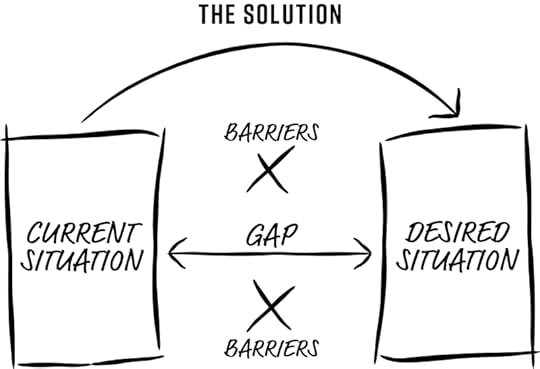
This is a step-by step process and takes place within a fluid world. It might be possible to cover both the diagnosis and prescription in one meeting, or even a conference call. Or, in a more complex sale, it might take three or four meetings to connect, evaluate, and diagnose – leading to a prescriptive presentation. The pace and complexity of a sale are dictated by the marketplace and the product.
Regardless of the time horizon or complexity of the sale, the process and steps remain the same. They can be adapted to suit any situation or customer, but the sequence remains constant.
WANT TO KNOW MORE ABOUT HONING YOUR TEAM’S COMPETITIVE EDGE?
Purchase a copy of my best-selling book, Selling is an Away Game, here
To learn more about how away-game selling can give you a competitive edge, contact Tyson Group here.


Master to Win: Away-Game Selling Strategies

I’m addicted to my Fitbit. It keeps my diet on track, helps me work out longer and more frequently, and basically keeps me on my game regardless of whether I’m at home or on the road.
But the thing I love the most about my Fitbit is that it’s mine and mine alone. Even though the basic hardware is off the shelf, it feels like it’s been tailored just for me because it uses my unique data.
Devices like Fitbit have inspired a wave of interest in products and solutions that feel tailored. In this era of 24/7 connectivity, the sales process needs to be tailored in a similar fashion.
Buyers are armed with more information than they would have been in the past, which gives them an advantage. When buying a product online, 92 percent of consumers spend time reading online reviews ahead of time – and 40 percent of those consumers form an opinion by reading just 1-3 reviews. They read those reviews, insert their own confirmation biases, and make quick decisions based on how well they believe that product or solution will be customized for their own pre-determined needs before they even speak with a salesperson.
The ready availability of information is fundamentally changing how they buy, across the board. The biggest challenge for salespeople today is having to make constant decisions on the fly as they adapt to the needs of the buyer.
These are just a few of the factors that have turned selling into an “away game.” Just like a sports team must overcome a disadvantage when playing on the opponent’s field, salespeople need to be prepared to play on a dynamically changing field, adapting to what the buyer already knows or wants.
THE FOUR ELEMENTS OF AWAY-GAME SELLING
In away-game selling, successful salespeople need to be more like the Waze App than a printed map. They need to constantly adjust in real time, based on the feedback they receive from the buyer and from other drivers, and continually update with relevant, customized information depending on where the buyer wants to go. That said, it’s essential for the salesperson to have a predictable process with repeatable steps.
There are four interrelated elements to the away-game sales process, shifting dynamically to accommodate one another in real time. Here are tips on how to succeed:
UNDERSTAND THE BUYER’S MINDSET
The buyer’s mindset is like a prism through which to view the decision-making process. To align with what is in the buyer’s mind, you need to mirror every action that person would normally take when buying something: get the attention of prospects, qualify them to see if they fit the business parameters, engage them in some kind of request for their time, ask them a series of questions, and create a scenario in which you can present ideas and start to create an opportunity.
DEVELOP A STRATEGY
To adapt to the buyer’s mindset, you need a sales strategy that is flexible enough to be tailored to individual clients, yet sturdy enough to be scalable and repeatable. Find a way to engage buyers in conversation and convince them you are a person worth listening to.
EMPLOY BATTLE-TESTED TACTICS
Your sales strategy needs to be supported by a set of tried-and-true tactics: “If this, then that.” For example, if you get someone’s voicemail, what will you say? How will you start the sales conversation? If you encounter an objection about price, how will you respond? It’s important to have a deep repertoire of tactics for every step of the sales process, but it’s equally important to stay in the moment and continue looking for opportunities to adapt to the buyer’s mindset.
HONE YOUR SKILLS
You need a skill set that is versatile enough to support your process. The basic toolkit should include a range of skills, including verbal brevity, selling time and awareness, communicating value, resolving objections, facilitating, and selling over the phone vs. selling in person.
To win this game, you’ve got to be like the Waze app – find out where your buyer wants to go and identify and eliminate potential roadblocks or other issues that might get in the way. Learn more about the landscape continuously so you can adjust your strategy accordingly. Then, use your acquired tactics and skills to help buyers reach their destination.
Want more? Purchase a copy of my best-selling book, Selling is an Away Game, here.
To learn more about how away-game selling can give you a competitive edge, contact Tyson Group here.
-----------------------------------------------------
This article was originally posted on March 25, 2019 by Lance Tyson in SellingPower
HOW TO INFLUENCE SALES BY TURNING THEIR IDEAS INTO YOUR IDEAS

In a previous post, I spoke about empathy and sympathy and how it’s better to be sympathetic to the client’s situation vs being empathetic and joining them in the situation. Let’s delve a little deeper into that and see how we can use this to influence the sale process.
Diagnosing is a delicate business. Doesn’t matter if I’m solving a need or creating an opportunity when I’m selling my product or service. I need to be sympathetic to the prospect’s conditions and help them face their situation. In other words, I have to do something I said previously I would never do. I have to tell the prospect in a nice way that “their kid is ugly.”
Diagnosing is a delicate business. Essentially, we need to tell our prospect in a nice way that their kid is ugly.
As salespeople, we are identifying that gap between where a prospect is and where they want to be. Essentially, we’re telling them that they have a problem, need to make a change, or need to make a commitment. And we have to be careful when stating our diagnosis. We don’t want to make the prospect feel the pain or imply that they are incapable of taking action.
Remember, we are selling to people. And people are creatures of emotion. Now, your prospect is stuck at an impasse that they can’t or don’t want to address. Otherwise, they would already have moved from where they are to where they want to be. There would be no gap and no reason for you be talking with them. So break out the velvet before using the hammer. Be respectful and sympathetic to their situation, but also be firm and dedicated to addressing the problem.
INFLUENCE IS NOT MANIPULATION
Picture this: you are at a nice restaurant with people you want to impress. So you order a fine Napa Cabernet. After a few moments, the sommelier comes back with an alternative bottle because the one you ordered was out of stock. There’s that moment of sheer panic when you see the bottle they’ve selected is way out of your price range. And addressing the situation at that moment is just awkward. So what do you do?
Well, a good salesperson would have read the situation and presented you with a comparable bottle. A bad salesperson, however, might take advantage of the situation to stick you with a $400 Merlot that has been sitting in the cellar for twenty years. They are banking on the fact that you wouldn’t ask the price in front of your guests. Or they believe they can easily guilt you into buying it if by chance you did happen to ask.
Manipulating and guilting someone into a buy is just a sucky way to do business. Period. Don’t do it.
The key to good diagnosing is leading the buyer to the gap. Ultimately, if you asked the right questions, you can actually make it their idea. It’s a lot harder for someone to walk away from their own idea than it is from your idea.
ACHIEVING INFLUENCE BY ALIGNING YOUR IDEAS WITH THEIRS
Here’s an example. We had an opportunity to pitch to an iconic pro-sports team, the Boston Red Sox (Fenway Sports Management). We had initial meetings with senior-level executives and got to meet with their EVP of Sales and Operations, John Clark. In this meeting, John did a wonderful job describing the historical significance of Fenway Park, how his business ran at all levels, their sales philosophy, how they were managed, how they sold and marketed, and how the marketplace perceived them. As we guided him through the questions about his current and past situations, he found it easier to talk about what needed to change and what needed to get better.
We also asked him, if he were in our position, how he would approach training his sales team and coaching his sales managers. He was then able to talk about the same things, but in the frame of the desired situation. He told us where he was, where he wanted to go, and how he would approach things if he were us.
We came back to him a few weeks later. But instead of submitting a run-of-the-mill proposal, we presented a tailored discussion document.
Our first two pages listed what he said about his current and desired situations. Essentially, we showed him the gap between where he currently was and where he wanted to be.
When we presented our recommendations, we based them all on his ideas. Remember, it’s hard to argue against your own ideas. Guess who was influenced to act by the recommendations?
SALES DEBRIEF: ACHIEVING INFLUENCE IN THE SALES PROCESS
Let’s revisit the doctor visit analogy. You go into the doctor’s office for an exam. You review all of your vitals like weight and blood pressure. Then, you review your symptoms to find out how sick you are, and comparing everything to what they should be. The remedy is more of a realization of what it will take to get well. Eventually it becomes your idea.
The skillful salesperson designs questions that lead buyers to realize there’s an opportunity to fill a gap or address a need. Don’t let your questioning process be a haphazard collection of curiosities. As you lead your prospect through the sales process, use your questions to reach a diagnosis with your prospect that’s going to solve their problem.
You’ll find more ideas on achieving influence through your questioning process in Lance Tyson’s book, Selling Is An Away Game: Close Business and Compete in a Complex World available on Amazon. Get your copy today!
The Top 4 Financial Sales Objections and How to Resolve Them

Here’s a quick story about the first step in resolving 4 common sales objections, assessing the objection.
Have you ever heard the story of how McIlhenny’s Tabasco sauce got started?
Before the Civil War, the McIlhenny family lived on an island along the coast of Louisiana called Avery Island. If you look at the bottle, you’ll see a picture of Avery Island, right there off the coast. The island was just a great place to live – it had sugar cane, fresh water, and cattle. The McIlhenny family loved it there.
When the Civil War broke out, some troops were stationed on the island, and they ended up killing the cattle, burning the sugar cane, polluting the water, and further devastating the island.
After the Civil War was over, the McIlhenny family were faced with a challenge. The way they had always lived and made a living was gone. So they sat down, assessed their situation, and essentially asked themselves what they had left. That’s when they realized they had a lot of old French perfume bottles still lying around from before the war, some salt, and a bunch of red-hot Mexican chili peppers. So they decided to go back to an old family recipe and developed the concept of Tabasco.
FACING ADVERSITY AND ASSESSING OBJECTIONS
Sometimes the best opportunities come out of facing adversity and assessing objections. Today, you find Tabasco in most fine restaurants and probably in every supermarket in the country, if not the world. It’s an extremely well-known brand.
In every single sale, be it complex or simple, there comes a time where you’re going to have to have a dialogue and assess what your buyer is thinking. Are they in or out? What do they like or dislike?
In our sales calls, we often hear things that make us think a sale is going pretty well. We can feel the momentum building towards a deal. And suddenly, brake lights! Everything comes to a screeching halt. Your prospect says:
Your price is too high….
It’s not in our budget…
I’m not sure about the cost…
I’m not sure if your product or solution really has value in my situation.
Just like the McIlhenny family, our job is to assess the objections and get the buyer to see opportunities instead.
UNDERSTANDING THE DIFFERENCE BETWEEN COST, PRICE, BUDGET AND VALUE
Cost.
Value.
Budget.
Price.
All those words mean very different things. And in a complex or simple sale, we need to understand the difference between those terms by putting a definition to those marketplace-driven objections we run into. On the surface, those words, and the financial objections derived from them, all seem like they’re the same thing. But in reality, they’re very different animals. The first thing we need to do is dig in and really understand those differences.
COMMON OBJECTION WE HEAR CONCERNING PRICE
Let’s start by asking: What does price mean? A lot of people say price is defined as the cost of somebody doing something. Fair enough. Sounds logical. The question then becomes: If price is the cost of doing something, then what is cost? If you asked most people, they would say It’s the price. See what I mean? Those words are used interchangeably, but there is a difference.
So let’s define price as what the market will bear to pay for a good or service. Take Amazon for instance. The number you see when you look at a product on their site is the price. If people buy it, then that’s the price they’re willing to pay. That’s evidence of what the market will bear.
THE DIFFERENCE BETWEEN PRICE AND COST
Now if somebody says that the cost is too high, do they actually mean cost, or do they mean price? Let’s define the word cost. Cost is the overhead that goes along with a product or service because of ownership. So if I pay a certain price for a home, my costs are things like maintenance, repair, water service, electric service, sewer… These are all costs associated with having a home. If I buy a car, regular replacement of the tires is a cost. Changing oil is a cost. Gasoline is a cost. Maintenance is a cost. Insurance is a cost.
Price and cost are clearly two different things. But the marketplace uses those words interchangeably. When our prospect uses these words in an objection, you need to get them to define what they mean before you can engage them in a dialogue about their objection.
THE BUDGET OBJECTION
Another objection that comes up in more complex sales is: it’s not in the budget. The questions you need to ask yourself at that point is: is my prospect referring to a number? Well, budget means a lot of things to different people. Budget is defined as an estimate of income and expenditure for a set period of time, a past performance that usually dictates future spending. But you have to ask yourself, “is my prospect using this as another way of saying that the price is too high? So you might need to educate your prospect to clear up the objection.
DETERMINING THE VALUE IN YOUR OFFER
Now, if somebody says, “I don’t see the value,” that’s a whole different story. The budget objection seems addressable if you can get them to identify what it is. But now we are talking about value. What we know about value is it’s defined as it’s perceived. It is truly in the eye of the beholder. And people can’t value what they can’t compare and contrast.
Money objections and financial objections can be the toughest objections to address. It’s our job as sales professionals to get the prospect to define and explain as much as possible about their objection. Once you’ve clarified the language the prospect is using and you have “gently encouraged” them to reflect on their real concerns, then are you ready to address your prospect’s objection.
In summary, before you assume you know what your prospect means when they say “your cost is too high,” stop and remember, price, cost, budget, and value all have different meanings. It’s up to you to respond to your prospect and get them to define and explain what their real challenges are before addressing their concerns.
Check out Lance Tyson’s book, Selling Is An Away Game, available on Amazon, for additional methods on resolving sales objections. Get your copy today!
2 Things to Avoid When Opening a Sales Call

Sales reps are still being taught old school tactics that don’t work in today’s digital business environment. In a previous post, I reviewed how the much maligned cold call has become ineffective because of the outdated practices still being used to execute them.
The same can be said for opening a sales call. If you want to to be effective when opening a sales call, you need to drop the old-school behaviors that some organizations are still teaching. Here are two examples of behaviors you need to stop right now when opening a sales call.
WHEN OPENING A SALES CALL, DON’T READ YOUR SCRIPT
One morning recently, I received a call from someone offering a free executive report as a “reward” for subscribing to an online publication. I can appreciate what these sales reps are doing. However, if you’re targeting executives, your communication style needs to be executive-like.
I was in the middle of a task when my phone rang. Like most people in business, I didn’t want to stop what I was doing. So, I looked at my smartphone and made a decision based on the caller ID.
Usually, when the caller ID is “unknown” I do what most business people do and let the call go to voicemail. However, I was curious this time. So I answered, half expecting the call to be a marketing robocall that I could easily drop.
Instead, I got “Bobbi”. She opened her call with, “Hi my name is “Bobbi and I’m with High Tech Magazine. May I speak with Lance?”
Now, I typically answer the phone by stating my name, “Lance Tyson”, and today was no different. So when somebody responds with , “Hello, Lance?” or, “Lance?” my perception is, “OK. They have poor cell phone reception” or “They are re-affirming my name because I didn’t speak plainly enough.”
But when they begin with a “Hello this is Bobbi from High Tech Magazines, Inc. May I please speak with Lance?” after I just said, “Hello, Lance Tyson” it says to me that they are reading from a script.
When opening a sales call, perception is everything. If you sell over the phone, especially in a B2B environment, drop the script. Stay focused on the conversation and respond to your contact accordingly. Stay present and aware. Managers and executives have no time for sales reps who are mentally unavailable.
WHEN OPENING A SALES CALL, RESPECT THEIR SCHEDULE
After Bobbi opened her sales call with her less-than-stellar attention-getter, she proceeded to read the rest of her script. She outlined the benefits of this report and how it was going to reveal secrets about the sales industry. But, before she could send it to me, she needed to confirm some information.
Remember, I’m preoccupied with my own tasks. So, I tell her that I’m currently in the middle of a meeting.
Now, here’s a question for you readers out there: How many of you are in the middle of a couple of tasks when you get an unsolicited phone call?
As I’ve said in many of my training sessions, no one is sitting at their desk waiting for a salesperson to call them. Your prospects are always preoccupied with something at any given time.
After I tell her that I’m in a meeting, she paused, and then said, “I apologize for the interruption. I just need to verify a few pieces of information”. She did not say, “I apologize, is there a better time to talk” or “I’ll call back at a more opportune time.” She sent the unspoken message, “I’m sorry, but this is more important. So drop what you’re doing and give me your information.”
If your contact says that they don’t have time right now or they are in a meeting, don’t double-down on your request. Use the few seconds you do have with them to set up a future meeting.
Remember, perception is key. How you respond to your prospect’s statement of “I don’t have time right now” goes beyond simply getting the calls in to make a quota. It reveals to your contacts how you view them: either as a number on a spreadsheet or a valued professional.
TWO THINGS YOUR PROSPECTS ARE SHORT ON – ATTENTION AND TIME
Today, business people are being pulled in multiple directions. The attention span of the people you are contacting is limited, fractured, and split among 5 to 7 different projects. And your call is just one more item thrown into the mix, adding to their mental burden and their frustration.
Now, I realize that sales reps have more channels like LinkedIn to communicate with their prospects in addition to picking up the phone and making a call. However, if your prospect is so busy that they can’t respond at that moment, then the issue is less about the media used and more about you doing a better job of breaking their preoccupation and getting their attention.
You won’t break their preoccupation by reading a phone script. And you certainly won’t win their respect by disrespecting their time.
In review, when someone says that they don’t have the time to talk at that moment, schedule time in the future with them and move on to your next prospect. But before you move on, perform a quick review of the call. Determine how you failed to break the prospect’s preoccupation and win their attention. Now, you’ve set yourself up for the next prospect on your list. And you have the high ground when you call your busy prospect back.
DO YOU WANT MORE POWERFUL IDEAS ON OPENING A SALES CALL?
Because the two are so similar, many of the ideas we use when opening a sales presentation are similar to those in opening a sales call. For additional ideas on getting your audience’s attention, from a single prospect to a room full of decision makers, download our digital publication, Basics of Dynamic Sales Presentations, here.
Check out Lance Tyson’s book, Selling Is An Away Game, available on Amazon, for additional methods and sales strategy. Get your copy today!
3 Valuable Secrets to Building Better Rapport with Your Prospects

Here’s a revelation about the sales process from our Director of Technology, followed by a few ideas on leveraging the power of rapport and becoming a valuable asset.
THERE IS NO MAGICAL ONE-CALL CLOSE. PROSPECTS MUST GO THROUGH THEIR BUYING PROCESS
I remember a situation from years ago when I worked as an outside sales rep during the day and taught presentation programs in the evening.
I had just finished a sales call, closed the deal, gotten the order, and I was ecstatic. The lead coordinator told me that this lead was hot and he was right.
When I got back to the office, I began entering the information into our CRM system. At that time, we were using individual copies of ACT synchronized to a central database. Seems like stone-age technology compared to how we coordinate our sales and marketing activities today with SalesForce and Hubspot.
Upon synchronizing my activities in ACT, not only did I find another record for this customer, but discovered that a fellow sales rep, Bob, had been working with them. He had sent out literature by the box load, made dozens of phone calls, contacted the client numerous times, and still made no headway in moving the prospect through the sales process.
Yet, on this day, I had walked in, met the customer once, and closed the deal.
I’ve never been a believer in the “one call close”. No one walks in a new account cold and sells the management team on the first day. In those instances, there’s always some unseen prep work and relationship building. It can happen from another sales rep, your competition, some marketing material, or a whole lot of online research from the prospect. If you are meeting with a prospect for the first time and they buy, someone else did the heavy lifting to get their attention and spark their interest. And in this particular case, that person was Bob.
BECOMING A VALUABLE ASSET BEGINS WITH ACHIEVING RAPPORT AND LEAVING A FAVORABLE IMPRESSION.
I felt low. I liked Bob. He’s a stand-up guy. The last thing I wanted to do was sneak in behind him and grab the sale after he did all the heavy lifting of educating the customer.
So I approached Bob the next day and told him what had happened.
His comment was “That’s alright. If they couldn’t remember me after all the time I’ve spent with them, then I wasn’t effective in making a lasting impression and I don’t deserve the business.”
Over the past few years I’ve often thought about that situation. I can remember similar sales calls where I did all of the heavy lifting with a prospect, spending time building rapport and educating them. And at the 11th hour, another sales rep swooped in behind me and closed the sale.
It didn’t feel good.
Still, I think of Bob’s statement and his attitude often:
If I don’t do enough to achieve rapport and leave a favorable impression with the prospect, then I don’t deserve the business.
Of course I’ve had those other conversations with clients that sounded like this:
“Yeah, we got a call from someone in your company yesterday, but we told them that we had a rep from your company taking care of us.”
Now if the client said that to another rep in my company, I can imagine what they said to a competitor trying to bring in alternate solutions or quick fixes.
THERE ARE NO MORE ORDER-TAKERS. 3 RAPPORT IDEAS TO MAKING YOURSELF A VALUABLE ASSET
Using rapport to becoming a valuable asset doesn’t have to be an exotic blend of special tactics. In our training and consultation sessions, we tie it to a process involving three simple ideas:
Identify. Connect with your prospect as a person. Remember, people do business with people, not businesses.
Understand Their Needs and Wants. In order to understand what they want, you need to get out of your head. Selling is an away game. It happens in the customer’s mind.
Credibility. Bring to bear your unique insights, and ideas as they relate to the client’s situation.
Three simple ideas to having your customers telling your competition, “We already have a rep taking care of our needs”. You don’t like it when you hear a lead say that phrase to you. But it sure helps you sleep at night when your prospects and customers use it in your defense.
Ultimately, it comes down to your prospects and customers viewing you as a valued addition to their business model.
In this Internet age, your customers and prospects can buy anything they want online with no hassles at all. And they have access to all of the information, recommendations, and social referrals they will ever need. So ask yourself, what value do you bring to the table that justifies your customers spending time with you?
But for now, simply jot down 5 activities that you do to get your customers and prospects to remember you as a valuable asset when you aren’t there with them. Because I can guarantee you, your competition is actively looking for ways to unseat you.
Don’t make it easy for them.
Good Selling!
WANT MORE POWERFUL IDEAS ON OPENING SALES CALLS?
Because the two are so similar, many of the ideas we use when opening a sales presentation are similar to those in opening sales calls. For additional ideas on getting your audience’s attention, from a single prospect to a room full of decision makers, download our digital publication, Basics of Dynamic Sales Presentations, here.
Also, be sure to check out my book, Selling Is An Away Game, available on Amazon, for additional methods and sales strategy. Get your copy today!