
 Sign in with Facebook
Rosa Luxemburg Quotes
Quotes tagged as "rosa-luxemburg"
Showing 1-22 of 22

“Being human means throwing your whole life on the scales of destiny when need be, all the while rejoicing in every sunny day and every beautiful cloud.”
―
―
“What presents itself to us as bourgeois legality is nothing but the violence of the ruling class, a violence raised to an obligatory norm from the outset.”
―
―

“Should I, too, prefer the title of 'non-Jewish Jew'? For some time, I would have identified myself strongly with the attitude expressed by Rosa Luxemburg, writing from prison in 1917 to her anguished friend Mathilde Wurm:
An inordinate proportion of the Marxists I have known would probably have formulated their own views in much the same way. It was almost a point of honor not to engage in 'thinking with the blood,' to borrow a notable phrase from D.H. Lawrence, and to immerse Jewishness in other and wider struggles. Indeed, the old canard about 'rootless cosmopolitanism' finds a perverse sort of endorsement in Jewish internationalism: the more emphatically somebody stresses that sort of rhetoric about the suffering of others, the more likely I would be to assume that the speaker was a Jew. Does this mean that I think there are Jewish 'characteristics'? Yes, I think it must mean that.”
― Hitch 22: A Memoir
What do you want with these special Jewish pains? I feel as close to the wretched victims of the rubber plantations in Putamayo and the blacks of Africa with whose bodies the Europeans play ball… I have no special corner in my heart for the ghetto: I am at home in the entire world, where there are clouds and birds and human tears.
An inordinate proportion of the Marxists I have known would probably have formulated their own views in much the same way. It was almost a point of honor not to engage in 'thinking with the blood,' to borrow a notable phrase from D.H. Lawrence, and to immerse Jewishness in other and wider struggles. Indeed, the old canard about 'rootless cosmopolitanism' finds a perverse sort of endorsement in Jewish internationalism: the more emphatically somebody stresses that sort of rhetoric about the suffering of others, the more likely I would be to assume that the speaker was a Jew. Does this mean that I think there are Jewish 'characteristics'? Yes, I think it must mean that.”
― Hitch 22: A Memoir
“Europe, it is true, is a geographical and, within certain limits, an historical cultural conception. But the idea of Europe as an economic unit contradicts capitalist development in two ways. First of all there exist within Europe among the capitalist States – and will so long as these exist – the most violent struggles of competition and antagonisms, and secondly the European States can no longer get along economically without the non-European countries. ... At the present stage of development of the world market and of world economy, the conception of Europe as an isolated economic unit is a sterile concoction of the brain. ...
And if the idea of a European union in the economic sense has long been outstripped, this is no less the case in the political sense.
....
Only were one suddenly to lose sight of all these happenings and manoeuvres, and to transfer oneself back to the blissful times of the European concert of powers, could one say, for instance, that for forty years we have had uninterrupted peace. This conception, which considers only events on the European continent, does not notice that the very reason why we have had no war in Europe for decades is the fact that international antagonisms have grown infinitely beyond the narrow confines of the European continent, and that European problems and interests are now fought out on the world seas and in the by-corners of Europe.”
― Rosa Luxemburg Speaks
And if the idea of a European union in the economic sense has long been outstripped, this is no less the case in the political sense.
....
Only were one suddenly to lose sight of all these happenings and manoeuvres, and to transfer oneself back to the blissful times of the European concert of powers, could one say, for instance, that for forty years we have had uninterrupted peace. This conception, which considers only events on the European continent, does not notice that the very reason why we have had no war in Europe for decades is the fact that international antagonisms have grown infinitely beyond the narrow confines of the European continent, and that European problems and interests are now fought out on the world seas and in the by-corners of Europe.”
― Rosa Luxemburg Speaks

“If you are curious and open to the life around you, if you are disturbed as to how, by, and against whom wealth and political power is held and used, if you sense there must be good reasons for your unease, if your curiosity and openness drive you toward wanting to act with others, to "do something," you have much in common with the writers of the three essays in Manifesto.”
― A Human Eye: Essays on Art in Society, 1997-2008
― A Human Eye: Essays on Art in Society, 1997-2008

“Social democracy as we now know it underwent its moment of speciation when Eduard Bernstein began to question the orthodoxy of revolution. His essential postulate was the absence of crises. The Steven Pinker of socialism, he pointed to the empirical fact that no serious crisis had rocked the capitalist economy for the past two or three decades, which invalidated the Marxian prophecy of a system trending towards collapse. Since it was not prone to malfunctioning, the idea of seizing power, smashing decrepit capitalism and installing a completely different order had become redundant; instead social democracy could continue to grow in strength, extract piecemeal reforms and gradually lift the working class out of the mire. Rosa Luxemburg very famously objected that the crisis tendencies had merely been postponed. In the near future, they would burst forth with even more dreadful violence. Ignoring her prognosis, the social democrats in the making went ahead and presently gave their first demonstration of how they dealt with catastrophe: by expediting it through consent.”
― Corona, Climate, Chronic Emergency: War Communism in the Twenty-First Century
― Corona, Climate, Chronic Emergency: War Communism in the Twenty-First Century
“Clearly, not uncritical apologetics but penetrating and thoughtful criticism is alone capable of bringing out the treasures of experiences and teachings.”
― The Russian Revolution
― The Russian Revolution
“Dealing as we are with the very first experiment in proletarian dictatorship in world history (and one taking place at that under the hardest conceivable conditions, in the midst of the world-wide conflagration and chaos of the inlperialist mass slaughter, caught in the coils of the nlost reactionary military power in Europe, and accompanied by the completest failure on the part of the international working class), it would be a crazy idea to think that every last thing done or left undone in an experiment with the dictatorship of the proletariat under such abnormal conditions represented the very pinnacle of perfection.”
― The Russian Revolution
― The Russian Revolution
“If the proletariat came to power, it could draw from Bernstein's theory the following 'practical' conclusion: to go to sleep.”
― Reform or Revolution
― Reform or Revolution
“Dealing as we are with the very first experiment in proletarian dictatorship in world history (and one taking place at that under the hardest conceivable conditions, in the midst of the world-wide conflagration and chaos of the imperialist mass slaughter, caught in the coils of the most reactionary military power in Europe, and accompanied by the completest failure on the part of the international working class), it would be a crazy idea to think that every last thing done or left undone in an experiment with the dictatorship of the proletariat under such abnormal conditions represented the very pinnacle of perfection.”
― The Russian Revolution
― The Russian Revolution
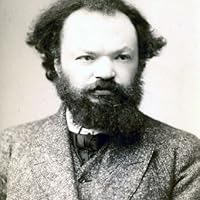
“It is only by guaranteeing liberty to our opponents that we can secure our own”
― Nihilism As It Is, Being Stepniak's Pamphlets and Felix Volkhovsky's Claims of the Russian Liberals
― Nihilism As It Is, Being Stepniak's Pamphlets and Felix Volkhovsky's Claims of the Russian Liberals
“Fourier's scheme of changing, by means of phalansteries, the water of all the seas into tasty lemonade was surely a phantastic idea. But Bernstein, proposing to change the sea of capitalist bitterness into a sea of socialist sweetness, by progressively pouring into it bottles of social reformist lemonade, presents an idea that is merely more insipid but no less phantastic.”
― Reform or Revolution
― Reform or Revolution
“.. the homemade wisdom of the parliamentary nursery: in order to carry anything, you must first have a majority. The same, they say, applies to revolution: first let's become a "majority." The true dialectic of revolutions, however, stands this wisdom of parliamentary moles on its head: not through a majority to revolutionary tactics, but through revolutionary tactics to a majority - that is the way the road runs.”
― The Russian Revolution
― The Russian Revolution
“Social Democracy, does not, however, expect to attain its aim either as a result of the victorious violence of a minority or through the numerical superiority of a majority. It sees socialism come as a result of economic necessity - and the comprehension of that necessity - leading to the suppression of capitalism by the working masses. And this necessity manifests itself above all in the anarchy of capitalism.”
― Reform or Revolution
― Reform or Revolution
“Der "Bolschewismus" ist das Stichwort für den praktischen revolutionären Sozialismus, für alle Bestrebungen der Arbeiterklasse zur Machteroberung geworden.”
― Politische Schriften III. Herausgegeben und eingeleitet von Ossip K. Flechtheim
― Politische Schriften III. Herausgegeben und eingeleitet von Ossip K. Flechtheim
“Have you been reading the letters of Rosa Luxemburg again, Donatella?’ Brunetti asked in a normal voice.
She laughed her bright laugh, a sound he delighted in hearing because to be thought clever or amusing by this woman was, to Brunetti, a jewel of great price.
‘No dear, not recently. Besides, they’re very serious and filled with lofty thoughts about the inner contradictions of capitalism, and I’m too old to enjoy reading things like that.’ She gave him a level glance as though she were testing how far she could go – the same look he had sometimes been given by her daughter – and added, ‘And too rich.’
This time it was Brunetti who laughed.”
― Give Unto Others
She laughed her bright laugh, a sound he delighted in hearing because to be thought clever or amusing by this woman was, to Brunetti, a jewel of great price.
‘No dear, not recently. Besides, they’re very serious and filled with lofty thoughts about the inner contradictions of capitalism, and I’m too old to enjoy reading things like that.’ She gave him a level glance as though she were testing how far she could go – the same look he had sometimes been given by her daughter – and added, ‘And too rich.’
This time it was Brunetti who laughed.”
― Give Unto Others
“A la fin, tout sera bien récapitulé; et si ça ne l'est pas, je «m'en fiche aussi»; même sans ça, la vie m'est une telle source de joie tous les matins j'inspecte scrupuleusement les bourgeons de tous mes arbustes et vérifie où ils en sont; chaque jour je rends visite à une coccinelle rouge avec deux petits points noirs sur le dos que je maintiens en vie depuis une semaine sur une branche, dans un pansement de chaude ouate malgré la bise et la froidure; j'observe les nuages, toujours plus beaux et sans cesse différents, et au total je ne me considère pas plus importante que cette petite coccinelle et, imbue du sentiment de mon infime petitesse, je me sens ineffablement heureuse.”
― Commencer à vivre humainement
― Commencer à vivre humainement
“Chérie, garde la tête haute. Il faut demeurer fiers et ne rien laisser voir. Nous devons seulement nous serrer un peu plus pour avoir «plus chaud ».”
― Commencer à vivre humainement
― Commencer à vivre humainement
“Et comme je comprends que vous soyez amoureuse « de l'amour »! Pour moi, l'amour a été (ou est?...) toujours plus important, plus sacré que l'objet qui l'éveille. Parce qu'il permet de voir le monde comme un conte de fées scintillant, parce qu'il fait sortir de l'être humain ce qu'il a de plus noble et de plus beau, parce qu'il rehausse qui est le plus commun et le plus humble et le sertit de brillants et parce qu'il permet de vivre dans l'ivresse, dans l'extase...”
― Commencer à vivre humainement
― Commencer à vivre humainement
“En réalité, je traverse actuellement une passe assez dure. C'est exactement comme l'an dernier, à la Barnimstrasse : pendant sept mois je tiens bon, et le huitième mes nerfs flanchent tout à coup. Chaque jour à passer devient un petit sommet qu'il me faut gravir; la moindre bagatelle m'irrite douloureusement. En effet, dans cinq jours il y aura huit mois pleins de ma deuxième année de solitude. Ensuite, sûrement, comme l'an dernier, la vie reprendra ses droits, d'autant plus qu'on s'approche du printemps. Du reste, tout serait bien plus facile à supporter, si je n'oubliais pas la loi fondamentale que je me suis fixée comme règle de vie: être bon, voilà le principal! Etre bon tout simplement. Voilà qui englobe tout et qui vaut mieux que toute l'intelligence et la prétention d'avoir raison.
5 mars 1917, prison de Wronke
À Hans Diefenbach”
― Commencer à vivre humainement
5 mars 1917, prison de Wronke
À Hans Diefenbach”
― Commencer à vivre humainement
“Sur ma tombe, comme dans ma vie, il n'y aura pas de phrase grandiloquente. Sur la dalle de mon tombeau, on ne devra lire que deux syllabes: «zwi-zwi». C'est le cri des mésanges charbonnières que j'imite si bien qu'elles accourent aussitôt. Et imaginez que dans ce zwi-zwi qui d'habitude brillait comme une aiguille d'acier et rendait un son très clair et très grêle, il y a depuis quelques jours un trille tout à fait menu, une minuscule note de poitrine. Et savez-vous, mademoiselle Jacob, ce que cela signifie ? C'est le premier léger mouvement du printemps à venir : malgré la neige, le froid et la solitude, nous croyons, les mésanges charbonnières et moi, à la venue du printemps ! Et si, par trop d'impatience, il ne devait pas m'être donné de vivre ce printemps, n'oubliez pas que sur la dalle de ma tombe on ne doit lire rien d'autre que «zwi-zwi».
7 février 1917, prison de Wronke
À Mathilde Jacob”
― Commencer à vivre humainement
7 février 1917, prison de Wronke
À Mathilde Jacob”
― Commencer à vivre humainement
“Cette heure crépusculaire possède un charme particulier. Le soleil était encore chaud, mais on se laisse volontiers brûler les joues et la nuque par ses rayons obliques, comme par un baiser. Une légère brise agitait les buissons et semblait promettre en chuchotant que la fraîcheur du soir viendrait bientôt succéder à la chaleur du jour. Dans le ciel, d'un bleu radieux, s'amoncelaient très haut quelques nuées d'un blanc éclatant ; une demi-lune, toute pâle, passait au milieu d'eux, fantomatique, telle un rêve. Les hirondelles partaient déjà en cortège pour leur vol vespéral, déchiraient en lambeaux de leurs petites ailes pointues la soie bleue de l'espace, filaient de-ci, de-là et fonçaient avec des pépiements aigus à des hauteurs vertigineuses. J'étais là, mon arrosoir dégoulinant à la main, et j'éprouvais un désir nostalgique et incoercible de me plonger là-haut dans ce bleu humide, étincelant, de m'y baigner, d'y barboter, de me dissoudre entièrement dans l'écume et de disparaltre.”
― J'étais, je suis, je serai
― J'étais, je suis, je serai
All Quotes
|
My Quotes
|
Add A Quote
Browse By Tag
- Love Quotes 102k
- Life Quotes 80.5k
- Inspirational Quotes 77k
- Humor Quotes 44.5k
- Philosophy Quotes 31.5k
- Inspirational Quotes Quotes 28.5k
- God Quotes 27k
- Truth Quotes 25k
- Wisdom Quotes 25k
- Romance Quotes 24.5k
- Poetry Quotes 23.5k
- Life Lessons Quotes 22.5k
- Quotes Quotes 21.5k
- Death Quotes 21k
- Happiness Quotes 19k
- Hope Quotes 19k
- Faith Quotes 18.5k
- Inspiration Quotes 18k
- Motivational Quotes 16k
- Spirituality Quotes 16k
- Relationships Quotes 16k
- Religion Quotes 15.5k
- Life Quotes Quotes 15.5k
- Writing Quotes 15k
- Love Quotes Quotes 15k
- Success Quotes 14k
- Motivation Quotes 14k
- Time Quotes 13k
- Science Quotes 12k
- Motivational Quotes Quotes 12k
