
 Sign in with Facebook


“In the comfortingly distorted view of the past, American slavery came about in the passive sense. That's just the way things were back then. Slavery was an inherited reality, a long-standing if unsavory fact of trade and war. In reality, colonial legislatures consciously conceived American chattel slavery at the turn of the eighteenth century, and they spelled out its terms in painstaking regulatory detail. Virginia's slave codes contained forty-one sections and more than four thousand words.
...
The slave codes of 1705 are among American history's most striking evidence that our nation's greatest sins were achieved with clear forethought and determined maintenance.”
― Four Hundred Souls: A Community History of African America, 1619-2019
...
The slave codes of 1705 are among American history's most striking evidence that our nation's greatest sins were achieved with clear forethought and determined maintenance.”
― Four Hundred Souls: A Community History of African America, 1619-2019
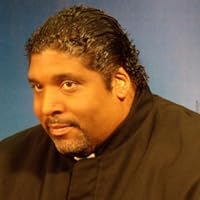
“Though slavery officially ended after the Civil War, the Christianity that blessed white supremacy did not go away. It doubled down on the Lost Cause, endorsed racial terrorism during the Redemption era, blessed the leaders of Jim Crow, and continues to endorse racist policies as traditional values under the guise of a "religious right." As a Christian minister myself, I understand why, for my entire ministry, the number of people who choose not to affiliate with any religious tradition has doubled each decade. An increasingly diverse America is tired of the old slaveholder religion.
But this is why the freedom church that David George joined in the late 1760s is so important. We who speak out in public life to insist that God cares about love, justice, and mercy and to call people of faith to stand with the poor, the uninsured, the undocumented, and the incarcerated are often accused of preaching something new. But those who claim "traditional values" to defend unjust policies do not represent the tradition of David George, George Liele, and Brother Palmer. They do not represent the Black, white, and Tuscaroran people of Free Union, North Carolina, who taught my people for generations that there is no way to worship Jesus without being concerned about justice in the world.”
― Four Hundred Souls: A Community History of African America, 1619-2019
But this is why the freedom church that David George joined in the late 1760s is so important. We who speak out in public life to insist that God cares about love, justice, and mercy and to call people of faith to stand with the poor, the uninsured, the undocumented, and the incarcerated are often accused of preaching something new. But those who claim "traditional values" to defend unjust policies do not represent the tradition of David George, George Liele, and Brother Palmer. They do not represent the Black, white, and Tuscaroran people of Free Union, North Carolina, who taught my people for generations that there is no way to worship Jesus without being concerned about justice in the world.”
― Four Hundred Souls: A Community History of African America, 1619-2019

“Black Brits emigrated into a society with an already established white underclass and were mostly dumped in areas where that underclass already lived; black Americans and the indigenous peoples were the foundation of the US underclass.”
― Natives: Race and Class in the Ruins of Empire
― Natives: Race and Class in the Ruins of Empire
“What racialised stop and search is about, in London at least, is letting young black boys and men know their place in British society, letting them know who holds the power and showing them that their day can be held up even in a nice ‘liberal’ area like Camden in a way that will never happen to their white friends, if they still have any left by the time they have their first encounter with the police. It is about social engineering and about the conditioning of expectations, about getting black people used to the fact that they are not real and full citizens, so they should learn to not expect the privileges that would usually accrue from such a status. Racialised stop and search is also a legacy of more direct and brutal forms of policing the black body in the UK, from back in the days before political correctness.”
― Natives: Race and Class in the Ruins of Empire
― Natives: Race and Class in the Ruins of Empire

“Decolonizing knowledge shouldn’t put us in the position of only producing knowledge as a reaction to Western knowledge. Our existence should not become one in which everything we produce is to justify our intellectual existence vis-à-vis the West. It means to produce what we see as important, fit, and nurturing to our communities, countries, and cultures, in separation from the West and its colonial and imperial agenda. This way, we will ensure to not waste our energy in simply reacting to the West to justify the value of our contribution to knowledge.”
―
―
 The History Book Club
— 26120 members
— last activity 2 hours, 36 min ago
The History Book Club
— 26120 members
— last activity 2 hours, 36 min ago
"Interested in history - then you have found the right group". The History Book Club is the largest history and nonfiction group on Goodread ...more

Bethany Elizabeth’s 2025 Year in Books
Take a look at Bethany Elizabeth’s Year in Books, including some fun facts about their reading.
Bethany Elizabeth hasn't connected with her friends on Goodreads, yet.


Favorite Genres
History, Politics, Historical Fantasy, Speculative Fiction, Magical Realism, Sociology, Social History, Cultural History, New Weird, Social Science, Alternative History, Gothic Horror, History of Ideas, Cultural Criticism, Humanities, Theory, Ethnology, Social Issues, Anthropology, Microhistory, Popular Science, Sociobiology, Anthrozoology, Human Geography, Medical Anthropology, food-history, and Social Science fiction
Polls voted on by Bethany Elizabeth
Lists liked by Bethany Elizabeth
